Evidence-Based Sports Injury Care by Dr. Sean LeoSports Injury Specialist in Singapore

With over 25 years of experience, Dr. Sean Leo specialises in minimally invasive treatment of sports injuries and joint conditions. His expert care supports faster recovery, restored mobility, and a return to peak performance.
Man with short black hair and glasses wearing a dark shirt, smiling at camera.

Dr. Sean Leo

Orthopaedic Surgeon Singapore

National Service Injuries: What Every NSman Needs to Know About Knee Pain, Meniscus Tears and Training-Related Injuries

Every year in Singapore, thousands of young men cross from civilian life into National Service as an accepted rite of passage into adulthood. National service injuries may occur while servicemen undergo training. This risk may be higher initially due to the shift from a sedentary study lifestyle to full physical training. This guide draws on Dr Sean Leo’s over 25 years of clinical experience in knee and lower limb surgical procedures. 

📌National service injuries in Singapore commonly affect the knee, ankle, and shoulder. The most frequent knee injuries include iliotibial band syndrome, patellofemoral pain, and meniscus tears. Early recognition, relative rest, and specialist assessment significantly improve recovery outcomes and reduce the risk of long-term damage.

Key Takeaways

  • National service injuries commonly affect the knee, ankle, and shoulder from overuse and sudden load increases.
  • Meniscus tear is a significant knee injury and often requires specialist evaluation.
  • Servicemen may get injured during training due to rapid transitions from sedentary to high-intensity physical activity.
  • Early treatment of training-related injuries prevents minor issues from becoming long-term problems.
  • Knowing how to prevent overuse injuries in the military starts well before enlistment day.

Why Do Soldiers Get Injured During Training?

There are multiple factors which may affect the rate of injury. However one simple factor that can be mitigated is to prepare the body to undertake a higher degree of physical load and activity. 

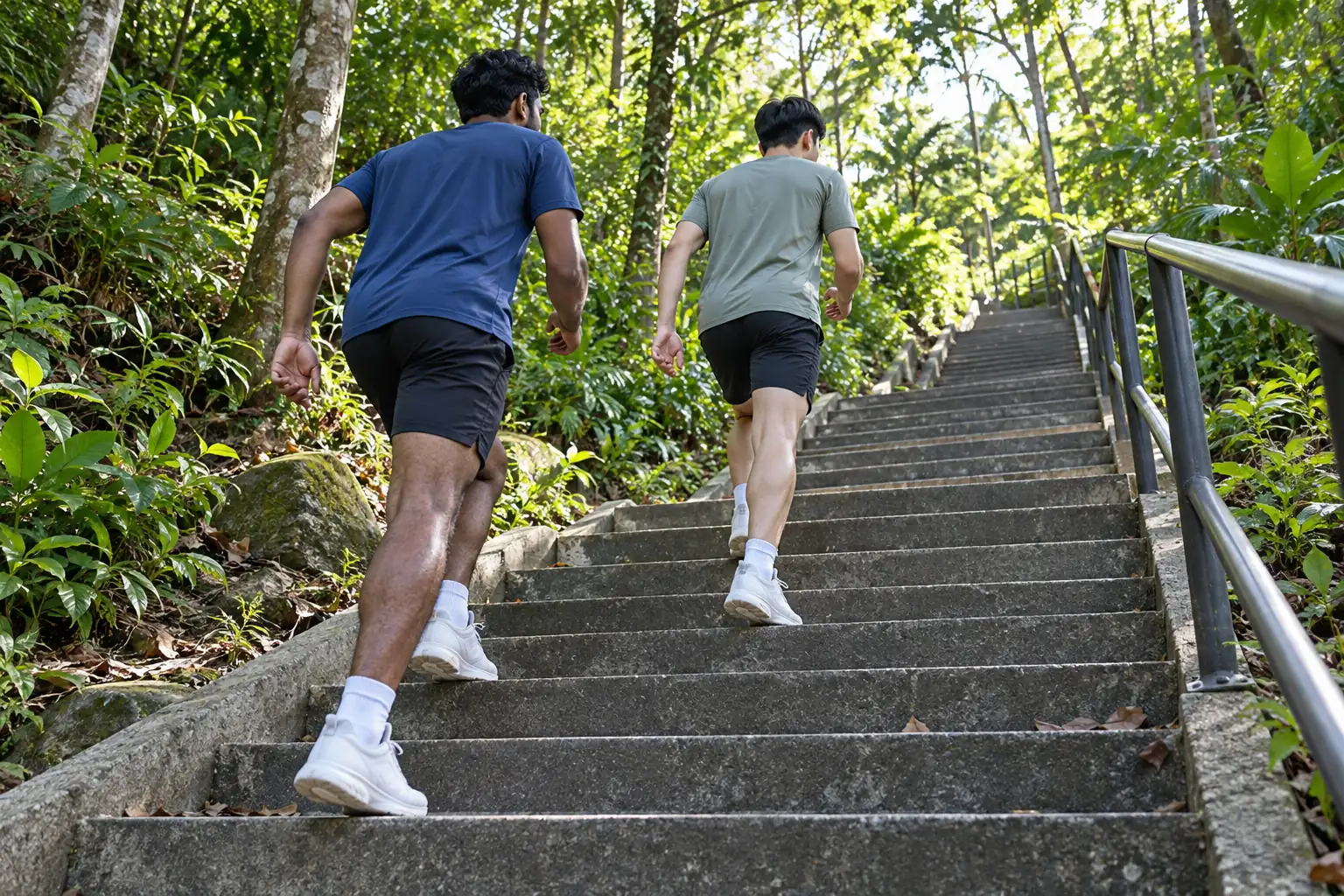
Most pre-enlistees may spend the months before enlistment in a relatively sedentary lifestyle. Then, after enlistment, they are introduced to route marches, obstacle courses, physical training sessions, and long operational hours carrying heavy loads. This abrupt shift sometimes places stress on joints, tendons, and muscles that have not been conditioned for that demand.

Musculoskeletal injuries are commonly reported among military recruits during basic training, particularly those related to overuse from repetitive physical activity rather than a single incident  (Murphy et al., 2023).  These types of injuries make up a significant proportion of medical consultations in physically demanding training environments.

This pattern is widely observed in military and athletic populations, where rapid increases in training intensity, load, and repetition can place stress on the muscles, joints, and connective tissues.

The biomechanics of military training may also compound the risk. Prior to national service, servicemen may not be used to wearing boots for prolonged periods, walking over uneven terrain or going for extended marches at pace. These unfamiliar activities could increase the mechanical demand on the lower limbs significantly beyond what recreational sport typically produces.

What Are the Most Common NS Injuries?

Knee Injuries: A Frequently Affected Joint

Among the commonly encountered injuries, the knee joint is frequently involved. Two conditions in particular are often noted in NS-related knee issues.

1. Iliotibial Band Syndrome (ITBS) 

Occurs when the long tendon running along the outside of the thigh and knee becomes inflamed from repetitive friction. Individuals who run long distances or march for extended periods may feel a sharp, burning sensation on the outer aspect of the knee and often described as a hot band tightening with every step. It typically worsens with continued activity and eases at rest, only to return the moment training resumes.

2. Patellofemoral Pain Syndrome (PFPS) 

Often called “runner’s knee” it develops when the kneecap does not track correctly over the femur during movement. The result is a dull, aching pain around or behind the kneecap, aggravated by stairs, squatting, prolonged sitting, and downhill movement. For 

Individuals spending hours in full kit, it is a consistent and debilitating complaint.

📌Both conditions are overuse injuries. They do not require a single traumatic event as they accumulate quietly over days and weeks of training until the pain becomes impossible to ignore.

Meniscus Injuries: The One NSmen Most Often Dismiss

A meniscus tear is one of the most significant knee injuries an individual can sustain, yet its symptoms are often ignored leading to delay in diagnosis and treatment.

The meniscus is a C-shaped cartilage disc in the knee that acts as a shock absorber and stabiliser. Each knee has two — a medial meniscus on the inner side and a lateral meniscus on the outer side. Meniscus tears can occur from a sudden twisting movement under load, a direct impact, or more insidiously, through accumulated stress from repeated deep squatting, running on uneven ground, and weight-bearing rotation.

Meniscus tear is damage to the cartilage disc in the knee joint, causing pain, swelling, reduced range of motion, and in some cases, a clicking or locking sensation that prevents full knee extension.

Common meniscus injury symptoms include:

  • A sharp or deep aching pain on the inner or outer knee joint line
  • Swelling that develops over hours rather than immediately
  • A feeling of the knee “locking,” “clicking,” or “giving way”
  • Difficulty fully straightening or bending the knee
  • Pain when squatting, pivoting, or walking on uneven ground

If you recognise any of these meniscus injury symptoms after  training, early orthopaedic specialist assessment matters. Delayed treatment allows continued activity on a damaged meniscus, accelerating cartilage wear and increasing the risk of osteoarthritis. Orthokinetics provides meniscus assessment and repair for NSmen and athletes across Singapore.

Ankle Injuries During National Service

The ankle is another commonly affected area in national service injuries. The combination of running and movement across uneven terrain creates conditions which increase the risks of ankle sprains.

An ankle sprain occurs when the foot rolls inward or outward beyond its normal range of movement, overstretching or partially tearing the ligaments that stabilise the joint. Lateral ankle sprains, where the foot rolls inward, are the most common. The immediate symptoms are familiar: sudden pain at the time of the roll, followed by swelling, bruising, and difficulty bearing weight. Often, a properly worn pair of boots support the ankles and reduces the risk of inversion. However, boots alone may not be able to prevent ankle injury if the individual trips and falls, especially while carrying a heavy load when this occurs.

An inadequately treated ankle sprain can substantially increase the risk of recurrent sprains and chronic ankle instability. If this injury occurs, medical attention should be sought and if an ankle sprain does not resolve with basic RICE management within 48 to 72 hours, or if there is significant swelling and an inability to bear weight, an X-ray is often ordered to rule out fracture or ligament rupture.

Orthokinetics provides assessment and treatment for ankle sprains and ligament tears for active patients and NSmen returning to full function.

Shoulder Injuries: When Load-Bearing Becomes a Problem

Shoulder injuries represent another major category of injuries, typically driven by the load-bearing demands of combat kit, field packs, and weapons.

The rotator cuff,  a group of four muscles and their tendons surrounding the shoulder joint, is the structure most commonly affected. Under prolonged or repeated loading, these muscles may be excessively overloaded leading to micro-tears that fail to heal adequately between training sessions. Over time, micro-tears accumulate into a more significant structural injury, causing deep shoulder aching, weakness, and pain that radiates down the arm or into the neck.

What makes shoulder rotator cuff injuries particularly important to treat promptly is that the secondary effects — limited range of motion, referred pain down the arms and progressive loss of strength — develop gradually and can become significantly harder to treat the longer they are left unaddressed.

If shoulder pain affects the individual, they should seek medical attention. If the symptoms persist beyond two weeks despite rest and treatment provided, or if it is accompanied by weakness, sometimes further investigations such as MRI may provide a more accurate assessment to guide treatment. 

Orthokinetics provides specialist shoulder care and rotator cuff assessment for active patients.

How to Treat Training-Related Injuries Fast

Prompt and accurate diagnosis is important. The faster an injury is correctly identified and managed, the shorter the recovery timeline and the lower the risk of it becoming a chronic problem.

Here is a practical first-response framework for the mentioned injuries:

  1. Stop the aggravating activity immediately. Continuing to train on an acutely injured joint accelerates damage significantly.
  2. Apply RICE — Rest, Ice, Compression, Elevation. In the first 48 hours, ice applied for 15 to 20 minutes every two to three hours reduces swelling and pain.
  3. Avoid heat, alcohol, and massage in the first 48 hours. All three increase blood flow to the injured area and worsen swelling.
  4. Seek medical assessment if symptoms persist or if they are severe. Pain that does not resolve with basic management, or any joint that locks, clicks, gives way, or cannot bear weight, requires medical evaluation.
  5. Follow the full rehabilitation protocol. Returning to full training before proper healing may result in reinjury.
  6. For meniscus symptoms, locking or giving way, or persistent knee swelling that does not settle within 48 hours even after seeing a doctor, one should return to the doctor or medical officer for a re-evaluation of the condition.

 Orthokinetics offers sports injury specialist assessment for NSmen and active adults across Singapore.

How to Prevent Overuse Injuries in the Military


The most effective way to prevent overuse injuries in the military is to begin physical preparation before enlistment and not after it.

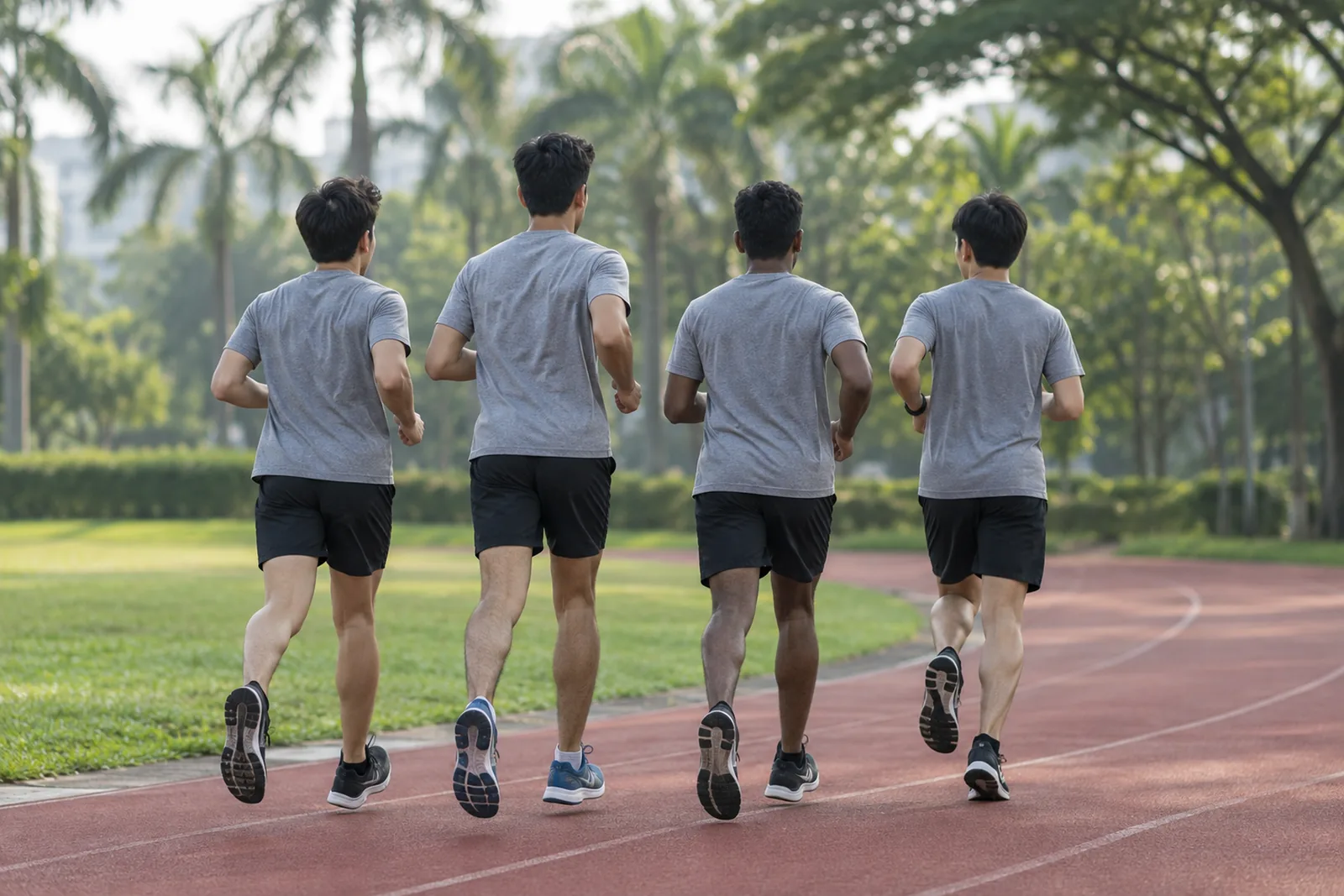
A progressive training programme started eight to twelve weeks before NS enlistment substantially reduces the abruptness of the transition from sedentary to high-intensity training. The programme does not need to be aggressive. Consistent moderate-intensity activity like running, bodyweight exercises, swimming,  builds the cardiovascular and musculoskeletal base that NS training demands.

Specific recommendations for pre-enlistment injury prevention:

  • Build running volume gradually — no more than a 10% increase in weekly distance per week
  • Strengthen the quadriceps, hamstrings, and glutes to protect the knee joint
  • Practise single-leg balance and ankle stability exercises to reduce sprain risk
  • Ensure footwear is appropriate for the volume of training being done
  • Allow adequate rest between training days — adaptation happens during recovery, not during effort

For individuals already in service, the single most important prevention strategy is honest communication with medical officers when symptoms develop. Pushing through joint pain that persists beyond 48 hours rarely produces the desired outcome — it typically delays recovery and increases the severity of the eventual injury.

Read more about sports injury prevention on the Orthokinetics resource page.

Frequently Asked Questions About National Service Injuries Singapore

1. What are the most common NS injuries in Singapore?

Some of the common injuries encountered affect the knee, ankle, and shoulder. Knee injuries include iliotibial band syndrome, patellofemoral pain syndrome, and meniscus tears. Ankle sprains from tripping and falling on uneven terrain are also frequently encountered. Shoulder rotator cuff strains from lifting loads or twisting movements are common shoulder injuries. Early assessment significantly improves outcomes across all three.

2. How do I know if I have a meniscus tear?

Meniscus injury symptoms include pain along the inner or outer knee joint line, swelling that develops over hours, a clicking or locking sensation, and difficulty fully bending or straightening the knee. If your knee locks or gives way, seek specialist assessment promptly rather than waiting for the symptoms to resolve on their own.

3. Can I continue NS training with knee pain?

Mild muscle soreness from training is expected and normal. Joint pain, particularly pain that is specific to one area and accompanied by swelling, clicking, or giving way, is not normal soreness and should not be trained through. Continuing to load an acutely injured joint can accelerate damage and significantly prolong recovery. Inform your medical officer and seek assessment. The medical officer will usually advise whether it is safe to continue training.

4. When do knee injuries require surgery?

Not all national service injuries require surgical intervention. Many meniscus injuries, IT band conditions, and patellofemoral complaints resolve with structured physiotherapy, load management, and appropriate rest. Surgery is considered when conservative treatment fails to restore function, when there is a structural injury such as a complete meniscus tear or ACL rupture, or when symptoms significantly impact daily activity and return to service. Dr. Sean Leo at Orthokinetics prioritises non-surgical treatment first and uses minimally invasive techniques when surgery is clinically indicated.

5. How long does recovery from knee injuries take?

Recovery timelines vary by injury type and severity. Iliotibial band syndrome and patellofemoral pain typically respond to physiotherapy within four to eight weeks with appropriate load management. Meniscus tears may require six to twelve weeks with conservative management, or three to six months following surgical repair. ACL injuries requiring reconstruction typically involve a nine to twelve month return-to-full-activity timeline. Early, accurate diagnosis significantly shortens the overall recovery period.

Take Your Injury Seriously — Your Knee Will Thank You

National service injuries sometimes occurs while undergoing training. Many of these injuries, when properly managed, have a good chance of complete recovery.  However, if injury symptoms are ignored, some of these issues can persist or worsen if appropriate adjustments are not made to accommodate for a recovery and rehabilitation period.

If you are experiencing persistent knee pain, meniscus injury symptoms, ankle instability, or shoulder weakness following NS training, early medical assessment generally leads to better outcomes. The longer a structural injury is left unaddressed, the more complex the treatment pathway becomes.

At Orthokinetics, Dr. Sean Leo provides specialist knee and lower limb care for NSmen, athletes, and active adults across Singapore. With over 25 years of clinical experience in knee and lower limb surgery, each patient is assessed individually, with the most conservative effective treatment recommended first, supported by access to the full spectrum of non-surgical and surgical options. 

If surgery becomes the right answer, whether for a meniscus repair, ACL reconstruction, or cartilage restoration, Orthokinetics uses minimally invasive arthroscopic techniques designed to minimise recovery time and restore full function. Explore our knee injury services or book a consultation to take the first step toward proper recovery.

Orthosports at Novena: 38 Irrawaddy Road, #10-41, Mount Elizabeth Novena Specialist Centre, Singapore 329563. Tel: +65 6734 8168

Orthosports at Connexion: 1 Farrer Park Station Road, #15-17 Connexion, Singapore 217562. Tel: +65 6435 0015

WhatsApp: +65 8439 2120 | Email: appointment@orthokinetics.sg

Book a knee assessment at Orthokinetics

Reference:

Murphy MC, Stannard J, Sutton VR, et al. Epidemiology of musculoskeletal injury in military recruits: a systematic review and meta-analysis. BMC Sports Science, Medicine and Rehabilitation. 2023;15(1):144. doi:10.1186/s13102-023-00755-8

Link: https://bmcsportsscimedrehabil.biomedcentral.com/articles/10.1186/s13102-023-00755-8

This article is for informational purposes only and does not constitute medical advice. Consult a qualified medical professional for assessment and treatment of any knee condition.

Index