
Introduction
Knee care · ACL injuries
Revision ACL reconstruction surgery (revision anterior cruciate ligament reconstruction)
Dr Sean Leo · Orthopaedic Surgeon (Specialist in Orthopaedic Surgery) · Clinical Interest: Knee Conditions, Injuries & Surgery · MBBS, MRCS (Ed), MMed (Ortho), FRCSEd (Ortho)

Dr Sean LeoOrthopaedic Surgeon, Singapore
Clinic enquiries · Not an emergency service
Illustrative image

A second reconstruction begins with understanding the first.
A second reconstruction begins with understanding the first.
Understand the problem
A second reconstruction begins with understanding the first.
Revision ACL reconstruction is a second operation to rebuild the knee ligament when a first reconstruction has not worked. Planning starts with why the first graft did not hold, including tunnel position, alignment and graft choice. Recovery is usually slower and more protected. Not every reconstruction that has not held needs another operation.[8]
You may be here because a first ACL reconstruction has not held. This is often called a failed ACL reconstruction. The knee may feel unstable again, or a scan may show a graft problem.
This page explains why it happens, how the cause is found, what a second operation involves, and what recovery and results can realistically look like. Seeing a surgeon does not mean a second operation is decided.
OrthoKinetics is Dr Sean Leo’s professional brand. Clinical consultations and treatment are provided through OrthoSports Orthopaedic & Sports Surgery.
What’s covered on this webpage
Follow the route in order, or jump to the stop you need. Stops you have read are marked.
What the ACL graft is and what it does
What the ACL graft is and what it does
What the ACL graft is and what it does
The anterior cruciate ligament (ACL) sits inside the knee. It stops the shin bone sliding forward and helps the knee cope with turning and pivoting.
In an ACL reconstruction, a graft replaces the torn ligament. It is held in tunnels drilled into the thigh bone and the shin bone, and may come from your own tissue (autograft) or, in selected settings, from a donor (allograft).[8][10]
A graft is living tissue that needs time to join the bone and mature.[8][9] Like any ligament, it can stretch or tear if overloaded, and even a strong graft can tear if it takes high-risk activity too soon.[13]

How a first reconstruction can come to fail
How a first reconstruction can come to fail
How a first reconstruction can come to fail
A reconstruction that has not held has known causes in three families. Many knees involve more than one.[8]
Technical causes
The commonest technical cause is where the bone tunnels sit. In one series of 167 people, cited in a review, technical causes accounted for 64.5% of cases. Within those, a thigh-bone tunnel in a position that did not suit the graft was the most common, at 83.1%.[8]
A new injury
A new injury is the second most common cause. In the same series it accounted for 29.1%.[8] In the MARS research group, it was the cause in 32% of 460 people in 2010 and 54% of 1,200 people in 2013.[8] Returning early to high-impact sport makes this more likely.[8]
Biological causes
Sometimes the graft does not join the bone and mature as expected. In the 167-person series this accounted for 6.4%.[8] Infection is a separate cause.[8][9]
The type of graft also matters. Donor tissue (allograft) carries a higher risk of failure, especially in younger people and when the donor tissue has been irradiated or chemically treated.[8][9]
These shares come from whole groups of people, and the 64.5% from a single series. They describe a field, not your operation, and are not a verdict on your surgeon or on you.
What a reconstruction that has not held can feel like
What a reconstruction that has not held can feel like
What a reconstruction that has not held can feel like
People describe the knee giving way again, swelling after activity, or losing confidence in the knee.
These features overlap with other problems, such as meniscus damage, stiffness or weakness. A graft can stretch without tearing completely and still cause symptoms. Only an examination and scans can show whether it has failed.
In observational studies, repeated instability and longer delays before reconstruction are associated with more secondary damage to the medial meniscus, the cushion on the inner side of the knee.[11]

When to seek assessment
When to seek assessment
When to seek assessment
An assessment is reasonable if, after a previous reconstruction, your knee gives way again, swells or feels unreliable. You do not need a dramatic new injury.
If you can, bring the operation report, scans and rehabilitation notes from the first operation.
On this page, “revision” means a second ligament reconstruction. On the knee replacement page, it means replacing a worn implant.
Safety note: A knee that becomes more painful, swollen or red after surgery, a wound that leaks, or a fever should not wait. The signs that need urgent help, and where to go for each, are listed at the end of this page. This webpage is not an emergency service.
How a failed reconstruction is assessed
How a failed reconstruction is assessed
How a failed reconstruction is assessed
The aim is to find why the first reconstruction did not hold, because the plan has to correct that cause.[8]
An assessment usually follows this order:
- The history. The first injury, the first operation, the graft used and what happened afterwards.
- An examination. How stable the knee is, and how the other structures are working.
- An MRI scan. It shows soft tissue well, such as the meniscus, cartilage and ligaments.
- A CT scan, when tunnel problems are suspected. A CT is a detailed series of X-ray slices that shows bone and drilled tunnels clearly; an MRI shows soft tissue better.[8]
- Leg alignment and the tibial slope. Alignment is how straight or bowed the leg is. The posterior tibial slope is the downhill angle of the top of the shin bone. It affects the forces that push the shin forward.[8]
- The rest of the knee. Other injuries are very common in this setting and need to be addressed for a good result.[8]
Combined, the findings show whether one operation or two makes sense.

Not every failed reconstruction needs a second operation.
Not every failed reconstruction needs a second operation.
Not every failed reconstruction needs a second operation.
Some people do well without a second operation. This is a recognised path, not giving up on the knee.[8]
Non-surgical care may suit people who:[8]
- have no recurring instability;
- have a sedentary lifestyle;
- have advanced arthritis;
- do not wish to undergo the rehabilitation that surgery needs.
Non-surgical care means structured rehabilitation and changes to activity. It does not restore a graft that has failed. If the knee keeps giving way during sport or daily life, the conversation usually turns back towards surgery.
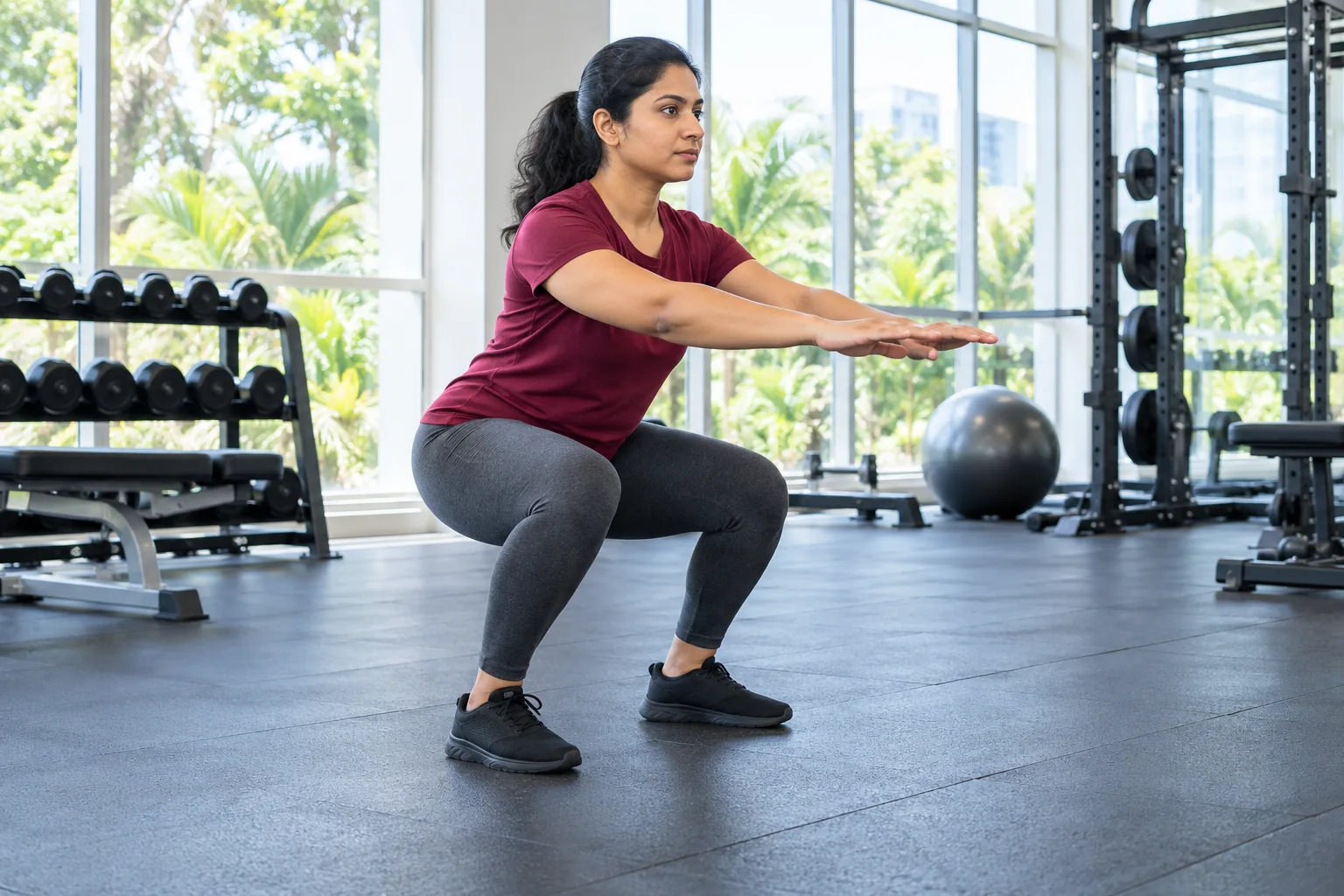
When revision surgery is considered
When revision surgery is considered
When revision surgery is considered
A second operation enters the conversation after assessment. A scan alone does not decide it.
It is usually discussed when the knee keeps giving way despite appropriate rehabilitation, when giving way happens during activities you value, and when a cause that can be corrected has been found.[8]
Problems elsewhere in the knee, such as the meniscus, cartilage or alignment, can change the discussion.[8]
The research gives no fixed checklist; the judgement is made with your treating clinician.
Structure / Patient / Goal
Structure / Patient / Goal
Deciding together
Structure / Patient / Goal: deciding what matters
No single feature decides the plan, including age, sport or what a scan shows. A revision asks more of you than the first operation, so the decision is weighed honestly.
S
Structure: what held the first graft back?
Structure is what the assessment found: tunnel position, meniscus or cartilage damage, alignment and slope, and the tissue available.[8]
P
Patient: who is making the decision?
Patient is you as a whole person: your age, activity, health, the effort you put into your first rehabilitation, and whether you can commit to a longer one.[8]
G
Goal: what do you want to do?
Goal is daily life, work, and whether you want to return to pivoting sport. Return to the same level of sport is less common after revision than after a first reconstruction.[8]
Your plan
Why the first reconstruction did not hold shapes the second.
Why the first reconstruction did not hold shapes the second.
Why the first reconstruction did not hold shapes the second.
The tunnels
Tunnel position and width shape the plan. A tunnel in a poor position, or one that has widened, may need attention first.[8] In the research, tunnels of 14 mm or more, or tunnels that overlap critically, were typically bone grafted first. That is a usual practice pattern, not a rule.[8]
One operation or two
In a one-stage revision, the new graft goes in at the same operation. In a two-stage revision, bone grafting comes first. The new graft is placed at a second operation, once the bone graft has consolidated.[7][8]
Two stages reflect the state of the tunnels, not a problem at the first operation.
What the research shows
In a cohort of 88 people, 39 had one-stage and 49 had two-stage revision. Outcomes, satisfaction and failure rates were not significantly different; failure rates were 10.3% and 6.1% in the two groups.[7] Patients were not randomly assigned and the series came from a single surgeon, so it cannot rank the two approaches.
The graft the second time
What was used the first time limits what is left. Own tissue from another source, or donor tissue, may be discussed.[10]
In the large MARS revision study, graft re-tear at 6 years was 5.8% overall. It was 3.5% with autograft and 8.4% with allograft.[3] People with a patellar-tendon autograft were 4.2 times less likely to re-tear than people with a patellar-tendon graft from a donor (95% confidence interval 1.56 to 11.27).[3]
Graft choice in that study was not randomised, and the groups differed. The figures are associations that inform a shared decision; they do not show that donor tissue causes a re-tear.[3]
This fits the 2022 AAOS guideline, which advises surgeons to consider autograft over allograft, particularly in young and active patients.[10] The graft choices video explains the options.
Correcting the cause
Correcting leg alignment or the slope of the shin bone, and treating meniscus, cartilage or other ligament injuries, may be part of the plan.[8] The combined-procedures section below covers these.
What revision surgery involves
What revision surgery involves
What revision surgery involves
Revision surgery follows the plan made at assessment.[8] In broad order:
- The old graft or hardware is removed or worked around, where that is needed.
- The tunnels are reused, adjusted or bone grafted. Bone grafting belongs to a staged plan.
- The new graft is placed.
- Other problems in the knee are treated at the same operation, where planned.[7][8]
A revision can be more involved than the first operation, because hardware, scar tissue and tunnel preparation can add steps.
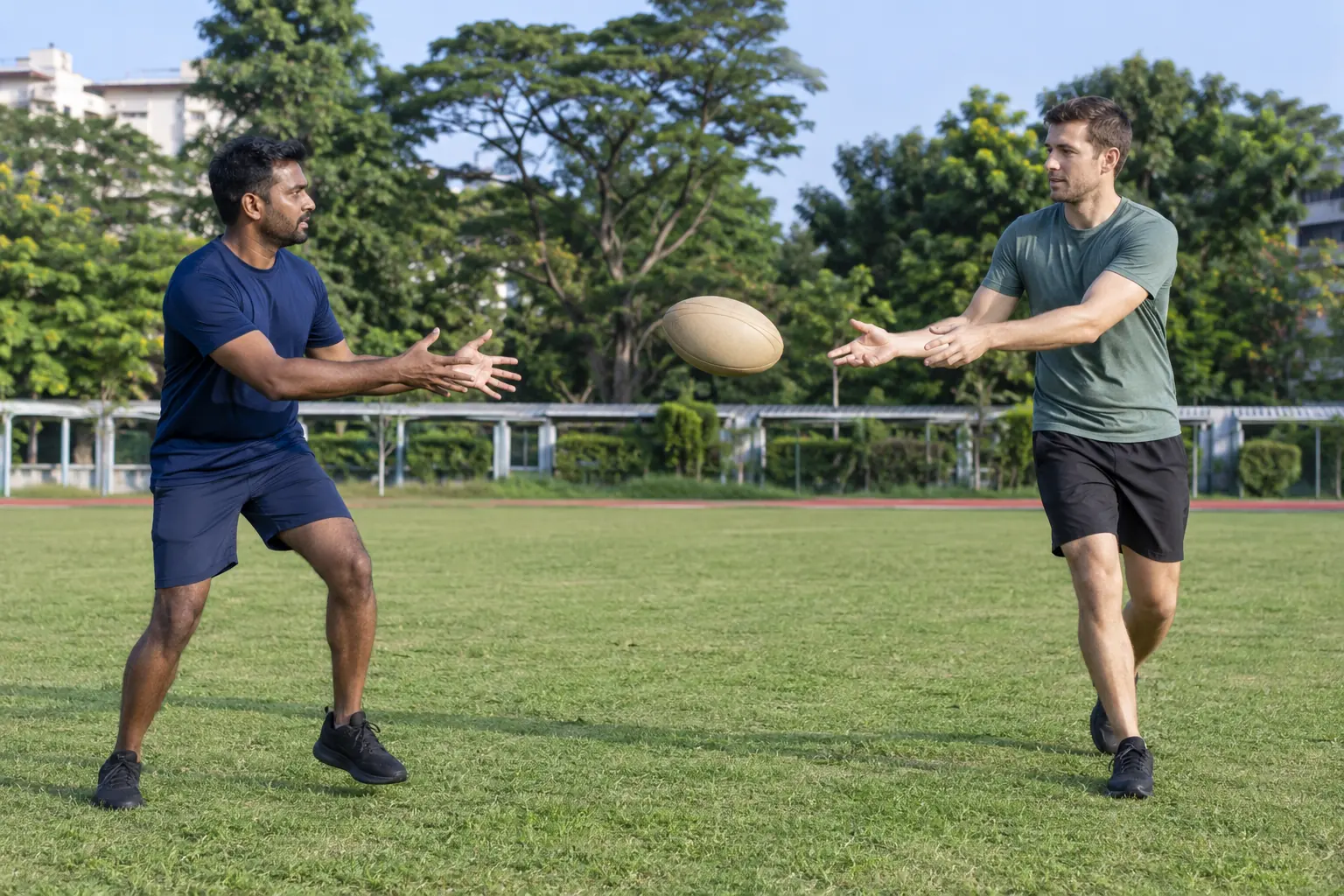
Recovery after revision is usually slower and more protected.
Recovery after revision is usually slower and more protected.
Recovery
Recovery after revision is usually slower and more protected.
Recovery after revision is typically slower and more protected than after a first reconstruction. This is more marked when bone grafting or other procedures are needed.[8]
No pooled rehabilitation protocol exists for revision, so this page gives no weeks or months. Your clinician sets milestones for you. Timelines on the ACL page describe a first reconstruction and do not apply directly to a revision.[8]
Recovery will look familiar from a first reconstruction: protect the knee, rebuild strength and movement quality, then reintroduce running and sport-specific work. Milestones, not dates, clear each stage. The calendar alone is not clearance to return to sport.[11]
For recovery after knee ligament surgery in general, see the knee ligament reconstruction recovery guide.
A staged plan means two recoveries, with a gap between them. A meniscus repair, a cartilage procedure or an alignment operation at the same time can also alter weight-bearing, motion and sport timelines.[8][11]
How progress is judged
Return-to-sport testing usually takes into account full motion, no pain or swelling, adequate strength and hop symmetry (hopping about as far on the injured leg as on the other), controlled landing and alignment, psychological readiness and sport-specific exposure.[11]
Risks and complications of revision surgery
Risks and complications of revision surgery
Risks and complications of revision surgery
Revision carries a higher chance of the graft failing again. The figures below differ because studies define failure differently.
- Graft failure. In a pooled review of 21 studies and 863 people, objective graft failure after revision was 13.7% ± 2.7% (95% confidence interval 8.0% to 19.4%). That is three to four times the failure rate after a first reconstruction, and outcome scores were lower.[1]
- Another operation. In the MARS study, 11% of 1,205 people had a further operation within 2 years, and 16% by 6 years.[2][3] These include meniscus work and surgery for stiffness. They are not all graft ruptures.[2] Donor tissue (odds ratio 1.79) and age under 20 (about double the risk) were linked with more reoperation.[2]
- Stiffness and front-of-knee pain. Stiffness (arthrofibrosis) and pain at the front of the knee can follow revision, particularly with patellar-tendon grafts. Overall, complications are more common than after a first reconstruction.[4][8]
- Risks of any knee surgery. These include infection, blood clots (deep-vein thrombosis) and anaesthetic complications.[11]
“Failure” in studies can include a knee that never became stable, not only a graft re-tear. One review found that 12 of 16 series reported graft re-tear in under 5%, yet overall failure, including clinical failure without a re-tear, exceeded 20% in a third of the series.[4] That gap comes from how failure is defined.
These are group figures from different studies and eras, not your personal odds. How much each risk matters depends on your graft, knee, procedure and rehabilitation.[1][4][11]
Safety note: After any knee surgery, a knee that becomes more painful, swollen or red, a leaking wound or a fever needs urgent attention. The urgent signs list at the end of this page says where to go.
How outcomes compare with a first reconstruction
How outcomes compare with a first reconstruction
How outcomes compare with a first reconstruction
Many people improve after revision. In one meta-analysis cited in a review, 73% had good outcomes.[8] Results are, on average, less good than after a first reconstruction.[1][8]
Return to sport is where the difference shows most:
- A systematic review of athletes found 13% to 69% returned to their pre-injury level. Between 56% and 100% returned to sport at any level.[5]
- A meta-analysis found 52% returned to their pre-injury level, and 84% returned to some sport.[6]
- A third meta-analysis, cited in a review, found 43% returned to the same level, significantly lower than after a first reconstruction.[8]
The ranges are wide because studies included different people and definitions. The review authors conclude that patient expectations must be kept realistic.[5][8]
Reconstruction has not been shown reliably to prevent osteoarthritis. A revision is not a promise of preventing it.[11]

Other procedures may be combined with a revision.
Other procedures may be combined with a revision.
Other procedures may be combined with a revision.
Other problems are common when a reconstruction has not held, so extra procedures are sometimes planned in the same operation.[8]
Extra support on the outer side of the knee
Lateral extra-articular tenodesis (LET) and anterolateral ligament (ALL) reconstruction are extra support procedures on the outer side of the knee. After a previous graft has failed, one of them may be considered. The LET and ALL video explains them.[14]
The meniscus
If the meniscus was damaged during the unstable period, it may be repaired where suitable. A repair done with ligament surgery lengthens rehabilitation. See the meniscus repair page.[8][12]
Leg alignment
If leg alignment contributed to the failure, correcting it may be part of the plan.[8]
Cartilage
Damaged cartilage can be treated in the same operation in selected situations.[8]
Additions depend on the knee, and needing one does not mean the operation went badly.

OrthoKinetics Recovery Reflection
Recovery reflection
What would it mean to treat a second recovery as a continuation?
A second recovery can feel like going back to the beginning. It is not. The strength you built, the way you learned to listen to your knee and the routines you kept all stay with you. The road may be longer this time. You are not starting from nothing.
Starting again is not starting from nothing.
Illustrative image

 With you through the seasons
Meet Dr Sean Leo
Meet Dr Sean Leo
A consultant orthopaedic surgeon whose clinical focus is the knee, sports injuries and the lower limb.
- Dr Sean Leo is a consultant orthopaedic surgeon. OrthoKinetics is his professional brand; clinical services are provided through OrthoSports Orthopaedic & Sports Surgery at Mount Elizabeth Novena Specialist Centre and Connexion, Farrer Park Hospital.
- His clinical interests include sports injuries, including those in adolescent athletes; ligament reconstruction; realignment surgery; cartilage repair and joint-preservation approaches; knee replacement; and technology-assisted hip and knee surgery.
- The consistent aim is to return people to meaningful function and activity while avoiding unnecessary downtime.
- Qualifications: MBBS, MRCS (Ed), MMed (Ortho), FRCSEd (Ortho).
More detail: Meet Dr Sean Leo
- Training and career: Dr Leo trained in medicine at the National University of Singapore and served in the Singapore Armed Forces Medical Corps from 2000 to 2012, where his work included the care of soldiers in physically demanding roles. He completed postgraduate orthopaedic training in 2009 and a one-year clinical fellowship at Royal North Shore Hospital in Sydney, Australia, before joining Changi General Hospital as an orthopaedic consultant in 2012, where he later held the positions of Senior Consultant and Director of the Hip and Knee Service. With seniority, his educational contribution has evolved towards mentorship and support for junior doctors.

Questions people often ask
Common revision ACL reconstruction questions
Common revision ACL reconstruction questions
How do I know my graft has failed?
Only an assessment can show it. Giving way, swelling and lost confidence overlap with other problems, and a graft can stretch without tearing completely. An examination and scans show whether it has failed.
Can it be done in one operation?
Sometimes. In a one-stage revision the new graft goes in at the same operation. A two-stage plan bone grafts first and places the new graft later.[7][8]
Is recovery longer the second time?
Usually it is slower and more protected, more so with bone grafting or other procedures.[8] A staged plan means two recoveries.[8]
When can I return to sport after revision?
No date fits everyone. Between 13% and 69% of athletes returned to their pre-injury level in one systematic review.[5]
Are the risks higher the second time?
Graft failure was three to four times more common than after a first reconstruction in a pooled review. Recovery is also typically slower and more protected.[1][8]
Does this apply to other ligaments?
This page covers the ACL only. Research on revision of other knee ligaments is much more limited, so ACL findings should not be assumed to apply.[8]
How much does revision ACL surgery cost?
A cost estimate is individual. The cost, MediSave and insurance section covers it.
Costs and insurance
Costs and insurance
Practicalities
Cost, MediSave and insurance

Ask the clinic team for current information about fees, panel status, pre-authorisation and expected payment arrangements. Insurance coverage and out-of-pocket costs depend on the individual policy and the insurer’s decision; no coverage is guaranteed.
Each individual condition is unique — implants used, time taken, and other factors contribute to the overall estimate. The estimate will be provided to you by the clinic should you decide on surgical management, and will also be used to assist in obtaining pre-authorisation from insurance where applicable.
A cost estimate for surgery can be given only after a consultation and assessment, once a surgical plan has been developed. A surgical estimate separates surgeon, anaesthetist, hospital or facility, implant and consumable costs, and the MOH publishes national fee benchmarks for common procedures. For how costs, MediSave and insurance work in Singapore, see Costs, insurance and MediSave, explained.
Insurance panels. Dr Sean Leo, Orthopaedic Surgeon, is on the specialist panels of Great Eastern (GE Panel), HSBC Life (HSBC Life Shield) and Singlife (Singlife Shield), and on the Prudential Panel. AXA Insurance Singapore became part of HSBC Life in 2023, and former AXA Shield plans are now HSBC Life Shield plans.
Corporate health plans. Dr Leo is on the panels of both Alliance Medinet and iXchange, which administer medical benefits for many company health plans. If your company plan uses either panel, you can see Dr Leo as a panel doctor.
If your company uses a different panel. Some company plans still let you see a doctor of your choice outside their panel, then claim reimbursement. This varies from plan to plan, as may the co-payment, so please check your benefits with your company’s HR department.
Panel arrangements change from time to time, so please confirm with your insurer or your company’s plan administrator before your appointment.
Dr Leo is on the panels shown. If your insurer is not listed, you may ask whether co-management with an Orthosports surgeon partner on that panel is clinically and administratively appropriate. Orthosports surgeon partners are collectively on the panels of all Shield plans.
Specific benefits, pre-authorisation, reimbursement and cashless treatment depend on the individual policy and insurer approval and are not guaranteed.
Ready to book? The appointment section is at the end of this page.
Arrange a consultation: the appointment section is further down this page.
Sources
References
References
- Wright RW, Gill CS, Chen L, et al. Outcome of revision anterior cruciate ligament reconstruction: a systematic review. J Bone Joint Surg Am. 2012;94(6):531-536. PMID 22438002. PMCID PMC3298683.
- MARS Group, Wright RW, et al. Two-year outcomes after revision ACL reconstruction. J Orthop Res. 2020. PMID 31840832. PMCID PMC7225036. DOI 10.1002/jor.24562.
- MARS Group. Patient-reported outcomes, graft rerupture, and reoperation 6 years after revision ACL reconstruction. Am J Sports Med. 2021. PMID 34260326. PMCID PMC9236596. DOI 10.1177/03635465211027170.
- Grassi A, Kim C, Marcheggiani Muccioli GM, Zaffagnini S, Amendola A. What is the mid-term failure rate of revision ACL reconstruction? A systematic review. Clin Orthop Relat Res. 2017;475(10):2484-2499. PMID 28493217. DOI 10.1007/s11999-017-5379-5.
- Glogovac G, Schumaier AP, Grawe BM. Return to sport following revision anterior cruciate ligament reconstruction in athletes: a systematic review. Arthroscopy. 2019;35(7):2222-2230. PMID 31272644. DOI 10.1016/j.arthro.2019.01.045.
- Grassi A, Zaffagnini S, Marcheggiani Muccioli GM, Neri MP, Della Villa S, Marcacci M. After revision anterior cruciate ligament reconstruction, who returns to sport? A systematic review and meta-analysis. Br J Sports Med. 2015;49(20):1295-1304. PMID 26062956. DOI 10.1136/bjsports-2014-094089.
- Mitchell JJ, et al. Outcomes after 1-stage versus 2-stage revision anterior cruciate ligament reconstruction. Am J Sports Med. 2017;45(8):1790-1798. PMID 28419808. DOI 10.1177/0363546517698684.
- Tapasvi S, Shekhar A. Revision ACL reconstruction: principles and practice. Indian J Orthop. 2021;55(2):263-275. PMID 33927805. PMCID PMC8046893. DOI 10.1007/s43465-020-00328-8.
- Samitier G, et al. Failure of anterior cruciate ligament reconstruction. EFORT Open Rev. 2015. PMID 26550585.
- American Academy of Orthopaedic Surgeons. Management of Anterior Cruciate Ligament Injuries: Evidence-Based Clinical Practice Guideline. Published 22 August 2022. Summary: Brophy RH, Lowry KJ. J Am Acad Orthop Surg. 2023;31(11):531-537. doi:10.5435/JAAOS-D-22-01020. PMID 36727995.
- OrthoKinetics. ACL reconstruction surgery: assessment, options and recovery. https://orthokinetics.sg/knee-specialist-singapore/acl-reconstruction-surgery/
- OrthoKinetics. Meniscus repair surgery. https://orthokinetics.sg/knee-specialist-singapore/meniscus-repair-surgery/
- OrthoKinetics. Graft choices in ACL reconstruction (video). https://orthokinetics.sg/videos/graft-choices-in-acl-reconstruction/
- OrthoKinetics. LET and ALL: extra procedures sometimes added to ACL surgery (video). https://orthokinetics.sg/videos/let-and-all/
Final next step
Final next step
Next step
Final next step
Reading about a problem is a starting point. An assessment brings together the history, an examination where needed and any useful tests, and helps you and your clinician decide what to do next. How much physical examination is needed is a matter of clinical judgement. It may be limited when pain makes an examination unreliable, or when imaging clearly shows a problem that matches the symptoms, such as a fracture seen on an X-ray or an MRI scan that clearly shows an injury consistent with the symptoms. The Singapore Medical Council and the UK General Medical Council both allow remote medical consultations, where a physical examination is not possible, with safeguards: the doctor must be clear about the limits of an opinion formed without an examination, and whether an in-person examination is needed, or referral to other services, is left to the clinical judgement of the attending doctor.
Signs that need urgent help
Some symptoms should not wait for a routine appointment. Each item below says where to go.
After an injury
- The kneecap has slipped out of place and is still out, or the knee looks deformed. Go to an emergency department. If the kneecap went back into place by itself, arrange an early assessment.
- The leg looks twisted or bent, a bone is showing, there is a deep cut, or the foot or leg turns cold, pale, numb, blue or white. Go to an emergency department or call 995.
- You cannot lift your leg up with the knee kept straight, and you may feel a gap just above or just below the kneecap. Arrange an urgent same-day assessment.
At any time
- The knee is stuck and will not straighten, or it is very painful and you cannot move it or put weight on it. Arrange an urgent same-day assessment.
- The knee is suddenly very painful, hot, red and swollen, especially with a fever or feeling generally unwell. Go to an emergency department or call 995.
- One calf or thigh is newly painful and swollen. Arrange an urgent same-day assessment. If you also feel short of breath or have chest pain, call 995.
After knee surgery
- The operated knee becomes more painful, swollen or red, a wound is leaking, or you develop a fever. Contact your surgical team straight away. If you cannot reach them the same day, go to an emergency department. If you feel very unwell, go to an emergency department. If you are short of breath or have chest pain, call 995.
If you are admitted by the doctor at the urgent care centre of one of these private hospitals, the Parkway Pantai hospitals (Mount Elizabeth Orchard, Mount Elizabeth Novena, Gleneagles and Parkway East), Farrer Park Hospital and Thomson Medical Centre, you may ask for Dr Sean Leo to be your attending orthopaedic surgeon. If you are instead discharged and referred for orthopaedic follow-up, you may contact the clinic to arrange an appointment. Both are subject to the hospital’s admission processes and to Dr Leo’s availability.
Was this page helpful?
Arrange a consultation
Appointments are arranged through the OrthoSports clinic team. Send your details below, or message or call the clinic.
Leave your details and the clinic team will reply to arrange a time.
Message the clinic on WhatsApp
-
38 Irrawaddy Road, #10-41 Mount Elizabeth Novena Specialist Centre, Singapore 329563 Map for Orthosports@Novena (opens Google Maps)
-
1 Farrer Park Station Road, #15-17 Connexion, Singapore 217562 Map for Orthosports@Connexion (opens Google Maps)
WhatsApp is for clinic enquiries only. It is not an emergency service and is not monitored for urgent care. Website or messaging contact is not an emergency-response service. For a medical emergency, use your local emergency service.
- OrthoKinetics does not provide emergency or urgent care through this webpage or its WhatsApp contact.