Introduction
OrthoKinetics · Dr Sean Leo
Orthopaedic care begins with understanding what matters to you.
Start with what is causing the problem, not with a procedure.
- A joint or ligament problem is rarely just about the joint. It can interrupt work, sport, sleep or confidence in ordinary movement.
- The most useful first question is not “Which procedure do I need?” It is “What is causing this, how is it affecting me, and which reasonable options fit my goals?”
- OrthoKinetics is Dr Sean Leo’s professional brand and patient-education platform. Consultations and treatment are provided through OrthoSports Orthopaedic & Sports Surgery.
- These pages help you understand your condition and take part in the decision. They cannot diagnose an individual problem.

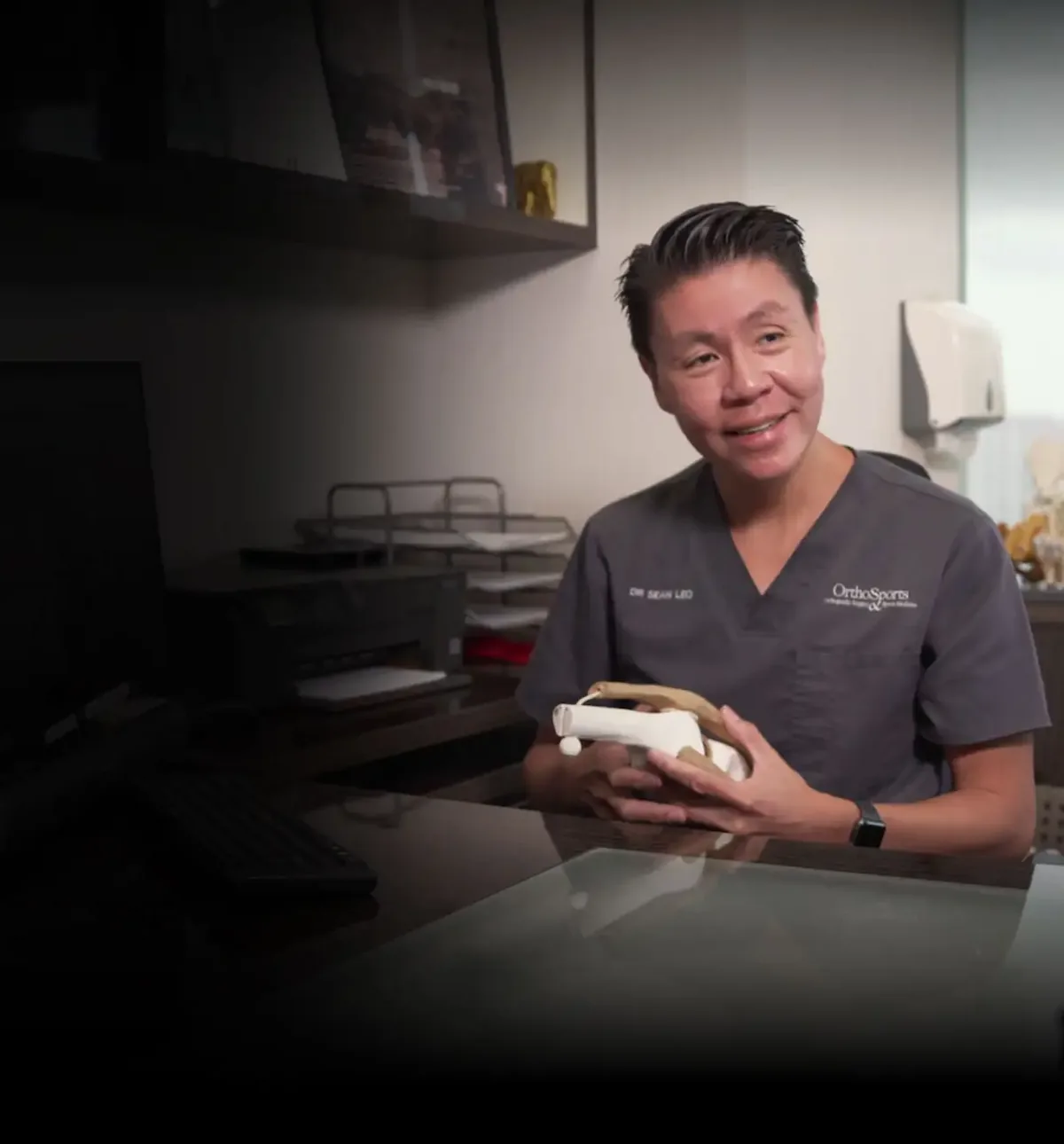
Dr Sean LeoOrthopaedic Surgeon, Singapore
Clinic enquiries · Not an emergency service
Start with a regionKneeShoulderFoot & ankleHip
At a glance
At a glance
Start here
The short version of how care works here.
- Understanding the problem comes before choosing a treatment. The “right” option depends on the diagnosis, your circumstances and what you want to get back to.
- Decisions are shared: the clinician brings examination findings and evidence, you bring your priorities, and the plan is agreed together.[1]
- Imaging can add useful information, especially after an injury, but it is read together with your history and examination rather than deciding treatment by itself.[2][3]
- Reasonable options may include education, rehabilitation, monitoring, injections in selected conditions, or surgery when the diagnosis and goals support it.
- Knees and sports injuries are a particular focus, but shoulder, foot and ankle and hip problems are approached in the same way.
- To see how recovery is organised, read what recovery after surgery involves.
Website or messaging contact is not an emergency-response service.
What’s covered on this webpage
Follow the route in order, or jump to the stop you need. Stops you have read are marked.

How OrthoKinetics approaches care
How care works
How care works here
Understand first. Decide together. Keep the plan open to change.
- Orthopaedic problems are personal. Two people with the same scan can need very different plans, because their symptoms, health, work, sport and priorities differ.
- This platform exists to help you understand your own situation well enough to take part in the decision, not to steer you towards a particular treatment.
- A clear explanation comes first: what is likely causing your symptoms, what the examination shows, and what any test adds.
- Uncertainty is discussed openly. Sometimes the most honest answer is that the picture needs time or reassessment to become clear.
- Decisions are shared. There is no single correct treatment for everyone, and no treatment can be guaranteed to deliver a particular result.[1]
- Plans can change. Choosing a non-operative pathway first does not close the door to surgery later, and choosing surgery does not remove the need for rehabilitation and realistic expectations.
- Knees and sports injuries are a particular focus. The same approach applies to the other regions described below.
More detail: How OrthoKinetics approaches care
- What each side brings to a shared decision: the clinician contributes examination findings, evidence about the benefits, burdens and uncertainties of each option, and experience; you contribute your goals, concerns and practical constraints. The plan that follows is one you both consider reasonable, not one imposed by a scan or a schedule.[1]
- Why plans get revisited: response to rehabilitation, new symptoms, or a clearer diagnosis can all justify looking again at the plan.
- Dr Leo’s clinical work concentrates on knee, sports injury and lower-limb conditions, from ligament and meniscus injuries to cartilage problems, kneecap instability and arthritis. The knee care hub explains how knee decisions are made and routes you to detailed condition pages.

Meet Dr Sean Leo
Meet Dr Sean Leo
A consultant orthopaedic surgeon whose clinical focus is the knee, sports injuries and the lower limb.
- Dr Sean Leo is a consultant orthopaedic surgeon. OrthoKinetics is his professional brand; clinical services are provided through OrthoSports Orthopaedic & Sports Surgery at Mount Elizabeth Novena Specialist Centre and Connexion, Farrer Park Hospital.
- His clinical interests include sports injuries, including those in adolescent athletes; ligament reconstruction; realignment surgery; cartilage repair and joint-preservation approaches; knee replacement; and technology-assisted hip and knee surgery.
- The consistent aim is to return people to meaningful function and activity while avoiding unnecessary downtime.
- Qualifications: MBBS, MRCS (Ed), MMed (Ortho), FRCSEd (Ortho).
More detail: Meet Dr Sean Leo
- Training and career: Dr Leo trained in medicine at the National University of Singapore and served in the Singapore Armed Forces Medical Corps from 2000 to 2012, where his work included the care of soldiers in physically demanding roles. He completed postgraduate orthopaedic training in 2009 and a one-year clinical fellowship at Royal North Shore Hospital in Sydney, Australia, before joining Changi General Hospital as an orthopaedic consultant in 2012, where he later held the positions of Senior Consultant and Director of the Hip and Knee Service. With seniority, his educational contribution has evolved towards mentorship and support for junior doctors.

Three things shape every management decision: Structure, Patient and Goal
Structure / Patient / Goal
Every plan weighs the same three things: the joint, you, and your goal.
This is a way of organising a shared conversation. It is not a score, a test or an automatic indication for any treatment.
S
Structure
Structure: what is actually happening in the joint or limb.
More detail: Structure
- Structure covers your symptoms, the anatomy and how it is functioning, the examination findings, and the results of any investigation that was genuinely worth doing.
P
Patient
Patient: you as a whole person, including health, circumstances, concerns and practical constraints.
More detail: Patient
- Patient covers your general health, circumstances, concerns, preferences, tolerance for risk and recovery time, and the practical constraints of work, family and finances.
G
Goal
Goal: the activities, function and independence you value and want to regain.
More detail: Goal
- Goal covers what you want to get back to, whether that is a return to competitive sport, walking without worry, or simply sleeping through the night.
Your plan
More detail: Three things shape every management decision: Structure, Patient and Goal
- The same three questions are considered whatever the joint and whatever the option under discussion, from watchful monitoring to rehabilitation, injection or surgery.
When structure, patient and goal are considered together, some problems are best managed without an operation, some benefit from one, and many need time and reassessment before the balance is clear.

Recovery Reflection
Recovery reflection
What would a good next step look like if it were guided by clarity rather than urgency?
Illustrative image
Explore by region
Explore by region
Your region
Start with the region that is troubling you. Each has its own assessment logic.
- Each pathway explains how the problem is usually assessed and what the reasonable options are. None of them replaces an individual assessment.

Knee line
Knee
- Knee symptoms can follow a sudden injury, develop with repeated loading, or change over time with osteoarthritis.[2][3][4][5][6][7][8]
- Pain, swelling, stiffness, catching and giving way occur in more than one condition, so a careful history and examination matter before a scan or a treatment is interpreted.
More detail: Knee
- Common knee problems include sudden sports or twisting injuries, pain at the front of the knee, meniscus problems, gradually increasing stiffness or pain from osteoarthritis, and kneecap or ligament instability. Not every knee problem needs surgery: for many conditions, structured rehabilitation and other non-operative care are genuine options, and each condition needs its own assessment.[2]
- Partial or total knee replacement is discussed as one option within shared decision-making for advanced joint disease, never as a consequence of age alone.

Shoulder line
Shoulder
- The shoulder pages describe how common presentations — shoulder pain, frozen shoulder, rotator cuff problems and dislocation — are usually assessed, and what the appointment process involves.

Foot & ankle line
Foot and ankle
- Ankle sprains and ligament tears, Achilles tendon problems and ankle fractures are among the problems seen in clinic. Assessment considers the mechanism of injury, the examination findings and the demands you place on the foot and ankle.

Hip line
Hip
- Hip symptoms are assessed in the same way: the story, the examination, selective imaging and your goals. Dr Leo’s clinical interests include technology-assisted hip and knee surgery and multidisciplinary care after hip fracture.

Why timely assessment and an accurate diagnosis matter
When to seek help
Most joint problems are not emergencies. A few are. Know the difference.
- Timely assessment means matching the speed of assessment to the risk, not treating every ache as an emergency.[2]
- Persistent pain or swelling, a joint that repeatedly gives way, movement that stays restricted, or symptoms that limit work, sleep or activity are reasonable reasons to arrange a routine assessment.
- There is no evidence-based rule that every episode lasting one or two weeks needs specialist care.
- An accurate diagnosis protects you from the wrong treatment. The same words (pain, swelling, clicking or giving way) can describe very different problems, and pain intensity alone does not identify the tissue involved.
- Tests are selected, not routine. Not every problem needs a scan, and no scan decides treatment by itself.[3]
Symptoms that should not wait
- Some symptoms should not wait for a routine appointment, whether or not there has been an injury. Seek urgent medical attention if a joint becomes hot and swollen and you feel feverish or generally unwell; if you develop new numbness or weakness in a limb, or any loss of bladder or bowel control; or if pain is accompanied by unexplained weight loss or is unrelenting at night.
- After a significant injury, seek emergency assessment if the limb is visibly deformed, there is an open wound, or the hand or foot beyond the injury becomes unusually cold, pale, numb or weak. These features can indicate a fracture, dislocation or injury to blood vessels or nerves.[9][10]
- A knee that is truly locked and cannot straighten after an injury also needs prompt clinical assessment.
- If you are unsure how urgent the situation is, use the appropriate local emergency or urgent-care service. Website or messaging contact is not an emergency-response service.
More detail: Why timely assessment and an accurate diagnosis matter
- How tests are chosen: an X-ray is useful when fracture or arthritic change is suspected. MRI can add useful information about ligaments, menisci, cartilage and other soft tissues to the overall clinical picture, and can provide a good source of additional information when pain and guarding make examination difficult. Findings are matched to your symptoms, examination and goals.[2][3]
- Why the story comes first: a careful history and examination narrow the possibilities before any test is ordered.
What a usual appointment involves
Your appointment
Your visit
A consultation is a structured conversation, not a commitment to a procedure.
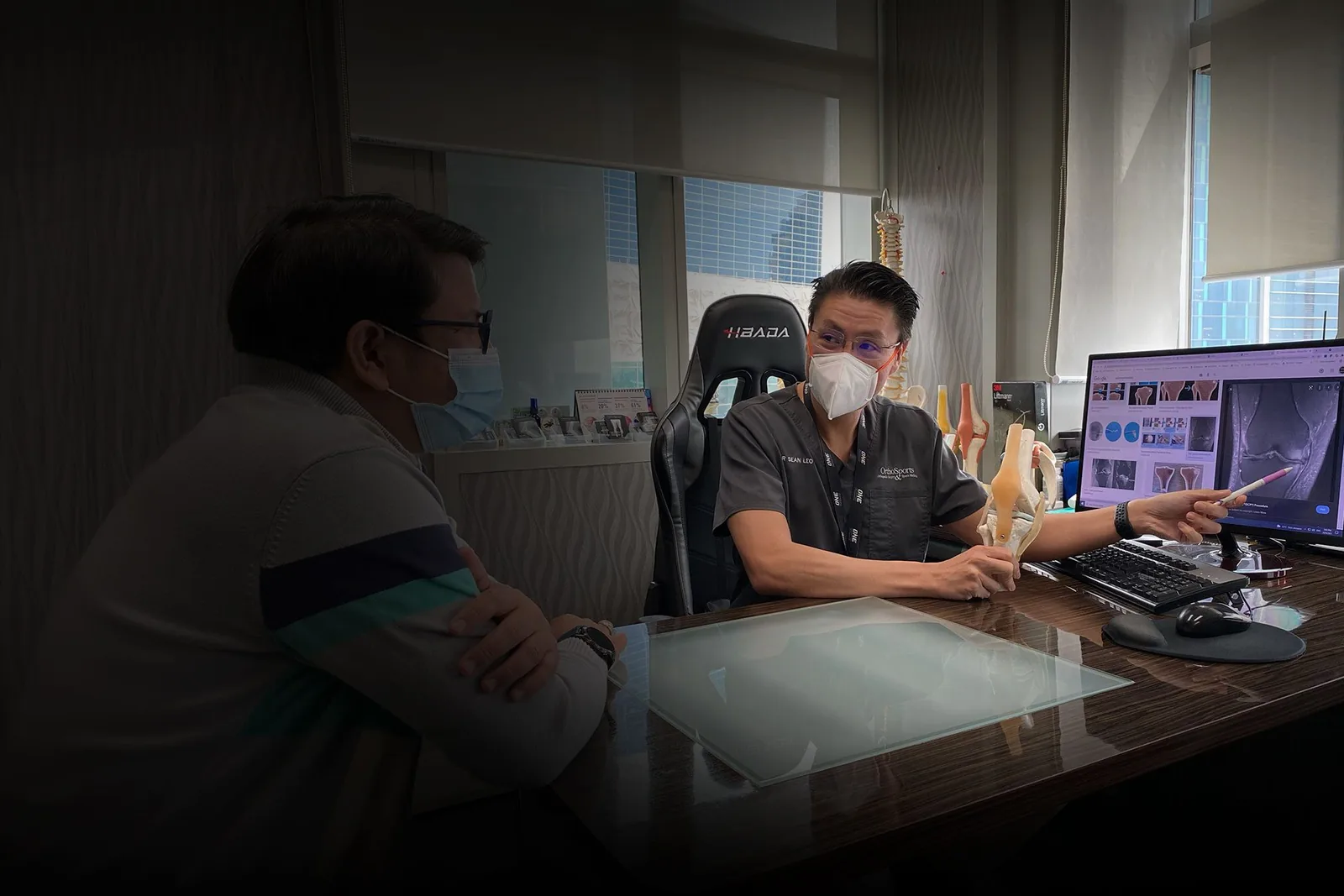

1
Talk through your symptoms, history and goals
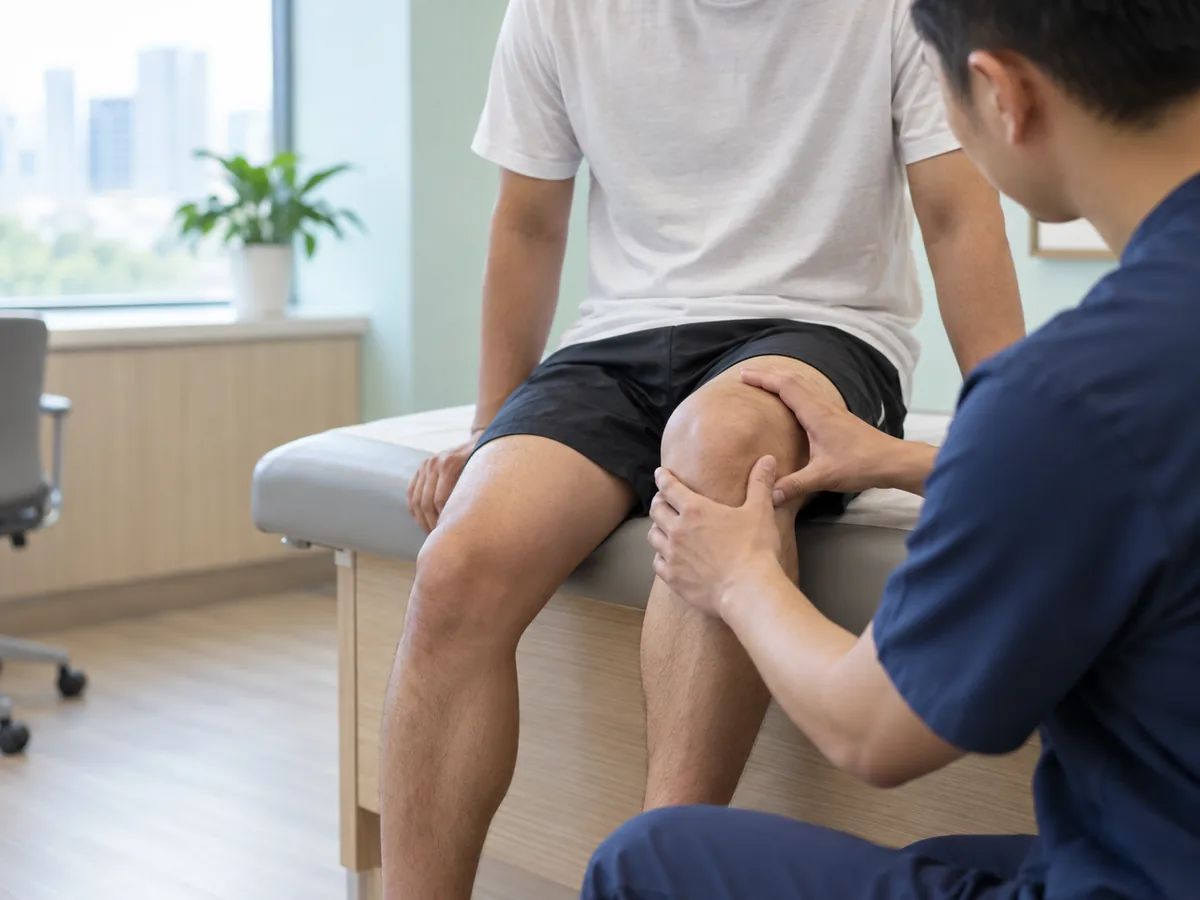
2
Clinical examination
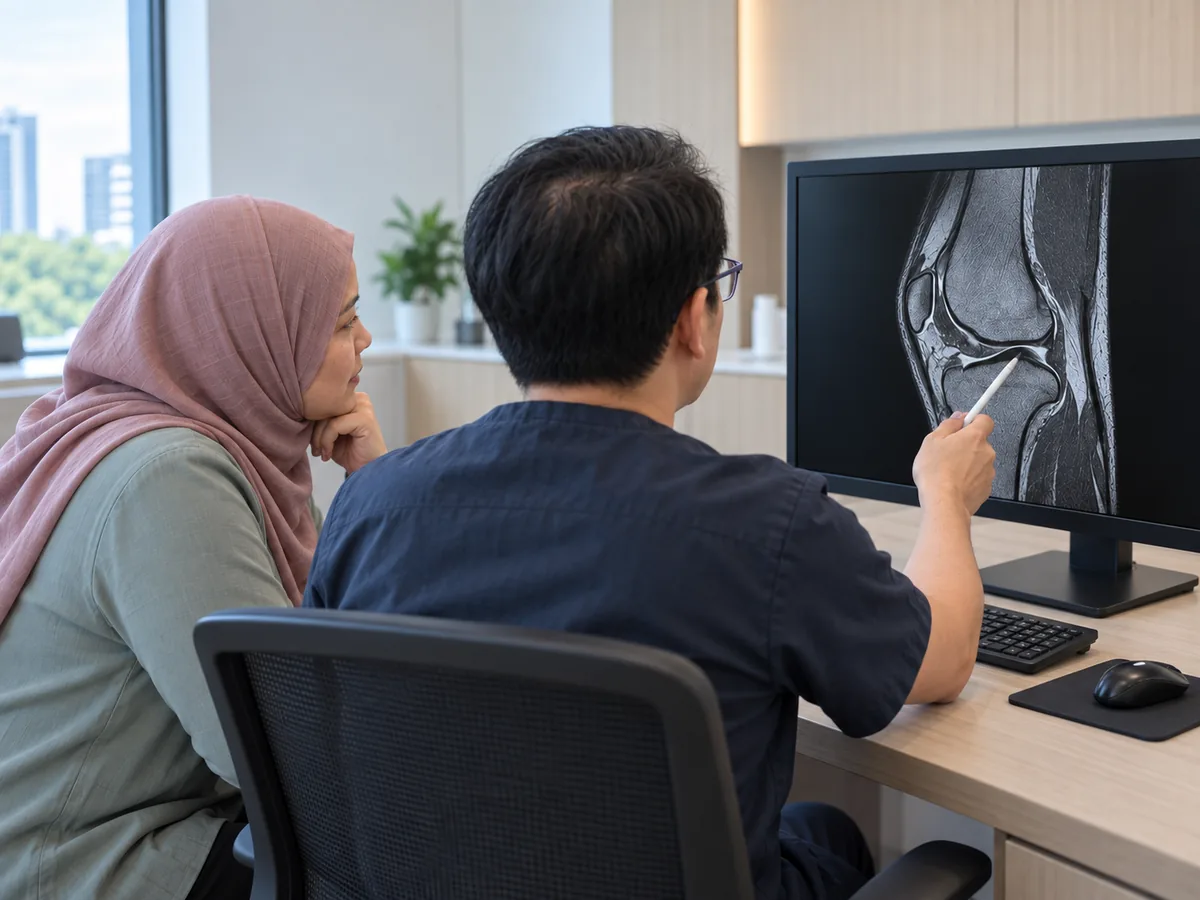
3
Investigations only when they are likely to change the picture

4
Review the options and agree next steps
We hope every patient leaves the consultation feeling reassured, with a mutually agreed next step and a plan for follow-up.[1]
More detail: What a usual appointment involves
- The conversation covers when and how the problem started, what makes it better or worse, previous injuries and treatment, your general health, and what you need the joint to do for work, activity and daily life.[2]
- The examination looks at movement, swelling, tenderness, strength, stability and, where relevant, the joints above and below. Pain and guarding soon after an injury can limit what can be tested, so a repeat examination is sometimes more informative than forcing an early conclusion.
- An X-ray, MRI or other test is arranged when it will help clarify the diagnosis or change management, not as a routine step. Existing reports and images you bring are reviewed first.[3]
- The review covers the likely explanations, the reasonable non-operative and operative pathways, their benefits, risks, uncertainties and recovery implications, and what would make the plan change.[1]
- The sequence describes what usually happens; the detail varies with the problem.
- It helps to bring available reports or imaging and to prepare questions such as: What is the likely source of my symptoms? Is there more than one contributing factor? What can reasonably be tried without surgery? If an operation is considered, what is its purpose and what are the alternatives? Which risks and uncertainties matter most in my circumstances? How will progress be judged?
Video · Dr Sean Leo
How to Prepare for Your First Visit to an Orthopaedic Surgeon
- What to gather before a first consultation, including previous imaging and reports
- How noting when and how symptoms started can help the visit
- What a first consultation usually covers: history, examination and imaging

Billing and insurance questions
Costs and insurance
Know the likely costs and check your own policy before treatment.
- Costs can include the consultation, imaging, rehabilitation, facility and professional fees, implants or graft-related items where relevant, and follow-up. Ask for a current written estimate before treatment.
- Bring your policy details, any referral or pre-authorisation requirements, and previous reports or imaging. Check the terms of your own policy, including excess, co-payment and pre-authorisation rules, before treatment.
- To see how fees, MediSave and insurance fit together, read how costs, MediSave and insurance work.
Insurance panels. Dr Sean Leo, Orthopaedic Surgeon, is on the specialist panels of Great Eastern (GE Panel), HSBC Life (HSBC Life Shield) and Singlife (Singlife Shield), and on the Prudential Panel. AXA Insurance Singapore became part of HSBC Life in 2023, and former AXA Shield plans are now HSBC Life Shield plans.
Corporate health plans. Dr Leo is on the panels of both Alliance Medinet and iXchange, which administer medical benefits for many company health plans. If your company plan uses either panel, you can see Dr Leo as a panel doctor.
If your company uses a different panel. Some company plans still let you see a doctor of your choice outside their panel, then claim reimbursement. This varies from plan to plan, as may the co-payment, so please check your benefits with your company’s HR department.
Panel arrangements change from time to time, so please confirm with your insurer or your company’s plan administrator before your appointment.
Dr Leo is on the panels shown. If your insurer is not listed, you may ask whether co-management with an Orthosports surgeon partner on that panel is clinically and administratively appropriate. Orthosports surgeon partners are collectively on the panels of all Shield plans.

Benefits, pre-authorisation, letters of guarantee, panel rules and reimbursement depend on your individual policy and the insurer’s decision. Neither panel status nor co-management guarantees coverage, approval or cashless treatment. The clinic team can assist with claim paperwork, including personal accident, hospitalisation or travel claims from other insurers, but cannot promise the outcome.

Consultations at Novena and Farrer Park
Locations and contact
Appointments are arranged through the OrthoSports clinic team at either location.
Dr Sean Leo practises through OrthoSports Orthopaedic & Sports Surgery at both locations. Appointments are arranged through the OrthoSports clinic team.
Contact routes
Email (all correspondence): appointment@orthokinetics.sgWhatsApp: +65 8439 2120 (clinic enquiries only; not an emergency service and not monitored for urgent care)

 With you through the seasons
Questions people often ask
Common questions
Practicalities
Common questions
What is OrthoKinetics?
OrthoKinetics is Dr Sean Leo’s professional brand and patient-education platform. Clinical services are provided through OrthoSports Orthopaedic & Sports Surgery.
Who provides clinical care?
Dr Sean Leo is a consultant orthopaedic surgeon. Consultations and treatment described on this site are provided through OrthoSports, subject to current scope and individual assessment.
Does seeing an orthopaedic surgeon mean I will need surgery?
No. The appointment is an assessment, not a commitment to a procedure. Reasonable options depend on the diagnosis, your circumstances and your goals. Surgery is one possible pathway for some conditions, not an assumed outcome.
Do I need a scan before an appointment?
Not automatically. Existing reports or images can be useful, but the need for further imaging depends on the concern and what the assessment shows.
What should I bring to an appointment?
Bring relevant reports or images if you have them, details of previous treatment and a current medicine list. It can also help to write down your questions and the activities you hope to regain.
Where should I start for a knee concern?
Start with the Knee Hub for an overview of knee symptoms, assessment and treatment pathways. It can help you find more specific information without asking you to diagnose the problem yourself.

A calm next step
A calm next step
If symptoms are affecting what matters to you, a structured assessment is a reasonable next step.
- An assessment can clarify the problem and the reasonable options, and you can decide from there.
For a new severe injury or the urgent features described above, use an appropriate emergency or urgent-care service rather than waiting for a routine appointment.
Sources
References
References
- Elwyn G, Frosch D, Thomson R, Joseph-Williams N, Lloyd A, Kinnersley P, et al. Shared decision making: a model for clinical practice. J Gen Intern Med. 2012;27(10):1361-1367. doi:10.1007/s11606-012-2077-6. PMID:22618581. PubMed
- Bunt CW, Jonas CE, Chang JG. Knee pain in adults and adolescents: the initial evaluation. Am Fam Physician. 2018;98(9):576-585. PMID:30325638. PubMed
- Brophy RH, Lowry KJ. American Academy of Orthopaedic Surgeons Clinical Practice Guideline Summary: Management of Anterior Cruciate Ligament Injuries. J Am Acad Orthop Surg. 2023;31(11):531-537. doi:10.5435/JAAOS-D-22-01020. PMID:36727995. PubMed
- Diermeier TA, Rothrauff BB, Engebretsen L, Lynch A, Svantesson E, Hamrin Senorski EA, et al. Treatment after ACL injury: Panther Symposium ACL Treatment Consensus Group. Br J Sports Med. 2021;55(1):14-22. doi:10.1136/bjsports-2020-102200. PMID:32661128. PubMed
- Neal BS, Lack SD, Bartholomew C, Morrissey D. Best practice guide for patellofemoral pain based on synthesis of a systematic review, the patient voice and expert clinical reasoning. Br J Sports Med. 2024;58(24):1486-1495. doi:10.1136/bjsports-2024-108110. PMID:39401870. PubMed
- Prill R, Ma CB, Wong SE, Beaufils P, Monllau JC, Arhos EK, et al. The formal EU-US Meniscus Rehabilitation 2024 Consensus: an ESSKA-AOSSM-AASPT initiative. Part II—prevention, non-operative treatment and return to sport. Knee Surg Sports Traumatol Arthrosc. 2025;33(8):3014-3024. doi:10.1002/ksa.12689. PMID:40501314. PubMed
- National Institute for Health and Care Excellence. Osteoarthritis in over 16s: diagnosis and management. NICE guideline NG226. London: NICE; 2022. Available from: nice.org.uk
- Moseng T, Vliet Vlieland TPM, Battista S, Beckwée D, Boyadzhieva V, Conaghan PG, et al. EULAR recommendations for the non-pharmacological core management of hip and knee osteoarthritis: 2023 update. Ann Rheum Dis. 2024;83(6):730-740. doi:10.1136/ard-2023-225041. PMID:38212040. PubMed
- National Institute for Health and Care Excellence. Fractures (complex): assessment and management. NICE guideline NG37. London: NICE; 2016, updated 2022. Available from: nice.org.uk
- NHS Tayside. Knee: orthopaedic and trauma surgery referral guidance. Right Decisions Scotland. Available from: rightdecisions.scot.nhs.uk