
Introduction
Recovery after surgery · Foot and ankle surgery
Foot and ankle surgery recovery: what to expect, stage by stage
Dr Sean Leo · Orthopaedic Surgeon (Specialist in Orthopaedic Surgery)MBBS, MRCS (Ed), MMed (Ortho), FRCSEd (Ortho)

Dr Sean LeoOrthopaedic Surgeon, Singapore
Clinic enquiries · Not an emergency service
Illustrative image

Recovery after foot and ankle surgery moves in stages.
Recovery after foot and ankle surgery moves in stages.
Recovery
Recovery after foot and ankle surgery moves in stages.
Foot and ankle surgery recovery moves in stages: protection, then progressive loading, then rebuilding strength. It covers five common operations: Achilles tendon repair, ankle ligament tightening, ankle fracture fixation, bunion (hallux valgus) correction and ankle fusion. The ranges are typical published guidance; your treating team sets your pace.[1][2][3]
Without surgery? See ankle sprain and Achilles tendonitis.
OrthoKinetics is Dr Sean Leo’s professional brand and patient-education platform. Clinical consultations and treatment are provided through OrthoSports Orthopaedic & Sports Surgery. Dr Sean Leo is a specialist orthopaedic surgeon who cares for foot and ankle problems.
What’s covered on this webpage
Follow the route in order, or jump to the stop you need. Stops you have read are marked.
Every recovery asks healing to come first.
Every recovery asks healing to come first.
Every recovery asks healing to come first.
Different tissues heal on different clocks. Bone knits. A tendon remodels as load is added in stages. Ligaments regain stability through rehabilitation.[1][2][3][4]
The boot, cast or special shoe protects healing tissue while it gains strength, not to slow you down.
After an ankle fusion (joining the joint surfaces so the bone knits as one), the bone must unite before it takes full weight.[3]

What recovery asks depends on the operation and the person.
What recovery asks depends on the operation and the person.
What recovery asks depends on the operation and the person.
The operation sets the broad shape of recovery. Your health, habits and home shape the rest.
Older age and smoking are each linked with more complications after Achilles repair.[5] These are group findings, not predictions for you. Stopping smoking before surgery is encouraged.
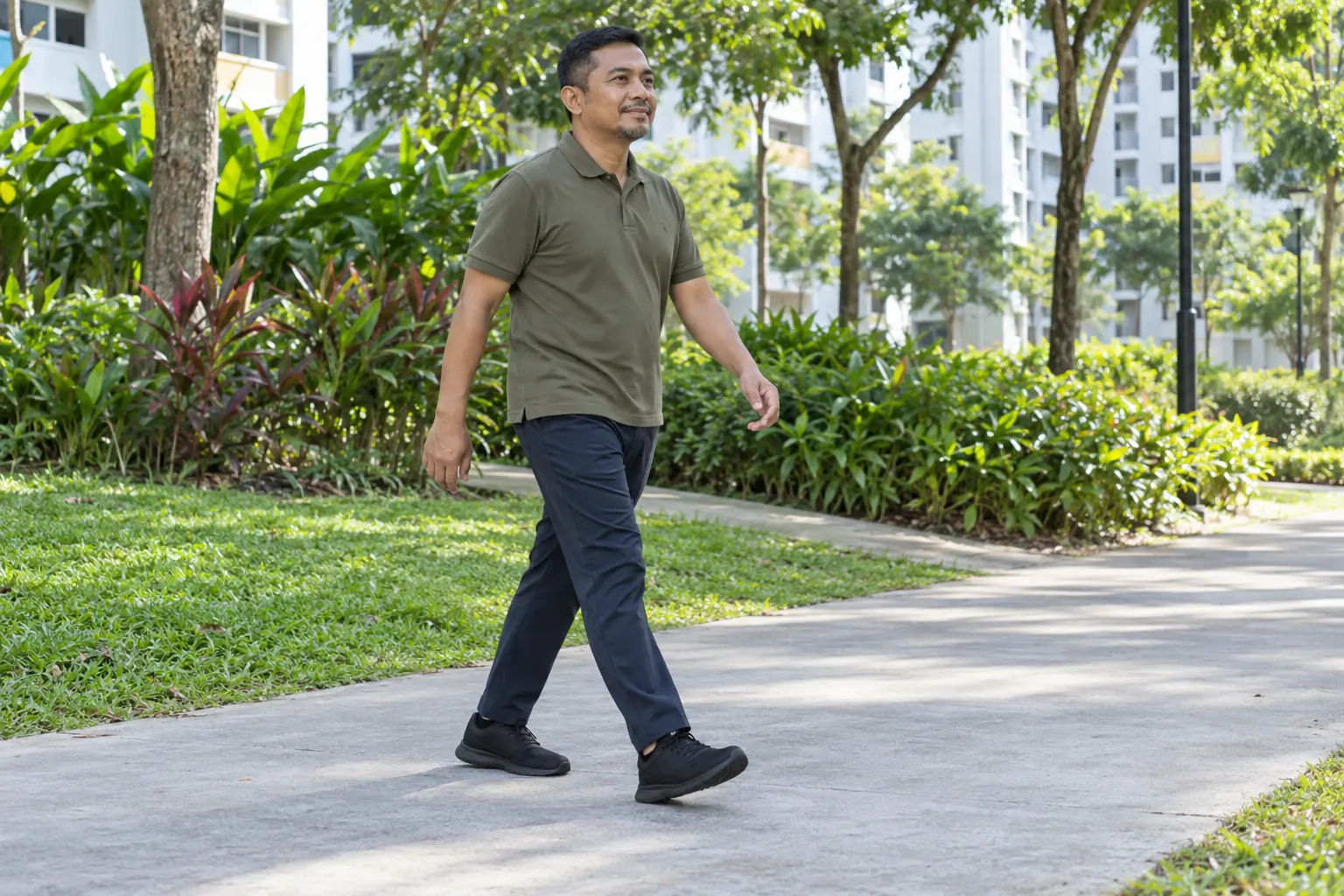
The early weeks centre on protection, elevation and the boot.
The early weeks centre on protection, elevation and the boot.
The early weeks centre on protection, elevation and the boot.
Whichever operation you had, the early weeks share a shape. A boot, cast or special shoe protects the limb, and you move around less. After bunion surgery or ankle fusion, the foot is kept raised for the first two weeks or so to settle swelling.[1][2][3][6]
Your surgical team gives the exact protection and weight-bearing rules.[7]
For general wound, pain and swelling care, see the post-surgery recovery page.
When should you contact your team during recovery
When should you contact your team during recovery
When should you contact your team during recovery?
Contact your team promptly if you notice any of these.[8][9]
- A leaking or smelly wound, spreading redness, fever, or worsening pain or swelling.
- A cast or boot that feels too tight, new numbness or tingling, or severe pain not eased by raising the foot. Contact your team the same day.
- Pain or swelling in one calf, or a warm, discoloured leg. These can be signs of a blood clot (deep vein thrombosis, DVT). Arrange an urgent same-day assessment.
- Sudden breathlessness or chest pain. Call 995.
The full urgent-signs list is under Final next step.
Progress is checked against healing, not just the calendar.
Progress is checked against healing, not just the calendar.
Progress is checked against healing, not just the calendar.
Follow-up visits check the wound, swelling and next step. After an ankle fusion, X-ray checks at around 6 weeks and 3 months show whether the bone is knitting before loading increases.[3]
Your discharge plan
Before you leave hospital, you should have the plan in writing: the follow-up date, your medicines, wound care, and when it is reasonable to drive or be alone.[7]

Movement, physiotherapy and patience do the rebuilding.
Movement, physiotherapy and patience do the rebuilding.
Movement, physiotherapy and patience do the rebuilding.
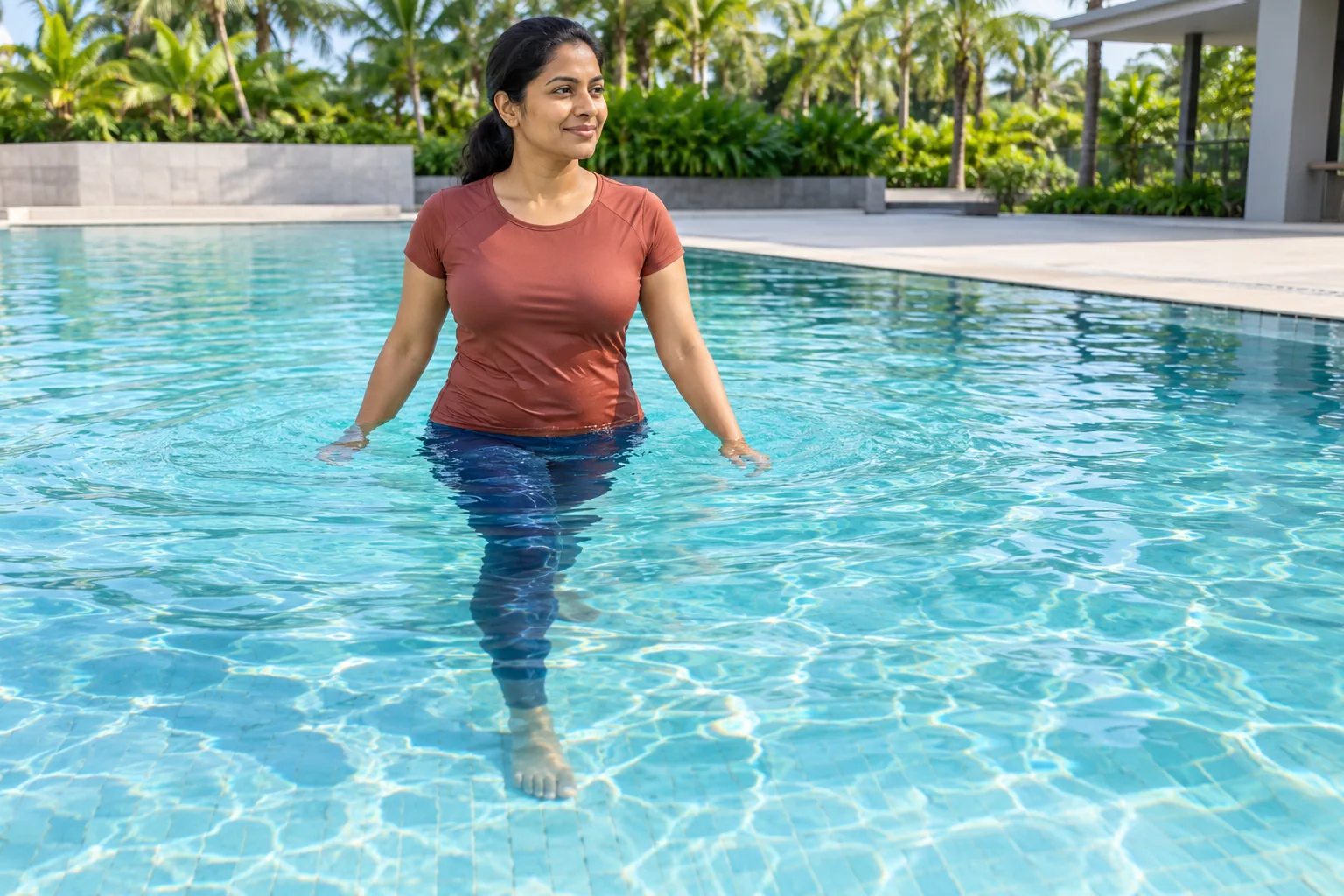
Movement returns in steps, on your team’s advice. Gentle movement within your protection rules helps blood flow, wound healing and strength.[10]
Physiotherapy then rebuilds strength and your walking pattern.
Doing too much is no shortcut, and doing nothing is not safer.
Structure / Patient / Goal
Structure / Patient / Goal
Deciding together
Structure / Patient / Goal
S
Structure: what was operated on?
Bone, tendon or ligament? Fixed, fused or realigned? What must the images show before loading increases?
P
Patient: how does recovery fit your life?
Your health, age and smoking matter, as do your stairs, work and available help.
G
Goal: what do you want back?
Painless walking, a sport, a trip or your job. Each goal has criteria for when it is reached.
Your plan
Each operation sets its own pace.
Each operation sets its own pace.
Each operation sets its own pace.
Typical published ranges. Your surgical team sets your protocol.
| Operation | Early protection | Loading and daily life | Longer arc |
|---|---|---|---|
| Achilles tendon rupture repair (surgical or non-surgical) | Boot for at least about 6 weeks, then gradual weaning.[1] | Guided weight-bearing increases step by step on either path.[1] | Full recovery commonly about 12 months, up to about 2 years for some goals.[1] About 80% return to play in pooled studies, though studies with a strict definition report lower rates.[11] |
| Ankle ligament stabilisation (Broström repair: it tightens stretched ligaments), for an ankle that keeps giving way despite 3 to 6 months of bracing and therapy[4] | Set by your surgeon. | Rehabilitation leads, guided by how the ankle responds. | There is no fixed date. |
| Ankle fracture fixation (open reduction and internal fixation, ORIF: plates and screws) | Surgery on the day of injury, the next day or after swelling settles.[2][12] | After surgery for an unstable break, full weight-bearing typically at about 6 to 8 weeks. Normal activities within about 3 to 4 months.[2][12] | Complete bone healing at about 10 to 12 weeks. National guidance says 6 to 8 weeks is usual and can be longer. Full recovery can take up to 2 years for some.[2][9] |
| Bunion correction | Usually day case. Foot raised for at least 2 weeks. Special post-operative shoe for about 6 weeks.[6][13] | Walk in the shoe as advised. Driving usually waits 6 to 8 weeks, work 2 to 12 weeks depending on the job, and sport 3 to 6 months.[6][13] | Swelling can last for months. Full settling can take up to a year.[6][13] |
| Ankle fusion, for ankle arthritis | 1 to 3 days in hospital. Below-knee cast or boot for about 12 weeks, with the leg raised much of the first 2 weeks.[3] | No weight on the ankle for roughly 4 to 6 weeks. Loading then progresses as X-rays at around 6 weeks and 3 months show the fusion knitting.[3] | The bone must unite before full loading. That takes months.[3] |
Achilles tendon rupture, ankle fracture, ankle ligament tear, bunion and ankle arthritis.

Work, driving and sport return on criteria, not dates.
Work, driving and sport return on criteria, not dates.
Work, driving and sport return on criteria, not dates.
Return to work, driving and sport follows criteria, not a calendar date, as the post-surgery recovery page explains.[14][15]
Driving. There is no standard timeline after orthopaedic surgery. It depends on strength, movement and being off medicines that impair driving.[15] After bunion surgery, driving is typically avoided for 6 to 8 weeks.[6][13]
Work. Time off depends on what the job physically asks.
Sport. Return to sport is a continuum, agreed with your clinician.[14]
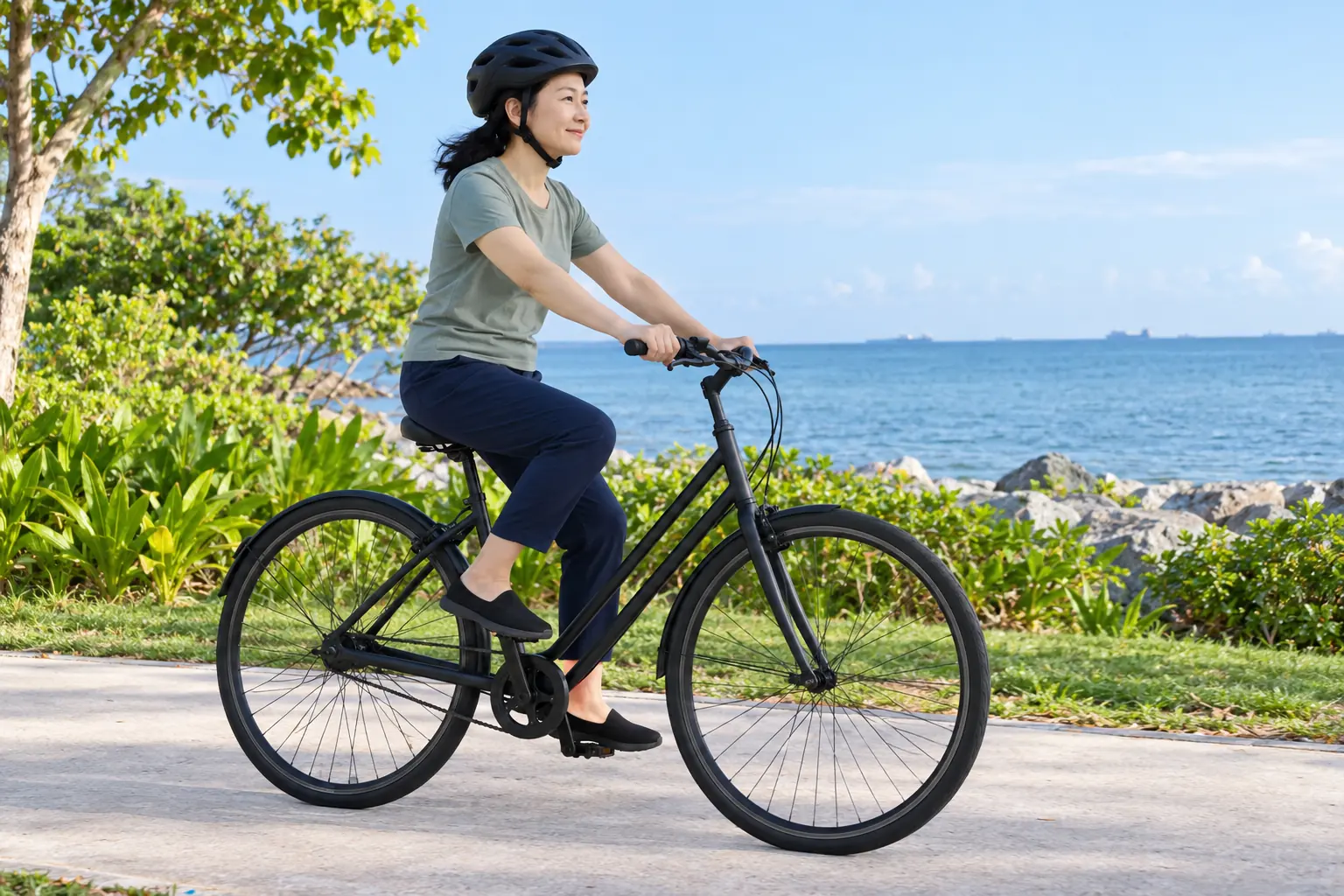
Honest expectations include a long tail.
Honest expectations include a long tail.
Honest expectations include a long tail.
- Infection and clots. The signs are listed above. Clots are a recognised risk while a leg is immobilised, and your team considers prevention.[8]
- Problems specific to one operation. After Achilles repair, re-rupture is uncommon on either path.[16] A bone may fail to knit (nonunion) after fusion or fracture surgery. A bunion can return, and the toe may be weaker, stiffer or not perfectly straight.[6]
- A long tail. Stiffness and swelling can last many months, even after a fracture has healed.[2] In one long-term series of surgically treated ankle fractures, 63% reported stiffness, 45% swelling and 50% pain five years on: one study’s group, not a forecast.[17]
The first weeks at home reward preparation.
The first weeks at home reward preparation.
The first weeks at home reward preparation.
A little preparation makes the boot weeks easier, and your team advises what your operation needs. The full checklist is on the preparing for surgery page.
- Clear loose rugs and floor clutter. Plan a rest spot where you can keep the leg raised.[7]
- Choose non-slip, slip-on footwear for your other foot.
- Arrange help for the first days. Someone must collect you and stay with you, and you cannot drive for at least 24 hours after a general anaesthetic.[18]
More on routes
Think through HDB stairs, MRT walking distances and wet floors.

OrthoKinetics Recovery Reflection
Recovery reflection
What is yours to do in recovery?
A bone knits at its own rate. A tendon remodels on its own schedule. What is yours is the conditions: the protection you keep, the load you add when allowed, each day’s faithfulness.
What if the boot and exercises are the whole job?
They are not obstacles to the real job. They are the job. You are the keeper of the conditions, and that is enough.
Illustrative image

 With you through the seasons
Meet Dr Sean Leo
Meet Dr Sean Leo
A consultant orthopaedic surgeon whose clinical focus is the knee, sports injuries and the lower limb.
- Dr Sean Leo is a consultant orthopaedic surgeon. OrthoKinetics is his professional brand; clinical services are provided through OrthoSports Orthopaedic & Sports Surgery at Mount Elizabeth Novena Specialist Centre and Connexion, Farrer Park Hospital.
- His clinical interests include sports injuries, including those in adolescent athletes; ligament reconstruction; realignment surgery; cartilage repair and joint-preservation approaches; knee replacement; and technology-assisted hip and knee surgery.
- The consistent aim is to return people to meaningful function and activity while avoiding unnecessary downtime.
- Qualifications: MBBS, MRCS (Ed), MMed (Ortho), FRCSEd (Ortho).
More detail: Meet Dr Sean Leo
- Training and career: Dr Leo trained in medicine at the National University of Singapore and served in the Singapore Armed Forces Medical Corps from 2000 to 2012, where his work included the care of soldiers in physically demanding roles. He completed postgraduate orthopaedic training in 2009 and a one-year clinical fellowship at Royal North Shore Hospital in Sydney, Australia, before joining Changi General Hospital as an orthopaedic consultant in 2012, where he later held the positions of Senior Consultant and Director of the Hip and Knee Service. With seniority, his educational contribution has evolved towards mentorship and support for junior doctors.

Questions people often ask
Common foot and ankle surgery recovery questions
Common foot and ankle surgery recovery questions
How long will I be in a boot, and when can I put weight on my foot?
Typically at least 6 weeks after an Achilles rupture, about 6 after a stable ankle fracture, about 12 after ankle fusion.[1][2][3] Weight-bearing follows your surgeon’s instructions. After surgery for an unstable ankle fracture, full weight-bearing typically starts at about 6 to 8 weeks.[2][12]
What are the warning signs of a blood clot?
Pain or swelling in one calf, or a warm, discoloured leg: contact your team promptly. Sudden breathlessness or chest pain: call 995.[8]
Is my operation claimable under MediSave or insurance?
A cost estimate comes only after consultation, assessment and a surgical plan, and cover depends on your policy. See Costs, insurance and MediSave, explained.
Costs and insurance
Costs and insurance
Practicalities
Cost, MediSave and insurance

A cost estimate for surgery can be given only after a consultation and assessment, once a surgical plan has been developed.
Each condition is unique, so implants, operating time and other factors shape the estimate. The clinic provides it if you choose surgery, and uses it to help with insurance pre-authorisation where applicable.
A surgical estimate separates surgeon, anaesthetist, hospital or facility, implant and consumable costs, and the MOH publishes national fee benchmarks for common procedures. For how costs, MediSave and insurance work in Singapore, see Costs, insurance and MediSave, explained.
Insurance panels. Dr Sean Leo, Orthopaedic Surgeon, is on the specialist panels of Great Eastern (GE Panel), HSBC Life (HSBC Life Shield) and Singlife (Singlife Shield), and on the Prudential Panel. AXA Insurance Singapore became part of HSBC Life in 2023, and former AXA Shield plans are now HSBC Life Shield plans.
Corporate health plans. Dr Leo is on the panels of both Alliance Medinet and iXchange, which administer medical benefits for many company health plans. If your company plan uses either panel, you can see Dr Leo as a panel doctor.
If your company uses a different panel. Some company plans still let you see a doctor of your choice outside their panel, then claim reimbursement. This varies from plan to plan, as may the co-payment, so please check your benefits with your company’s HR department.
Panel arrangements change from time to time, so please confirm with your insurer or your company’s plan administrator before your appointment.
Dr Leo is on the panels shown. If your insurer is not listed, you may ask whether co-management with an Orthosports surgeon partner on that panel is clinically and administratively appropriate. Orthosports surgeon partners are collectively on the panels of all Shield plans.
Specific benefits, pre-authorisation, reimbursement and cashless treatment depend on the individual policy and insurer approval and are not guaranteed.
Ready to book? The appointment section is at the end of this page.
Arrange a consultation: the appointment section is further down this page.
Sources
References
References
- American Academy of Orthopaedic Surgeons (AAOS). Achilles Tendon Rupture (Tear). OrthoInfo. https://orthoinfo.aaos.org/en/diseases–conditions/achilles-tendon-rupture-tear
- American Academy of Orthopaedic Surgeons (AAOS). Ankle Fractures (Broken Ankle). OrthoInfo. https://orthoinfo.aaos.org/en/diseases–conditions/ankle-fractures-broken-ankle
- Royal National Orthopaedic Hospital NHS Trust (RNOH). A Patient’s Guide to Ankle Arthritis. rnoh.nhs.uk.
- StatPearls. NBK459212. https://www.ncbi.nlm.nih.gov/books/NBK459212/
- Stavenuiter XJR, Lubberts B, Prince RM 3rd, Johnson AH, DiGiovanni CW, Guss D. Postoperative complications following repair of acute Achilles tendon rupture. Foot Ankle Int. 2019;40(6):679-686. PMID 30808187.
- NHS. Bunions. https://www.nhs.uk/conditions/bunions/
- American Academy of Orthopaedic Surgeons (AAOS). Patient Guide to Safe Orthopaedic Surgery. OrthoInfo. https://www.orthoinfo.org/treatment/patient-guide-to-safe-surgery
- NHS. Deep vein thrombosis (DVT). https://www.nhs.uk/conditions/deep-vein-thrombosis-dvt/
- NHS. Broken ankle. https://www.nhs.uk/conditions/broken-ankle/
- NHS. Having an operation (surgery): getting back to normal. https://www.nhs.uk/tests-and-treatments/having-surgery/recovery/
- Zellers JA, Carmont MR, Grävare Silbernagel K. Return to play post-Achilles tendon rupture: a systematic review and meta-analysis of rate and measures of return to play. Br J Sports Med 2016;50(21):1325-1332. PMID 27259751.
- StatPearls. NBK542324. https://www.ncbi.nlm.nih.gov/books/NBK542324/
- NHS Lothian. A Guide to Bunion Correction Surgery. Version 1.0, approved January 2021.
- Ardern CL, et al. 2016 consensus statement on return to sport from the First World Congress in Sports Physical Therapy, Bern. Br J Sports Med 2016;50(14):853-864. PMID 27226389.
- DiSilvestro KJ, Santoro AJ, Tjoumakaris FP, et al. When can I drive after orthopaedic surgery? A systematic review. Clin Orthop Relat Res 2016;474(12):2557-2570. PMID 27492688.
- Ochen Y, Beks RB, van Heijl M, et al. Operative treatment versus nonoperative treatment of Achilles tendon ruptures: systematic review and meta-analysis. BMJ 2019;364. PMID 30617123.
- Kyriacou H, Mostafa AMHAM, Davies BM, Khan WS. Principles and guidelines in the management of ankle fractures in adults. J Perioper Pract 2021;31(11). PMID 33826430. PMC8575982. https://pmc.ncbi.nlm.nih.gov/articles/PMC8575982/. The five-year stiffness, swelling and pain figures are from Shah et al 2007, as reported in this review.
- NHS. General anaesthetic. https://www.nhs.uk/tests-and-treatments/general-anaesthesia/
Final next step
Final next step
Next step
Final next step
Reading about a problem is a starting point. An assessment brings together the history, an examination where needed and any useful tests, and helps you and your clinician decide what to do next. How much physical examination is needed is a matter of clinical judgement. It may be limited when pain makes an examination unreliable, or when imaging clearly shows a problem that matches the symptoms, such as a fracture seen on an X-ray or an MRI scan that clearly shows an injury consistent with the symptoms. The Singapore Medical Council and the UK General Medical Council both allow remote medical consultations, where a physical examination is not possible, with safeguards: the doctor must be clear about the limits of an opinion formed without an examination, and whether an in-person examination is needed, or referral to other services, is left to the clinical judgement of the attending doctor.
Signs that need urgent help
Some symptoms should not wait for a routine appointment. Each item below says where to go.
After an injury
- The ankle or foot sits at an odd angle, a bone is showing, there is a deep cut, you are in severe pain, or the toes look blue or white or feel numb. Go to an emergency department or call 995.
- You felt a sudden pop or sharp pain at the back of the heel or calf, and pushing off or rising onto your toes is difficult. Arrange an urgent same-day assessment.
- It is very painful or the pain is getting worse, the swelling or bruising is large or spreading, or it hurts to put weight on the ankle or foot. Arrange an urgent same-day assessment.
At any time
- A joint, such as the ankle, is suddenly very painful, hot, red and swollen, especially with a fever or feeling generally unwell. Go to an emergency department or call 995.
- One calf or thigh is newly painful and swollen. Arrange an urgent same-day assessment. If you also feel short of breath or have chest pain, call 995.
If you have diabetes
- You have a foot sore and a fever or feel very unwell, or the foot is cold, pale or blue. Or skin on the foot or toes has turned black, or a sore looks deep, or there is pus or redness spreading up the foot. Go to an emergency department or call 995.
- You have a new foot sore, or a foot that is hot, swollen, changed in colour or leaking fluid, without the signs above. Arrange an urgent assessment within 24 hours.
If you are admitted by the doctor at the urgent care centre of one of these private hospitals, the Parkway Pantai hospitals (Mount Elizabeth Orchard, Mount Elizabeth Novena, Gleneagles and Parkway East), Farrer Park Hospital and Thomson Medical Centre, you may ask for Dr Sean Leo to be your attending orthopaedic surgeon. If you are instead discharged and referred for orthopaedic follow-up, you may contact the clinic to arrange an appointment. Both are subject to the hospital’s admission processes and to Dr Leo’s availability.
Was this page helpful?
Arrange a consultation
Appointments are arranged through the OrthoSports clinic team. Send your details below, or message or call the clinic.
Leave your details and the clinic team will reply to arrange a time.
Message the clinic on WhatsApp
-
38 Irrawaddy Road, #10-41 Mount Elizabeth Novena Specialist Centre, Singapore 329563 Map for Orthosports@Novena (opens Google Maps)
-
1 Farrer Park Station Road, #15-17 Connexion, Singapore 217562 Map for Orthosports@Connexion (opens Google Maps)
WhatsApp is for clinic enquiries only. It is not an emergency service and is not monitored for urgent care. Website or messaging contact is not an emergency-response service. For a medical emergency, use your local emergency service.
- OrthoKinetics does not provide emergency or urgent care through this webpage or its WhatsApp contact.