
About this video
Last updated: 9 October 2026
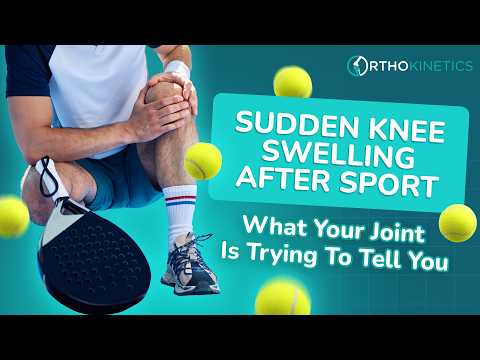
The video says knee swelling after sport usually means the joint is irritated during movement, and that what matters is why. It names a small meniscus tear that gets pinched during rotation, early cartilage wear, and a small flap or loose fragment as common causes.
Key points
- It names the meniscus, the shock absorber inside the knee, as one common cause: if a small tear gets pinched during rotation, the joint produces fluid and swelling follows later.
- It names early cartilage wear, where the surface becomes a little uneven and starts to grate under load, as another cause.
- It says sometimes a small flap or loose fragment rubs inside the joint during movement.
- The video says there may be no pain during the game, but a few hours later the knee stiffens, feels warm and becomes hard to bend.
- It says that when swelling becomes a pattern, the underlying issue usually is not settling on its own.
Questions this video answers
Why does the knee swell a few hours after sport?
The video says the swelling usually means the joint is irritated during movement. It names a small meniscus tear that gets pinched during rotation, early cartilage wear, and a small flap or loose fragment as common causes.
What are the signs the video describes?
It says there may be no pain during the game, but a few hours later the knee stiffens, feels warm and becomes hard to bend.
What does the video say about early assessment?
It says early assessment is not about rushing into treatment but about understanding what the knee is trying to cope with, and that swelling which becomes a pattern usually is not settling on its own.
Related pages
Signs that need urgent help
Some symptoms should not wait for a routine appointment. Each item below says where to go.
After an injury
- The kneecap has slipped out of place and is still out, or the knee looks deformed. Go to an emergency department. If the kneecap went back into place by itself, arrange an early assessment.
- The leg looks twisted or bent, a bone is showing, there is a deep cut, or the foot or leg turns cold, pale, numb, blue or white. Go to an emergency department or call 995.
- You cannot lift your leg up with the knee kept straight, and you may feel a gap just above or just below the kneecap. Arrange an urgent same-day assessment.
At any time
- The knee is stuck and will not straighten, or it is very painful and you cannot move it or put weight on it. Arrange an urgent same-day assessment.
- The knee is suddenly very painful, hot, red and swollen, especially with a fever or feeling generally unwell. Go to an emergency department or call 995.
- One calf or thigh is newly painful and swollen. Arrange an urgent same-day assessment. If you also feel short of breath or have chest pain, call 995.
After knee surgery
- The operated knee becomes more painful, swollen or red, a wound is leaking, or you develop a fever. Contact your surgical team straight away. If you cannot reach them the same day, go to an emergency department. If you feel very unwell, go to an emergency department. If you are short of breath or have chest pain, call 995.


