
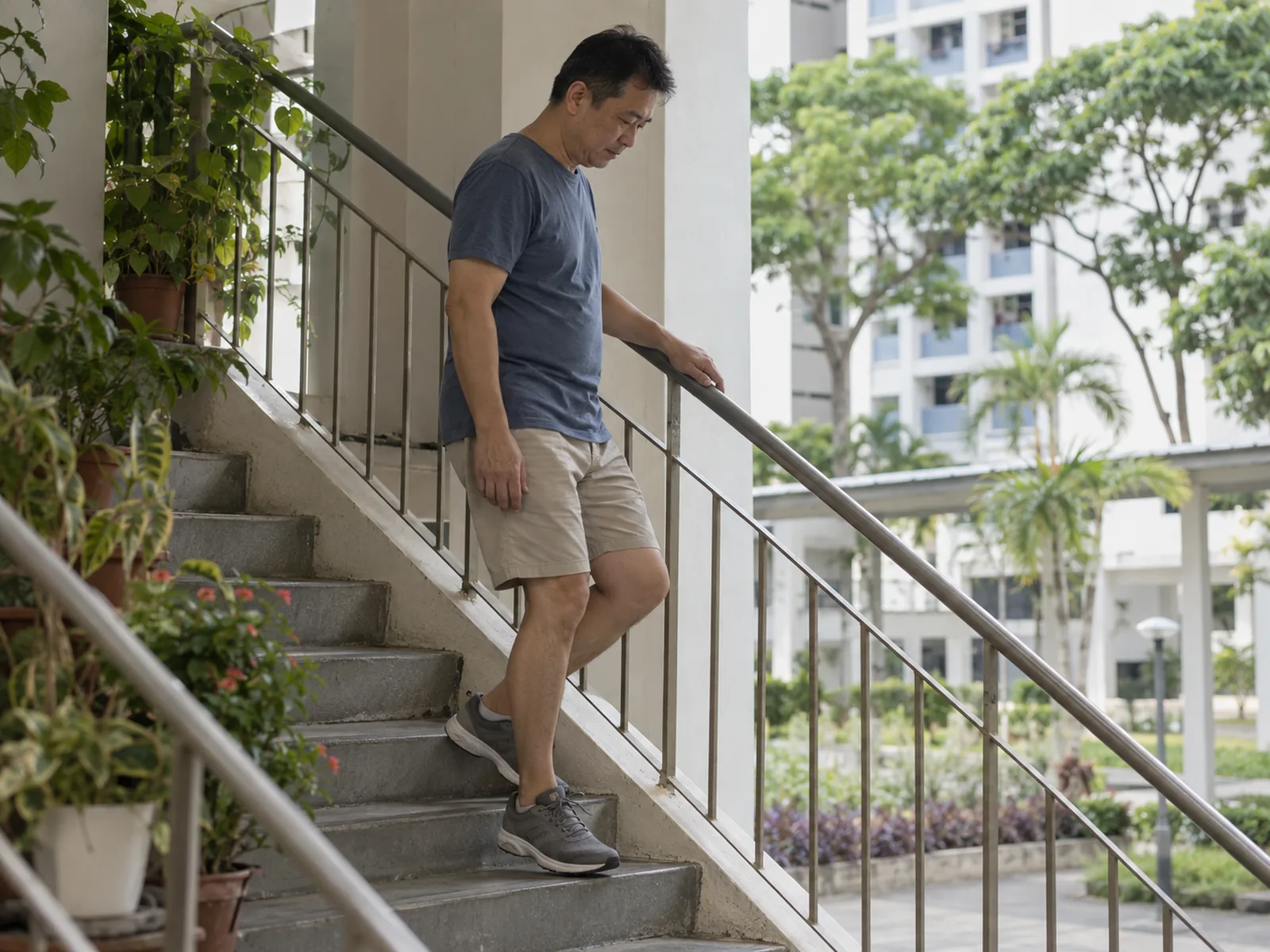
Front-of-knee aching that flares when you bend your knee, climb stairs, squat or sit with your knee bent for a long period is often linked to patellofemoral pain syndrome (pain in and around the kneecap) [2,3]. Other causes of knee pain include sprains and strains, tendonitis, a torn ligament, tendon or meniscus, cartilage damage, osteoarthritis and bursitis [1]. Many cases of patellofemoral pain improve with simple home care, activity modification and physiotherapy exercises for the core, buttock and thigh muscles [2,3]. A few signs, such as a knee that is stuck and will not straighten, or one that is very painful and cannot take weight, should be checked promptly; they are listed below under the warning signs.
- Which pattern of knee pain when bending do you have?
- Why does bending the knee, using stairs or squatting trigger pain?
- Why does my knee ache after sitting with bent knees, or click on stairs?
- What can I do at home when knee bending or stairs hurt?
- When should I see a doctor, and what are the red flags?
- How will a doctor assess my knee pain?
- Frequently asked questions
Which pattern of knee pain when bending do you have?
When you see a doctor for knee pain, they will ask when your symptoms started, whether the pain feels dull or sharp, and which activities make it worse, before performing a physical examination to determine the cause [2,3]. The symptom patterns below are a general guide to what may be causing knee pain and should not be used to diagnose yourself [1].
| Symptom location and pattern | What often triggers it | Possible cause (for a doctor to confirm) |
|---|---|---|
| On and around the kneecap; dull, aching pain in the front of the knee [2,3] | Bending the knee, climbing stairs, squatting, jumping, running, or sitting for a long time with the knee bent [2,3] | Patellofemoral pain syndrome (anterior knee pain syndrome or runner’s knee) [2,3] |
| Pain between your kneecap and shin [1] | Repetitive running or jumping [1] | Tendonitis [1] |
| Knee feels unstable, gives way when you try to stand, or you are unable to straighten it [1] | An injury where you may hear a popping sound [1] | Torn ligament, tendon or meniscus, or cartilage damage [1] |
| Knee pain after an injury or exercise [1] | Overstretching, overusing or twisting the knee, often during exercise [1] | Sprains and strains [1] |
| Knee feels warm and red with pain and swelling [1] | Kneeling or bending makes pain and swelling worse [1] | Bursitis [1] |
| Pain and stiffness in both knees with mild swelling, more common in older people [1] | Everyday weight-bearing tasks and stair descent, which requires greater knee bending than level walking [4,5] | Knee osteoarthritis [1,4,5] |
For a broader overview of other knee conditions, see our guides to common causes of knee pain and Baker’s cyst (popliteal cyst).
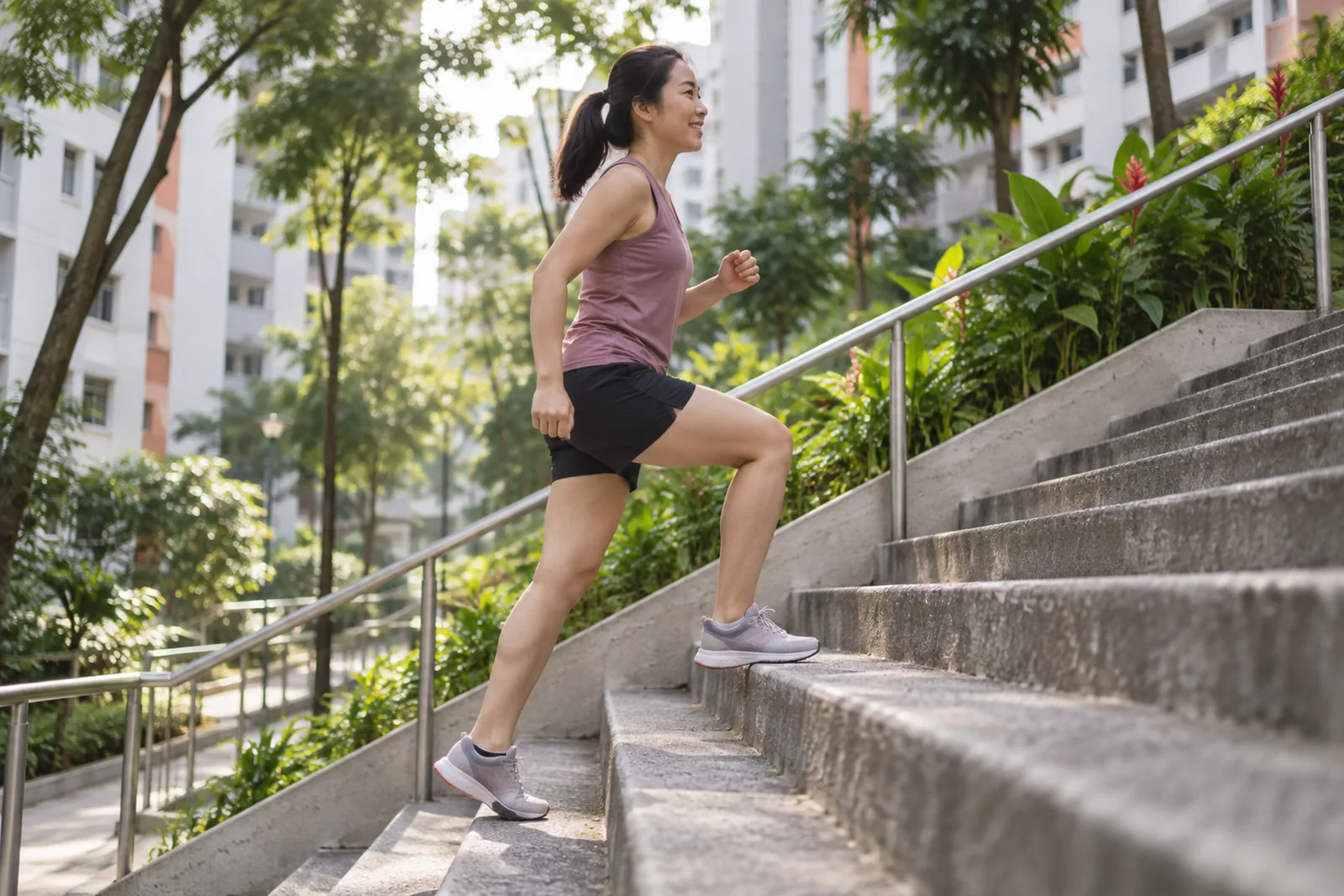
Why does bending the knee, using stairs or squatting trigger pain?
As you bend or straighten your knee, the underside of the kneecap (patella) glides within a groove at the end of the thighbone called the trochlear groove [3]. Smooth articular cartilage covers the ends of the thighbone, the trochlear groove and the underside of the kneecap to help the bones glide smoothly against each other, while a pad of fat just below the kneecap (the infrapatellar fat pad) cushions the area and acts as a shock absorber [3]. Pain occurs when nerves sense irritation in the bone and surrounding soft tissues—including the tendons, the infrapatellar fat pad and the synovial tissue lining the knee joint [3].
In patellofemoral pain syndrome (anterior knee pain), pain often starts after vigorous physical activities that put repeated stress on the knee, such as jogging, squatting and climbing stairs, or after a sudden increase in how often, how long or how hard you exercise [2,3]. It can also happen when the kneecap does not track smoothly in the trochlear groove and is pushed to one side when the knee bends, which may be associated with increased pressure between the back of the kneecap and the groove that irritates nearby soft tissues [2,3].
How your hip and thigh muscles guide the leg also matters [2,3]. When the knee bends and straightens, the quadriceps muscles and tendon at the front of the thigh and the muscles that abduct and externally rotate the hip help keep the kneecap centred in its groove [3]. Weak or imbalanced thigh and hip muscles and alignment issues between the hips and ankles can contribute to poor kneecap tracking [3], and a tight iliotibial band and flat feet are also recognised risk factors for patellofemoral pain [2].
In adults with patellofemoral joint osteoarthritis, walking down stairs is a particularly demanding daily task [4] (see also our video on what knee pain when climbing stairs tells you). A 2025 study of adults with arthritis behind the kneecap (patellofemoral osteoarthritis) found that bending the knee more while walking down stairs was linked to worse pain and symptoms, and that the link between knee loading and pain differed between men and women [4].
Why does my knee ache after sitting with bent knees, or click on stairs?
Many people with patellofemoral pain notice aching in the front of the knee after sitting for a long period with their knees bent—such as watching a film or riding on an aeroplane—and may hear crackling or popping sounds when climbing stairs or standing up after prolonged sitting [2,3].
On its own, painless clicking is normal [1]. If your knee is stuck and will not straighten, arrange an urgent same-day assessment.
What can I do at home when knee bending or stairs hurt?
Knee pain can often be treated at home, and many cases of patellofemoral pain improve with simple home care and activity changes [1,3].
How should I pace stairs, squats and daily knee load?
For an acute flare-up of knee or kneecap pain, simple first-step measures include:
- Pause or reduce provoking activities: For patellofemoral pain during a painful flare, stop or reduce repetitive, deep-knee-bending or high-impact activities that make your knee hurt—such as running, jumping, deep squatting, climbing stairs or step aerobics—until your pain settles, and modify your usual activities to a comfortable level [2,3] (for squat technique and load tips, watch our video on why your knees hurt after squats and what can help). Avoid sudden increases in training volume, running speed or workout frequency [2,3].
- Switch to low-impact exercise: While your knee settles, you can replace high-impact workouts with low-impact options such as cycling, swimming, deep-water running, rowing or elliptical training [2,3].
- Rest, ice, compression and elevation (RICE): Put as little weight as possible on the painful knee (for example, avoid standing for a long time) [1,3]. Apply an ice pack (or a bag of frozen peas wrapped in a tea towel, never directly on the skin) for up to 20 minutes every 2 to 3 hours [1,3]. If needed to help prevent extra swelling in patellofemoral pain, lightly wrap the knee in an elastic bandage with a hole left around the kneecap (making sure it fits snugly without causing extra pain) and rest with your knee elevated above the level of your heart [3].
- Simple pain relief if suitable for you: Over-the-counter painkillers such as paracetamol can help ease pain, and non-steroidal anti-inflammatory drugs (NSAIDs) like ibuprofen or naproxen can help ease pain and swelling, when medically appropriate for you [1,3].
- Footwear, insoles, taping and braces: Check that your shoes are not excessively worn out and choose a pair with a proper fit for your foot type [2]. Shoe inserts (orthotics)—either off-the-shelf or fitted after a podiatry assessment—can help align and stabilise your foot and ankle [2,3]. A doctor or physiotherapist may also recommend sports taping of the knee to help facilitate exercise without pain in patellofemoral pain syndrome [2], or appropriate knee bracing during weight-bearing activities or flares for short-term pain relief and functional improvement in adults with knee osteoarthritis [5].
- Weight management where relevant: If you are overweight, losing weight helps reduce pressure on the knee [3]. Singapore clinical guidance notes that losing weight reduces the load on the knee joints, and gradual weight loss of 5% to 10% over 6 to 12 months can improve pain, function and quality of life [5].
What types of exercises are commonly used in rehabilitation?
In both patellofemoral pain syndrome and knee osteoarthritis, structured exercise is a core part of recovery [2,3,5]. Working with a doctor or a physiotherapist allows exercises to be tailored to your range of motion, strength and symptom tolerance [2,3,5]:
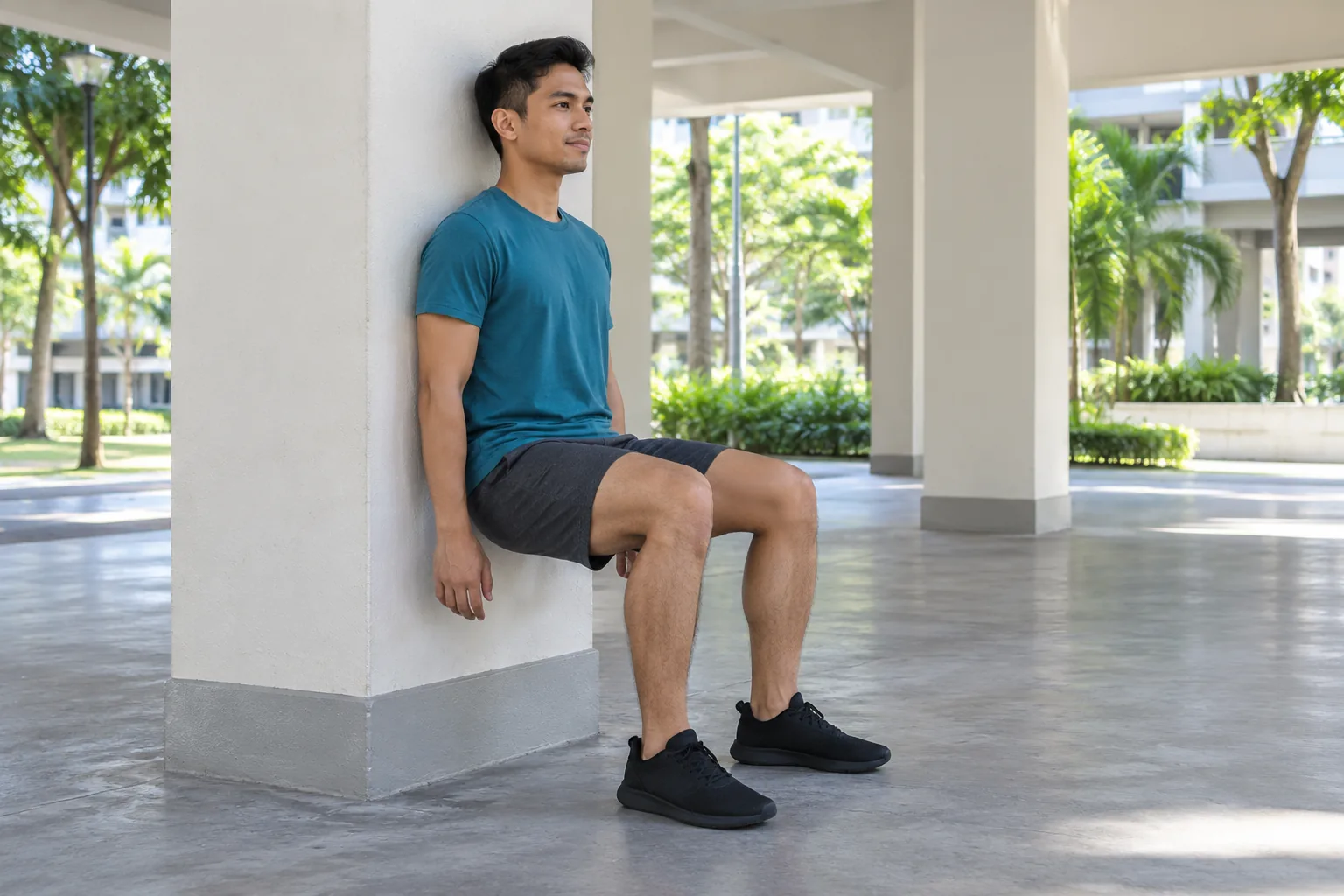
- Quadriceps and thigh strengthening: Because the quadriceps muscles help stabilise the kneecap, physiotherapy programmes may include exercises such as double-leg half-squats, single-leg mini squats, Bulgarian squats, and double-leg or single-leg chair stands [2,3].
- Hip, gluteal and core strengthening: Exercises to strengthen the buttock (gluteal), hip and core muscles—such as double-leg and single-leg bridging, clams, and abdominal and lower-back core exercises—help correct muscle imbalances that affect kneecap movement [2,3].
- Flexibility and range-of-motion stretches: Gentle stretching and mobility work—including quadriceps stretches, hip flexor stretches and iliotibial (IT) band stretches (standing, lying or with a foam roller)—help restore knee range of motion and flexibility [2,3].
When should I see a doctor, and what are the red flags?
Knee pain can often be treated at home, and you should start to feel better in a few days [1]. However, it is important to know when to arrange a routine medical review and when to seek urgent or emergency care [1,2,3].
Arrange to see a doctor for a thorough evaluation if:
- Your knee pain does not improve within a few weeks [1].
- Your pain persists or it becomes more difficult to move your knee [3].
- You have persistent fluid swelling (effusion) in the knee or a rapid worsening of symptoms, which Singapore clinical guidance notes may warrant further evaluation (such as by an orthopaedic surgeon or rheumatologist) [5].
How will a doctor assess my knee pain?
During a consultation, your doctor will take a medical history—asking when your knee pain started, whether it feels dull or sharp, and which activities make it worse—and perform a physical examination [2,3]. To pinpoint the source of pain and rule out other problems, the doctor may gently press on the front of the knee and kneecap, ask you to squat, jump or lunge to test knee and core strength, or assess your gait on a treadmill [2,3]. The physical examination commonly checks [3]:
- Lower-leg alignment and the position of the kneecap [3].
- Knee stability, hip rotation, and the range of motion of both the knees and hips [3].
- Tenderness of the kneecap and where the thigh muscles attach to the kneecap [3].
- The strength, flexibility, firmness and tone of the hip muscles, front thigh muscles (quadriceps) and back thigh muscles (hamstrings), as well as heel-cord tightness and foot flexibility [3].
A doctor can usually diagnose patellofemoral pain syndrome from the history and physical examination alone, and X-rays may be normal [2,3]. However, your doctor may order an X-ray or other imaging tests when needed to rule out damage to the bones and surrounding tissues [2,3]. Similarly, Singapore clinical guidance for adults with knee osteoarthritis notes that knee osteoarthritis is primarily diagnosed clinically and recommends reserving imaging for atypical symptoms, red flags or pre-surgical planning, because X-ray findings correlate poorly with day-to-day symptoms [5].
In most cases, patellofemoral pain is treated non-surgically with activity modification, physiotherapy exercises, footwear review, sports taping or orthotics [2,3]. For adults with knee osteoarthritis, Singapore guidance likewise recommends patient education, exercise programmes and weight management as mainstay strategies for all patients [5]. Surgical treatment for patellofemoral pain—such as arthroscopic debridement of damaged articular cartilage, lateral release of a tight lateral retinaculum, or tibial tubercle transfer to realign the kneecap—is very rarely needed and is considered only for severe cases that do not respond to non-surgical care [3].
Frequently asked questions
Why does my knee hurt when going up or down stairs?
Going up or down stairs is a classic trigger for patellofemoral pain syndrome because bending the knee under load requires the kneecap to glide smoothly inside the trochlear groove; if tracking is altered or the surrounding soft tissues are irritated, pressure between the back of the kneecap and the groove can trigger pain [2,3]. In adults with patellofemoral joint osteoarthritis, walking down stairs is a particularly demanding daily task, and a 2025 study found that bending the knee more while walking down stairs was linked to worse pain and symptoms, and that the link between knee loading and pain differed between men and women [4].
Should I stop squatting completely if my knees hurt?
During a painful flare, you should stop or reduce repetitive, deep-knee-bending activities that make your knee hurt until the pain resolves, and modify your activities to a level you can comfortably tolerate [2,3]. While symptoms settle, you can switch to low-impact options such as cycling or swimming [2,3]. As part of physiotherapy rehabilitation, a doctor or physiotherapist may introduce graded exercises—such as double-leg or single-leg chair stands, half-squats and mini squats—to strengthen the quadriceps, buttock and core muscles that stabilise the kneecap [2,3].
Is knee clicking when squatting or using stairs dangerous?
Crackling or popping sounds in the knee when climbing stairs or standing up after prolonged sitting can occur with patellofemoral pain syndrome, and painless clicking is normal [1,3]. If your knee is stuck and will not straighten, or very painful and you cannot put weight on it, arrange an urgent same-day assessment.
How long does runner’s knee or kneecap pain take to get better?
Recovery time varies: mild general knee pain treated at home may start to feel better within a few days, while patellofemoral pain (runner’s knee) often needs a period of activity changes and physiotherapy exercises to improve [1,2,3]. You should see a doctor if your knee pain does not improve within a few weeks, or if your pain persists or it becomes more difficult to move your knee [1,3].
What should I do next?
If knee pain when bending, using stairs or squatting is holding back your daily routine or training, a medical assessment can help identify the cause and guide your recovery plan [2,3].
This article provides general health education and does not replace an individual medical consultation. Please see the warning signs listed above for when to seek care promptly.
References
- National Health Service (NHS). Knee pain. Last reviewed 21 December 2023. NHS website
- SingHealth (Changi General Hospital, Sport & Exercise Medicine). Patellofemoral Pain Syndrome. Source website
- American Academy of Orthopaedic Surgeons (AAOS) OrthoInfo. Patellofemoral Pain Syndrome. OrthoInfo (AAOS)
- Hammond E, Johnson J, Haley T, Lee J, Bucknor MD, Akkaya Z, Kreutzinger V, Jiang F, Pedoia V, Majumdar S, Souza RB. Predictors of pain and cartilage damage in patellofemoral joint osteoarthritis: stair descent knee kinematics and kinetics. BMJ Open. 2025;15(10):e102121. PMID: 41087117; PMCID: PMC12519704. DOI link
- Agency for Care Effectiveness (ACE), Ministry of Health Singapore. Management of knee osteoarthritis – a joint effort with patients (ACE Clinical Guideline). Updated 29 July 2026. Singapore Government website
Was this page helpful?