
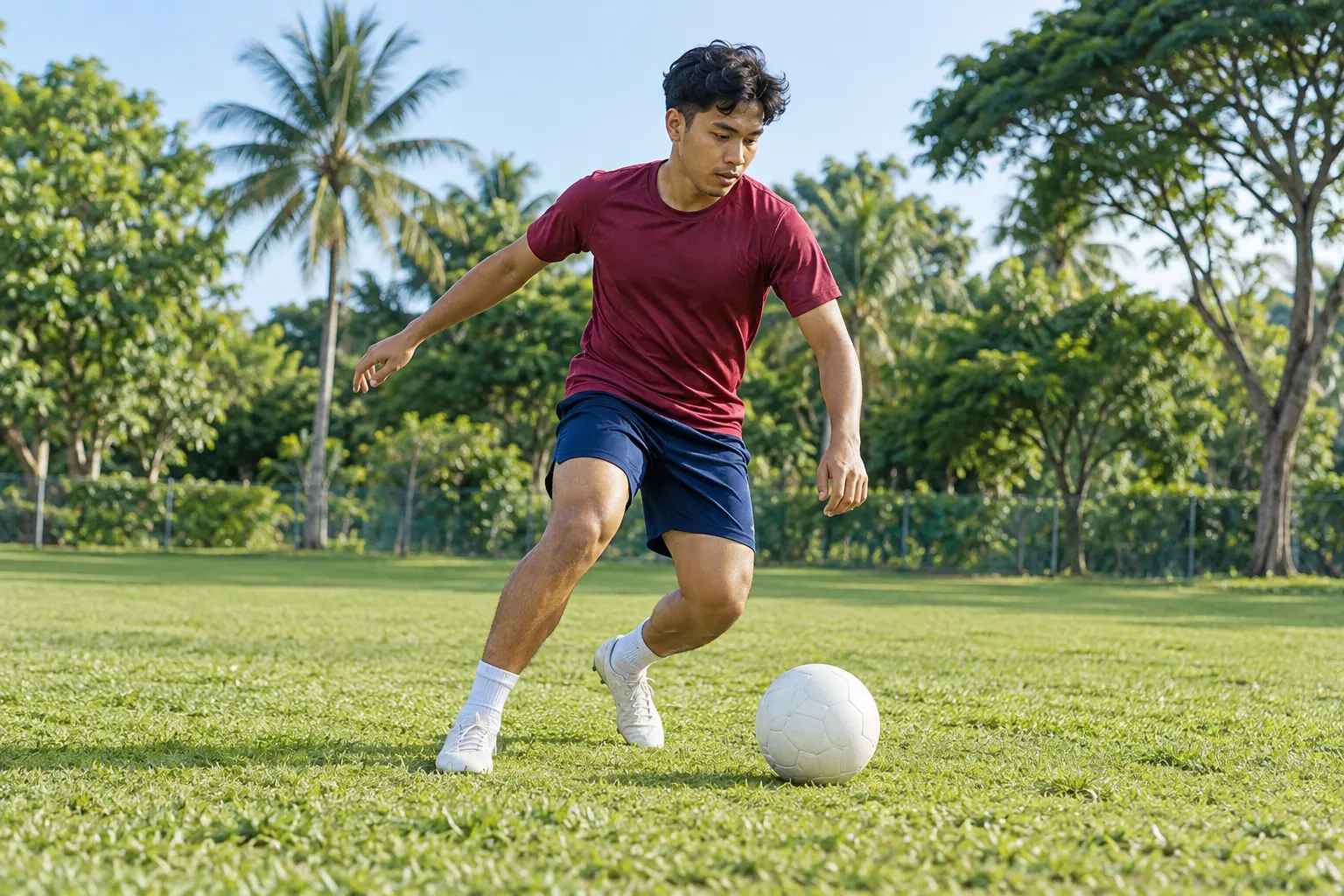
An ACL tear does not automatically mean that an operation is needed. There are three possible pathways, and the right one depends on how the knee behaves, other injuries in the knee, the activities a person wants to return to, their health and their priorities. Rehabilitation is required in every pathway.
Who is most affected by ACL injuries?
Anterior cruciate ligament (ACL) injuries are most often recorded in teenagers and young adults. The age pattern comes from one population study in the United States, so it describes a pattern, not the numbers in Singapore or any one person’s risk.
- Rates peak in the teens and early twenties (around 14 to 18 in females and 19 to 25 in males).
- None of this says that any one person will or will not injure their ACL. It describes who is more often affected.
More on what the ACL does
The ACL is one of the major ligaments within the knee. It helps control forward and twisting movement of the shin bone relative to the thigh bone, which is why landing, cutting and pivoting are the moments it is most stressed. When it is torn, some knees stay steady for daily activities, while others give way during sport, work or ordinary turning movements.
What does this page cover?
- Who is most affected by ACL injuries?
- What are the treatment options?
- How long until I can return to sport?
- Does ACL surgery prevent arthritis?
- When should a knee injury be checked urgently?
- What should I do next?
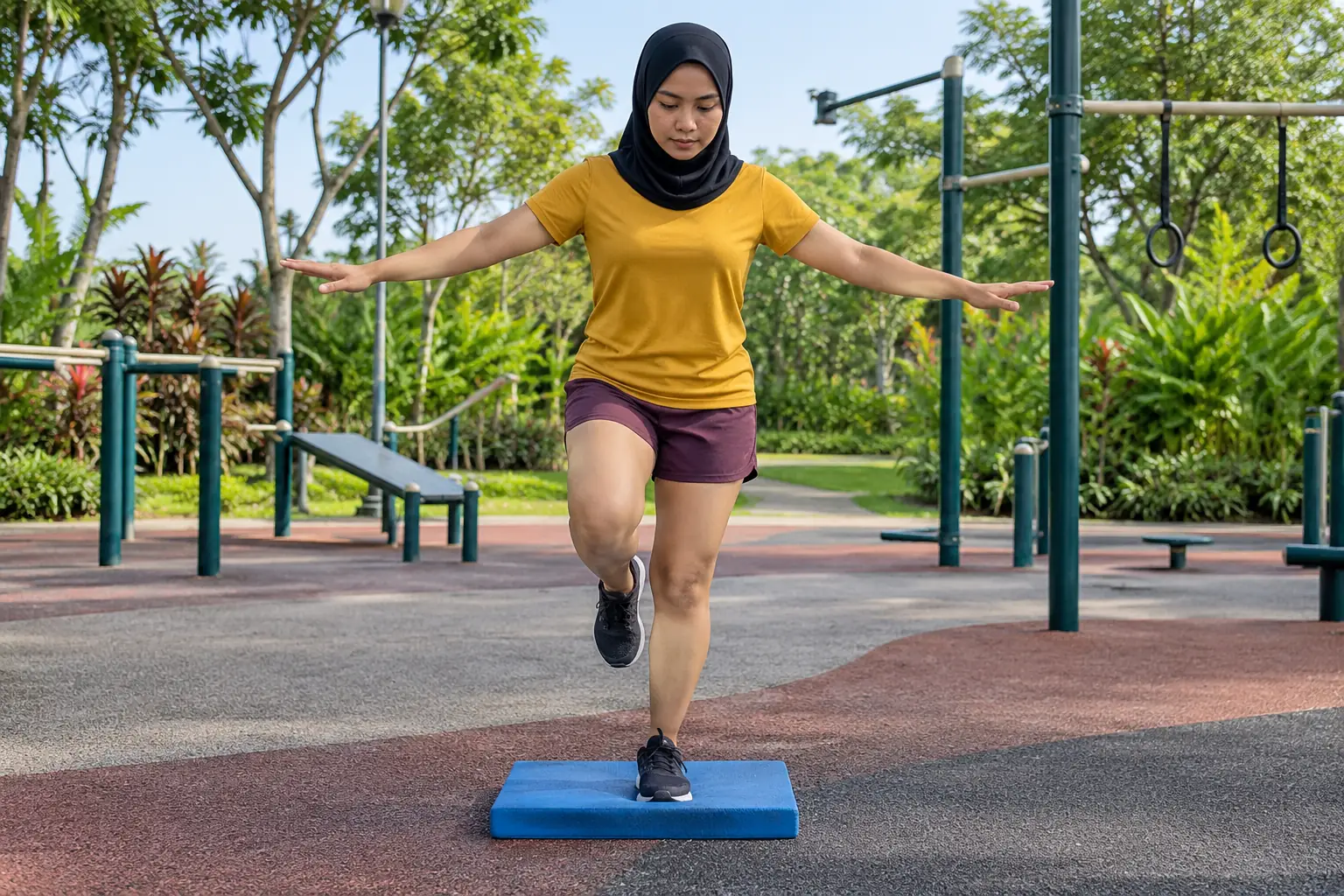 Owner clinical review required · not a release asset
What are the treatment options?
An ACL tear does not automatically mean that an operation is needed. There are three possible pathways, and the right one depends on how the knee behaves, other injuries in the knee, the activities a person wants to return to, their health and their priorities.
- Rehabilitation-led care. This is considered when the knee is functionally stable enough for the person’s intended activities, giving-way episodes are absent or controlled, associated injuries do not require surgery, and the person is willing to modify activities while strength and control are rebuilt.
- Reconstruction as part of a surgical-management strategy. This is considered for persistent functional instability, recurrent giving way, a goal of returning to high-demand cutting or pivoting activity, or associated injuries whose management changes the balance.
- Rehabilitation with the option of later reconstruction. An expert consensus statement describes structured rehabilitation as an acceptable option for people who want to return to straight-line activities, with reconstruction indicated if the knee keeps giving way (Diermeier et al., 2021).
- Rehabilitation is required in every pathway.
More on each pathway
Rehabilitation-led care is not “doing nothing”. It usually involves progressive work on swelling, motion, strength, balance, movement control and graded exposure to the activities that matter. The response needs to be reviewed. Persistent instability, repeated giving way, inability to meet important work or sport demands, or a change in the understanding of an associated injury may lead to reconsideration of reconstruction.
Choosing reconstruction is not the same as saying that every athlete needs surgery, or that age alone determines treatment.
Beginning with rehabilitation while preserving the option of later reconstruction allows function and instability to be assessed over time. It is not a promise that surgery will be avoided, and it is not suitable for every injury pattern.
Associated meniscal, cartilage or other ligament injuries may also alter the decision.
Three questions help to frame a decision. The structure of the injury, including any meniscus, cartilage or other ligament injury, can change the options. The patient matters: symptoms, general health, circumstances, preferences and ability to take part in rehabilitation. And the goal matters: the demands of daily life, work and sport help define what a useful outcome means for that person. No single feature on its own, including age, sport or magnetic resonance imaging (MRI, a detailed scan of the knee) appearance, decides treatment.
On repair: when surgical treatment of an ACL tear is indicated, the 2022 clinical practice guideline of the American Academy of Orthopaedic Surgeons recommends reconstruction rather than repair, citing a lower risk of revision. Repair remains a selective option whose longer-term evidence is limited.

How long until I can return to sport?
For high-risk pivoting sport (sport with twisting or sudden changes of direction), return is commonly around nine months or longer. That is a commonly used orientation, not a universal evidence-established minimum, and not a date of clearance.
- Nine months is not automatic clearance, and passing a test battery does not guarantee that reinjury will not occur.
- Recovery is better described as overlapping phases than as a guaranteed calendar. Time ranges are orientation, not clearance dates.
- Return to some sport is more common than return to the preinjury or competitive level (Ardern et al., 2014).
More on how readiness is judged
Return-to-sport testing usually takes into account full motion, no pain or swelling, adequate strength and hop symmetry (hopping about as far on the injured leg as on the other), controlled landing and alignment, psychological readiness and sport-specific exposure.
The international Panther consensus describes a continuum from return to participation, to return to sport, and finally return to performance. It recommends moving away from decisions based only on elapsed time and considering examination findings, function, psychological readiness, biological healing, associated injuries and the activity context.
Does ACL surgery prevent arthritis?
Not reliably. ACL injury is associated with a higher long-term risk of knee osteoarthritis (wear-and-tear arthritis of the joint), but reconstruction has not been shown reliably to prevent osteoarthritis compared with non-operative care, and it is not a promise of osteoarthritis prevention.
- An umbrella review (a review of earlier systematic reviews) concluded that reconstruction has not been shown to reduce osteoarthritis prevalence in the longer term compared with non-surgical treatment (Webster and Hewett, 2022).
- Reconstruction is considered mainly to address stability and function in selected patients.
- It may improve stability in selected patients, but it does not guarantee return to sport.

When should a knee injury be checked urgently?
What should I do next?
For a knee injury, or an ACL tear that has already been diagnosed, an assessment is a sensible next step. It brings together what happened, an examination and any tests that help, so that the patient and clinician can decide what to do next. An appointment supports an informed decision. It is not a commitment to surgery.
- The ACL reconstruction surgery page sets out how an ACL injury is assessed and how the treatment options compare.
- Read more about the ACL treatment decision for anyone weighing rehabilitation against surgery.
- For injuries that also involve the inner side of the knee, the MCL page explains how those injuries are handled.
- Browse the Knee Hub for other knee problems.
- Read about ACL tear symptoms.
- Read about which ACL injuries suit repair rather than replacement.
- Read about tips for recovering after ACL surgery.
- Read about what to expect before and after ACL reconstruction surgery.
This page provides general information and cannot diagnose an individual condition. OrthoKinetics does not provide emergency or urgent care through this webpage or its WhatsApp contact.
References
- Sanders TL, et al. Incidence of Anterior Cruciate Ligament Tears and Reconstruction: A 21-Year Population-Based Study. Am J Sports Med. 2016;44(6):1502-1507. doi:10.1177/0363546516629944. PMID:26920430.
- Webster KE, Hewett TE. Anterior Cruciate Ligament Injury and Knee Osteoarthritis: An Umbrella Systematic Review and Meta-analysis. Clin J Sport Med. 2022;32(2):145-152. doi:10.1097/JSM.0000000000000894. PMID:33852440.
- Brophy RH, Lowry KJ. American Academy of Orthopaedic Surgeons Clinical Practice Guideline Summary: Management of Anterior Cruciate Ligament Injuries. J Am Acad Orthop Surg. 2023;31(11):531-537. doi:10.5435/JAAOS-D-22-01020. PMID:36727995.
- American Academy of Orthopaedic Surgeons. Management of Anterior Cruciate Ligament Injuries: Evidence-Based Clinical Practice Guideline. Rosemont (IL): AAOS; published 22 August 2022 (replacing the 2014 edition). Available from: https://www.aaos.org/aclcpg
- Diermeier TA, Rothrauff BB, Engebretsen L, Lynch A, Svantesson E, Hamrin Senorski EA, et al. Treatment after ACL injury: Panther Symposium ACL Treatment Consensus Group. Br J Sports Med. 2021;55(1):14-22. doi:10.1136/bjsports-2020-102200. PMID:32661128.
- Meredith SJ, Rauer T, Chmielewski TL, Fink C, Diermeier T, Rothrauff BB, et al. Return to sport after anterior cruciate ligament injury: Panther Symposium ACL Injury Return to Sport Consensus Group. J ISAKOS. 2021;6(3):138-146. doi:10.1136/jisakos-2020-000495. PMID:34006577.
- Ardern CL, Taylor NF, Feller JA, Webster KE. Fifty-five per cent return to competitive sport following anterior cruciate ligament reconstruction surgery: an updated systematic review and meta-analysis including aspects of physical functioning and contextual factors. Br J Sports Med. 2014;48(21):1543-1552. doi:10.1136/bjsports-2013-093398. PMID:25157180.
Was this page helpful?