
Rehabilitation is a central part of recovery after anterior cruciate ligament (ACL) reconstruction, an operation that replaces the torn ligament with a graft. Getting back to sport is a different question: for high-risk pivoting sport (sport with twisting or sudden changes of direction), around nine months or longer [2] is a commonly used orientation, not a fixed minimum.
What is the short answer on recovery after ACL surgery?
- Rehabilitation is a central part of recovery.
- Everyday recovery and return to sport run on very different timescales.
- Fever, a wound that is leaking, or a knee that becomes more painful, swollen or red needs prompt attention.
What does this page cover?
- Does exercise help recovery?
- How long does day-to-day recovery take?
- What helps with early post-operative comfort?
- What are the post-operative warning signs?
- What should I do next?
Does exercise help recovery?
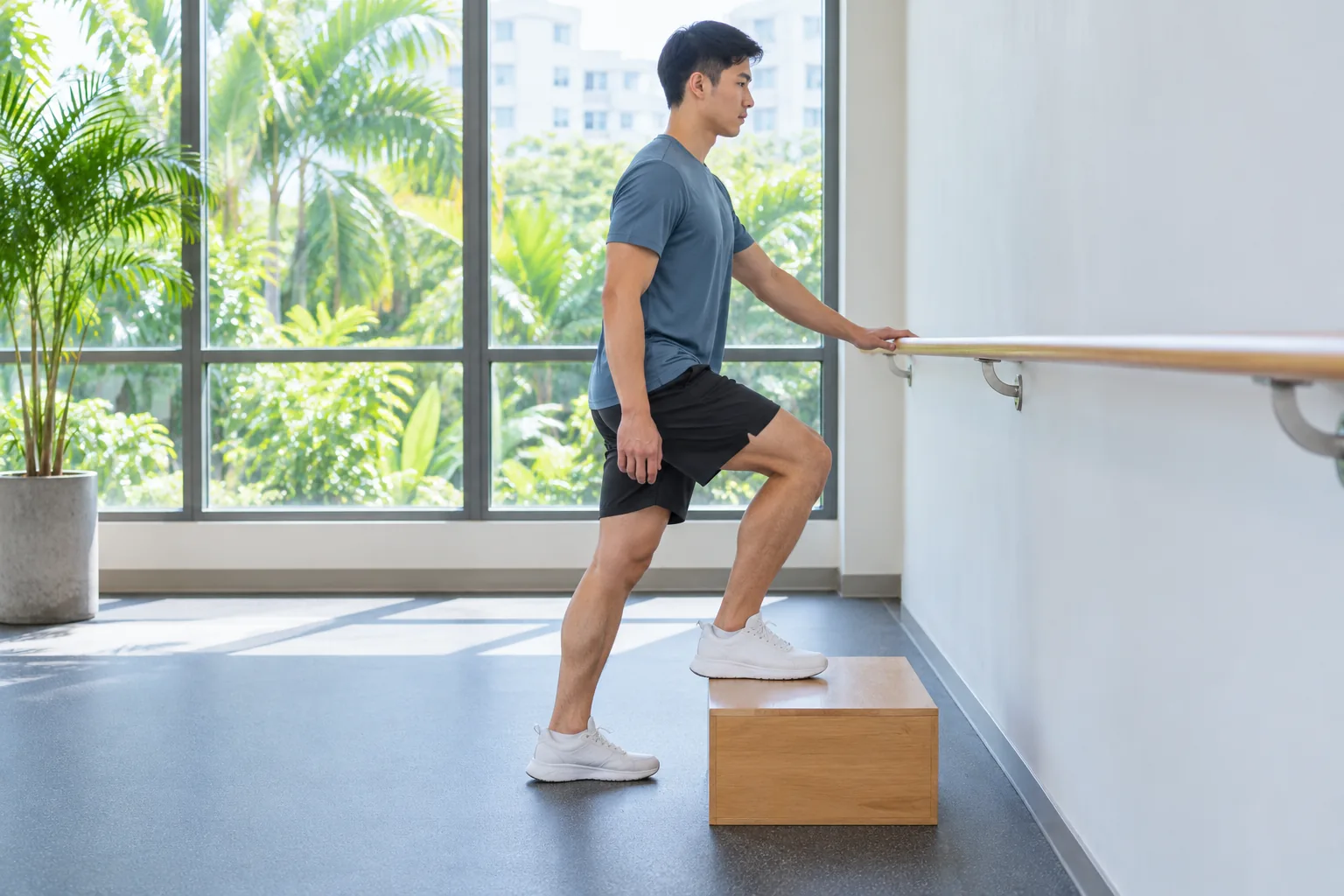
Yes. Rehabilitation is a central part of recovery after ACL reconstruction. It is not one routine for everyone: it should respond to the graft, any other procedures done at the same time, and how the knee is behaving.
- If you have had surgery, your rehabilitation should respond to swelling, pain, movement, strength, function and your goals.
- Recovery is better described as overlapping phases than as a guaranteed calendar.
- A general webpage is not a self-directed rehabilitation prescription. If you have had surgery, your own programme comes from the team looking after your knee.
More on what can change the pace
Progress may pause or move backwards if symptoms increase or a milestone is not met. A meniscal repair, a cartilage procedure or another associated injury may alter weight-bearing, motion, running and sport timelines. That is why two people with the same operation can follow different paths.
How long does day-to-day recovery take?
How quickly everyday recovery happens varies a lot from person to person. This is about daily life, not about sport.
- Return to high-risk pivoting sport is commonly around nine months or longer [2]. That is a commonly used orientation, not a universal evidence-established minimum.
- Nine months is not automatic clearance. Time matters, but it is only one part of readiness [1], and no test removes the risk of another injury.
More on how return to sport is judged
An international consensus describes return to sport as a series of stages rather than one moment [1]. It recommends moving away from decisions based only on elapsed time [1], and looking at examination findings, function, psychological readiness, healing, associated injuries and other contextual factors [1] such as the demands of the activity.
What helps with early post-operative comfort?
Some early discomforts are not in the knee at all. Constipation can occur after knee surgery, because moving less and taking pain medication can both contribute.
- If it is troubling you after surgery, mention it to your surgical team. They know which operation you had and what you have been prescribed.
- No remedies or medicines are suggested here, because the right choice depends on you.
What are the post-operative warning signs?
After knee surgery, a knee that becomes more painful, swollen or red, a wound that is leaking, or a fever should not be left to settle by itself. The block below says where to go.
What should I do next?
If you are recovering from ACL surgery, keep your own surgical and physiotherapy team as your first point of contact for questions about your programme. An assessment brings together what has happened, an examination and any tests that help, so that you and your clinician can decide what to do next. An appointment supports an informed decision. It is not a commitment to surgery.
- Read about post-surgery recovery for the wider recovery picture.
- See how rehabilitation fits into the whole journey in the rehabilitation after reconstruction section of the ACL reconstruction surgery page.
- Browse sports injury care for return-to-activity topics, or more articles on the OrthoKinetics Blog.
- Read about kinesiology tape after ACL surgery.
- Read about three things to know about ACL injuries.
- Read about whether a torn ACL can heal without surgery.
This page provides general information and cannot diagnose an individual condition. OrthoKinetics does not provide emergency or urgent care through this webpage or its WhatsApp contact.
References
- Meredith SJ, Rauer T, Chmielewski TL, Fink C, Diermeier T, Rothrauff BB, et al. Return to sport after anterior cruciate ligament injury: Panther Symposium ACL Injury Return to Sport Consensus Group. J ISAKOS. 2021;6(3):138-146. doi:10.1136/jisakos-2020-000495. PMID:34006577.
- Grindem H, Snyder-Mackler L, Moksnes H, Engebretsen L, Risberg MA. Simple decision rules can reduce reinjury risk by 84% after ACL reconstruction: the Delaware-Oslo ACL cohort study. Br J Sports Med. 2016;50(13):804-808. doi:10.1136/bjsports-2016-096031. PMID:27162233. PMCID:PMC4912389.
Was this page helpful?