

How to Prevent Injuries During National Service and Protect Your Knees

Picture this: it is your first week of Basic Military Training. Your boots are tight, your pack is heavy, and something is already pulling behind your knee. You push through … because that is what recruits do. But what if a few habits, started weeks before enlistment, could have changed everything? National service injury prevention begins long before you step onto the parade square. This guide, informed by Orthokinetics Singapore, gives you a clear, practical plan to protect your body through NS and beyond.
The most effective approach to national service injury prevention is to start a structured conditioning programme 6 to 8 weeks before enlistment. Focus on knee strengthening, ankle stability and progressive cardio. Report pain early and never train through acute discomfort. Prevention works best when physical preparation starts before training demands do.
Key Takeaways
- Most NS injuries are overuse injuries. They are preventable, not inevitable
- Knee and ankle injuries are among the most common military training injuries in Singapore
- Pre-enlistment conditioning helps reduce injury risk during basic military training
- Proper footwear, warm-up routines and progressive loading are simple and controllable risk factors.
- Pain is a signal, not a challenge thus reporting early prevents minor issues becoming serious injuries
Why Do Recruits Get Injured During Basic Military Training in Singapore?
Ask new military recruits who recently enlisted and you may hear these joint complaints. Swollen knees. Sore Achilles tendons. Stress fractures in feet that have never run more than a kilometre. Why do recruits get injured during basic training so consistently? The answer is not weakness. It is load.
Recruits go from largely sedentary lifestyles to daily running, route marches and obstacle courses. Bones, tendons and cartilage adapt to loading more slowly than cardiovascular fitness improves. The structural system lags behind apparent physical readiness and that gap is where injuries live.
Low pre-enlistment fitness, rapid increases in training volume and a previous injury history are all common risk factors for overuse injuries in military recruits. Managing these factors before enlistment can help lower injury risk during training.
Definition: An overuse injury is tissue damage caused by repetitive stress applied faster than the body can repair itself like training load exceeding physical capacity.
Citable Insight: Most military training injuries are not caused by a single event. They build gradually through repeated micro-stress that exceeds the body’s recovery capacity.
What Are the Most Common Military Training Injuries in Singapore?
Understanding what you are protecting against makes preparation more targeted. The common military training injuries in NS recruits fall into five categories.
1. Knee Injuries
Patellofemoral pain syndrome or pain around the kneecap is a common knee complaint in recruits. It develops when the quadriceps are weak and the knee is repeatedly overloaded. More serious injuries, including ACL tears and meniscus damage, can occur during obstacle courses and sudden directional changes.
2. Stress Fractures
Tibial stress fractures or often called shin splints in early stages may result from bone being stressed faster than it can remodel.
3. Ankle Sprains and Ligament Injuries
Uneven terrain and fatigue all contribute to ankle sprains during field training. Repeated minor sprains can lead to chronic instability if not properly rehabilitated. Learn more about ankle sprains and ligament tears at Orthokinetics.
4. Lower Back Pain
Carrying load incorrectly during route marches places compressive stress on the lumbar spine. Recruits with weak core muscles and poor lifting mechanics are most vulnerable.
5. Achilles Tendon Problems
Sudden increases in running volume stress the Achilles tendon. Left unaddressed, tendinopathy can progress to a partial or full Achilles tendon rupture, a far more serious injury requiring extended recovery.
How to Prevent Injuries During National Service: A Pre-Enlistment Training Plan
The most powerful national service injury prevention strategy is the one you start before you enlist.
Step 1 — Build a Running Base Gradually
Start with 20 to 30 minutes of easy jogging, three times per week. Increase your weekly running distance by no more than 10% each week. This gives bones, tendons and cartilage time to adapt before NS training begins.
Step 2 — Strengthen Your Knees
Wall sits: Stand with your back against a wall, feet shoulder-width apart. Slide down until your knees are at roughly 45 degrees. Hold for 5 seconds and repeat 8 to 10 times. This activates the inner quadriceps muscle that stabilises the kneecap during impact.
Single-leg squats: Progress to slow single-leg squats to build balance and quad strength for uneven terrain.
Step 3 — Strengthen Your Ankles
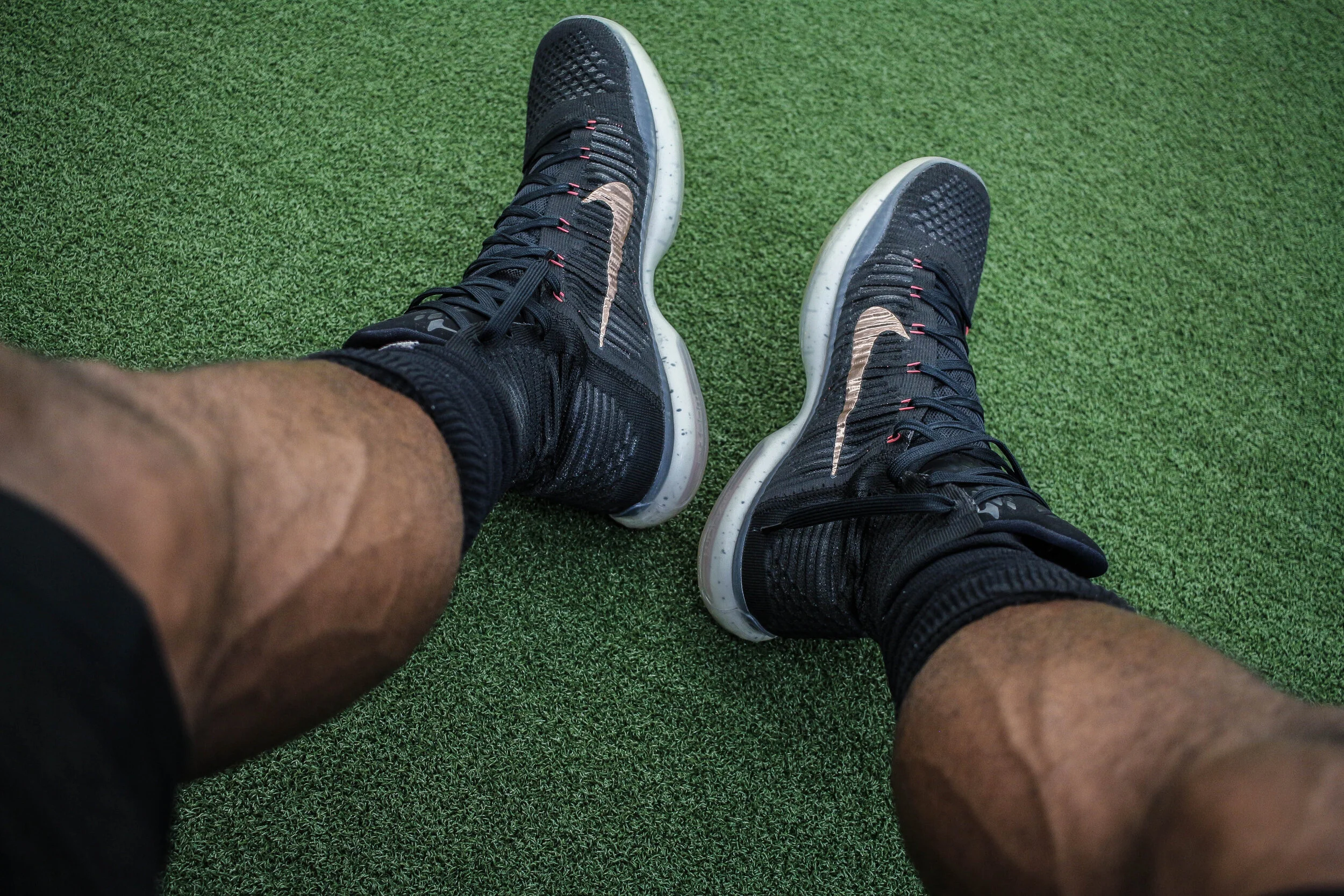
Calf raises: Stand feet shoulder-width apart. Raise slowly onto your toes, pause 2 seconds, then lower slowly. Do 3 sets of 15. The slow lowering phase builds the eccentric strength that absorbs landing forces.
Single-leg balance: Stand on one leg for 30 to 60 seconds. Progress to a folded towel to introduce instability. This trains the proprioceptive system that prevents ankle rolls.
Hopping patterns: Hop forward, backward and laterally on a single leg, 5 to 8 hops per direction. Repeat both sides to build reactive ankle control.
Step 4 — Condition Your Shoulders and Upper Back
Arm reach holds: Lie face up on the floor. Slowly lift one arm toward the ceiling until the shoulder blade lifts off the floor. Hold 3 seconds and return. Repeat 10 times each side to build the stabilisers that protect the shoulder under load.
Cross-body stretches: Raise one arm to shoulder height, use the opposite arm to draw it across your chest and hold 20 to 30 seconds to maintain shoulder mobility.
Step 5 — Prioritise Sleep and Recovery
Tissue repair happens during sleep, not during exercise. Treating sleep as part of your training plan is itself a form of national service injury prevention. Recruits who are chronically underslept show slower tendon and bone adaptation to load.
Tips to Stay Injury Free in Military Training
These tips to stay injury free in military training apply before and throughout NS.
Always warm up
Five minutes of light jogging followed by dynamic stretches such as leg swings, hip circles, arm windmills, prepares the body for loading. Cold muscles and tendons are stiffer and more vulnerable to strain.
Cool down and stretch after every session
Focus on the calves, hamstrings, hip flexors and quadriceps — the muscle groups most loaded by marching and running.
Break in your boots before enlistment
New boots alter gait and shift load to structures not used to absorbing it. Wear them on progressively longer walks beforehand.
Hydrate actively, not reactively
Dehydration reduces joint cartilage cushioning and slows muscle response. Drink water before you feel thirsty.
Report pain early
A dull ache persisting beyond two days is a warning sign. Recruits who report early get attention before a niggle becomes a fracture.
How to Avoid Overuse Injuries in NS
How to avoid overuse injuries in NS comes down to one principle: know the difference between productive discomfort and damaging pain.
Productive discomfort is muscular fatigue that recovers with rest. Damaging pain is sharp, localised, worsening and persistent. One builds fitness. The other signals tissue damage.
If you have a history of knee injury, ankle instability or stress fracture, a pre-enlistment specialist review is worth arranging. Identifying structural vulnerabilities before military training exposes them changes outcomes meaningfully. Learn more at Orthokinetics Sports Injury Prevention.
Disclaimer: Before embarking on any physical training or exercise regime, please consult your doctor for professional advice on your individual suitability to undertake the training.
What to Do If You Are Injured During NS
Step 1: Stop the activity immediately
Training through acute pain converts a minor injury into a serious one.
Step 2: Apply RICE in the first 48 hours
Rest, Ice, Compression and Elevation reduce swelling and limit secondary damage.
Step 3: Report to the medical officer the same day
Early diagnosis changes outcomes.
Step 4: Complete the full rehabilitation protocol
Returning before clearance is the leading cause of re-injury.
Step 5: Seek specialist review for persistent or recurring pain
If a joint feels unstable or pain returns after apparent recovery, specialist assessment (which will usually be referred by the camp MO if indicated) provides the clarity a camp MO cannot always offer.
Frequently Asked Questions — National Service Injury Prevention
1. What are the most common NS injuries in Singapore?
Some common NS injuries are tibial stress fractures, patellofemoral pain around the knee, ankle sprains and Achilles tendinopathy. These are predominantly overuse injuries driven by rapid training load increases. Most are preventable with pre-enlistment conditioning and early reporting.
2. How do I prepare my body for NS before enlisting?
Start a progressive running programme at least 6 to 8 weeks before enlistment. Add knee strengthening, ankle stability work and shoulder conditioning. Break in your boots, prioritise sleep and address any existing injuries before enlistment day.
3. Why are recruits more prone to overuse injury during the early period after enlistment?
For some previously sedentary recruits, the first weeks of BMT may represent the steepest loading spike of the entire NS journey. Bones and tendons adapt to load more slowly than cardiovascular fitness improves. That gap between structural readiness and physical demand is where most injuries occur.
4. Should I see a specialist before enlisting with a previous knee injury?
It depends. A pre-enlistment orthopaedic review is advisable for anyone with a history of medical problems or joint problems such as knee injury, ankle instability or stress fracture. Understanding structural vulnerabilities, having a proper assessment and declaring them before military training exposes them allows for targeted conditioning and informed medical status decisions.
5. When should an NS injury be reviewed by a specialist rather than just the camp MO?
A general rule of thumb to follow would be to seek advice from the Camp MO if a specialist review is indicated should pain persist despite rest or if a joint feels unstable, or if swelling does not resolve. The Camp MO would be able to make the decision if a specialist review is indicated.
Orthokinetics provides sports injury consultations at both Novena and Farrer Park.
Protect Your Body Before NS Demands It

The body you build before enlistment is the one that carries you through national service. National service injury prevention is not only about being cautious. It is also about being prepared. The recruits who emerge from NS stronger than they entered are almost always the ones who started training before they had to.
If you have a current knee concern, a history of training injuries, or simply want to understand your structural readiness before enlisting, a specialist consultation is one of the most practical steps you can take.
Dr Sean Leo at Orthokinetics brings over 25 years of clinical experience and further subspecialisation in knee and lower limb surgery. His practice addresses everything from pre-NS assessments for existing orthopaedic issues to complex ACL reconstructions and meniscus repairs in active patients. Non-surgical solutions are always explored first.
Orthosports at Novena: 38 Irrawaddy Road, #10-41, Mount Elizabeth Novena Specialist Centre, Singapore 329563. Tel: +65 6734 8168
Orthosports at Connexion: 1 Farrer Park Station Road, #15-17 Connexion, Singapore 217562. Tel: +65 6435 0015
WhatsApp: +65 8439 2120 | Email: appointment@orthokinetics.sg