

Partial Knee Replacement Vs Total Knee Replacement: Which Is Right For You?

Not all knee arthritis is the same, and not everyone needs the same surgery. If you’re considering partial knee replacement in Singapore, you’ve likely wondered which option suits your knee and lifestyle. The choice between partial knee replacement and total knee replacement depends on where your arthritis sits, how stable your ligaments remain, and what activities matter most to you.
This guide compares both procedures, recovery timelines, candidacy criteria, and real research outcomes so you can make an informed decision with your orthopaedic specialist. Understanding these differences helps you move forward confidently as you explore surgery or conservative treatment options.
Key Takeaways
- Partial knee replacement replaces only the damaged compartment; total knee replacement resurfaces all three
- PKR = shorter surgery, faster recovery, higher activity level; TKR = one-time solution, more reliable for severe arthritis
- Only 10–15% of arthritis patients currently receive PKR, though 25–50% may qualify
- TOPKAT trial: both procedures deliver similar long-term outcomes when performed by experienced surgeons
- PKR patients report 90% satisfaction and a higher willingness to have surgery again
- TKR remains the gold standard for multi-compartmental arthritis and severe deformity
- Recovery ranges: partial knee replacement surgery takes 4–6 weeks; total knee replacement surgery takes 3–6 months
Understanding Your Knee And Compartmental Arthritis
How the Knee Is Divided
Your knee isn’t one joint; it’s actually three separate compartments. The medial compartment is the inner side of your knee. The lateral compartment is the outer side. The patellofemoral compartment is where your kneecap sits. Arthritis doesn’t always hit all three at once. You might have bone-on-bone wear in one compartment while the others remain healthy. This is why the location of your arthritis matters so much when deciding between procedures.
What Is Partial Knee Replacement Surgery?
Partial knee replacement surgery, also called unicompartmental knee arthroplasty, replaces only the damaged compartment. A surgeon makes a smaller incision (3–4 inches) and removes the worn cartilage and bone from one compartment, then resurfaces it with metal and plastic components. The critical advantage: this approach preserves 60–70% of your natural knee structure, including healthy bone, cartilage, and crucial ligaments like the Anterior Cruciate Ligament (ACL) and Posterior Cruciate Ligament (PCL).
Case study example: A 68-year-old active adult has bone-on-bone damage in the medial (inner) compartment but healthy lateral and patellofemoral compartments. Their ACL is intact. They walk daily, travel often, and want to stay independent and mobile. They’re a strong candidate for partial knee replacement.
What Is Total Knee Replacement Surgery?
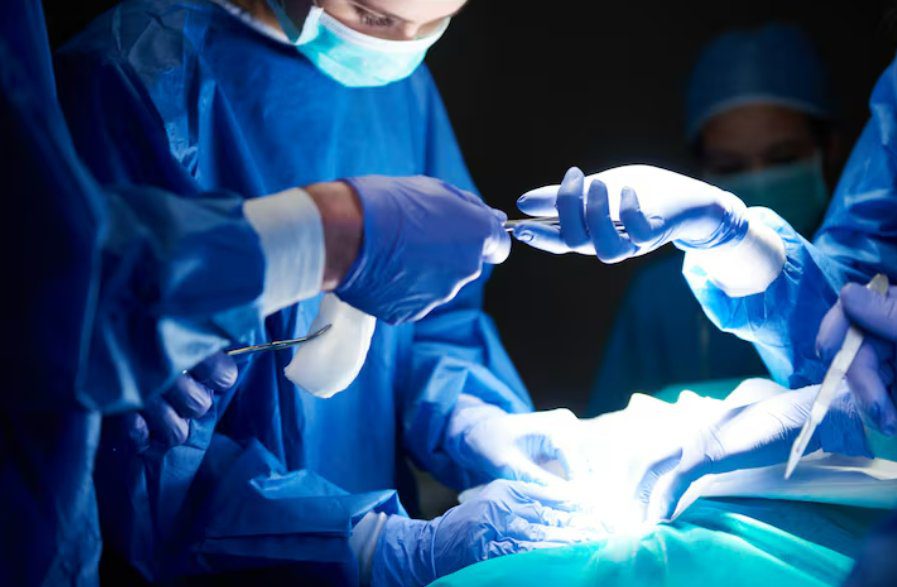
Total knee replacement surgery resurfaces all three knee compartments in one operation. A surgeon makes a larger incision (6–8 inches) and replaces or resurfaces the worn surfaces of the femur, tibia, and kneecap with metal and plastic implants. This procedure handles complex arthritis patterns and significant deformity. However, the surgery requires removal or resurfacing of the ACL, which affects how the knee feels and performs during higher-impact activity.
Case study example: A 72-year-old has arthritis spreading across the entire knee joint with significant bow-legged deformity and some ACL damage. Walking is painful and limited to short distances. They prefer stability and predictability over a return to tennis. They’re an ideal candidate for total knee replacement surgery.
Are You A Candidate For Partial Or Total Knee Replacement?
Who Typically Qualifies for Partial Knee Replacement Surgery?
You may be a candidate for partial knee replacement in Singapore if:
- Your arthritis is confined to ONE compartment only
- Your ACL and PCL ligaments are intact and stable
- You have a good or fair pre-operative range of motion
- You’re active or wish to stay mobile and independent
- Conservative treatment (physiotherapy, injections) hasn’t resolved symptoms over 6+ months
- You’re willing to accept a small risk of future arthritis in healthy compartments
The reality: only 10–15% of arthritis patients currently receive partial knee replacement, even though research suggests 25–50% may qualify. Many surgeons are more familiar with total replacement, which is why consulting a knee replacement specialist in Singapore with PKR experience matters significantly for your outcome.
Who Typically Qualifies for Total Knee Replacement Surgery?
You may be a candidate for total knee replacement surgery if:
- Your arthritis affects TWO or THREE compartments
- You have a significant “bow-legged” or “knock-knee” deformity
- Your ACL or PCL ligaments are damaged or absent
- You’ve had previous knee surgery that complicates partial replacement
- Your alignment is too complex for a single-compartment replacement
- You prioritise stability and predictability over return-to-sport activity
- You’re comfortable with a low-impact lifestyle (walking, swimming, cycling)
Head-To-Head Comparison: Partial Vs. Total Knee Replacement
| Factor | Partial Knee Replacement | Total Knee Replacement |
|---|---|---|
| Surgical Incision | 3–4 inches | 6–8 inches |
| Hospital Stay | Typically 1–2 days | Typically 1–2 days |
| Functional Recovery Timeline | 4–6 weeks | 3–6 months |
| Return to Demanding Sports | Yes (tennis, skiing, hiking) | Generally no; low-impact only |
| Patient Satisfaction Rate | 80–90% | 80% |
| Knee Feels “Normal” | Maintains proprioception; closer to original feel | 20% report it never feels fully “normal” |
| Revision or Reoperation Rate (5 years) | Similar to TKR when performed by experienced surgeons | Similar to PKR when performed by experienced surgeons |
| Risk of Future Conversion | 10–20% may develop arthritis in healthy compartments within 10–15 years | Rarely needs revision if properly implanted |
What The Research Shows
Researchers enrolled 528 patients and followed them for 5 years, comparing outcomes between partial knee replacement surgery and total knee replacement surgery.
- Comparable clinical outcomes: Both procedures delivered significant functional improvement, with no clinically meaningful difference in Oxford Knee Scores (a standard measure of knee function) at 5 years.
- Cost-effectiveness: Partial knee replacement delivered similar or better outcomes at a lower overall cost to the healthcare system.
- Patient satisfaction: Patients who underwent partial knee replacement reported significantly higher satisfaction and higher willingness to have the operation again.
- Revision rates: Contrary to older data suggesting PKR had higher failure rates, it showed similar reoperation and revision rates between both groups at 5 years when performed by experienced surgeons (Beard et al., 2020; Leo, 2025).
- What this means: If you qualify for partial knee replacement in Singapore and your surgeon has extensive PKR experience, outcomes are comparable to total replacement—with faster recovery, higher satisfaction, and less invasive surgery. This is particularly valuable if maintaining independence and returning quickly to daily activities matters to you.
Partial Knee Replacement: Recovery Timeline
- Weeks 1–2: Rest, ice, elevation. Minimal weight-bearing. Pain and swelling are normal.
- Weeks 3–6: Progressive weight-bearing begins. Physiotherapy 2–3 times weekly focuses on range of motion and gentle strengthening.
- Weeks 6–12: Return to low-impact activities (walking, swimming, stationary cycling). Most patients resume functional daily activity and regain confidence in the knee.
- Months 3–6: Gradual return to higher-impact activity (tennis, hiking, golf) as strength and stability return. Most people feel fully capable in daily life.
Key advantage: Most people feel “back to normal” function within 4–6 weeks after partial knee replacement surgery. For older adults, this means staying independent and returning to their routine quickly.
Total Knee Replacement: Recovery Timeline
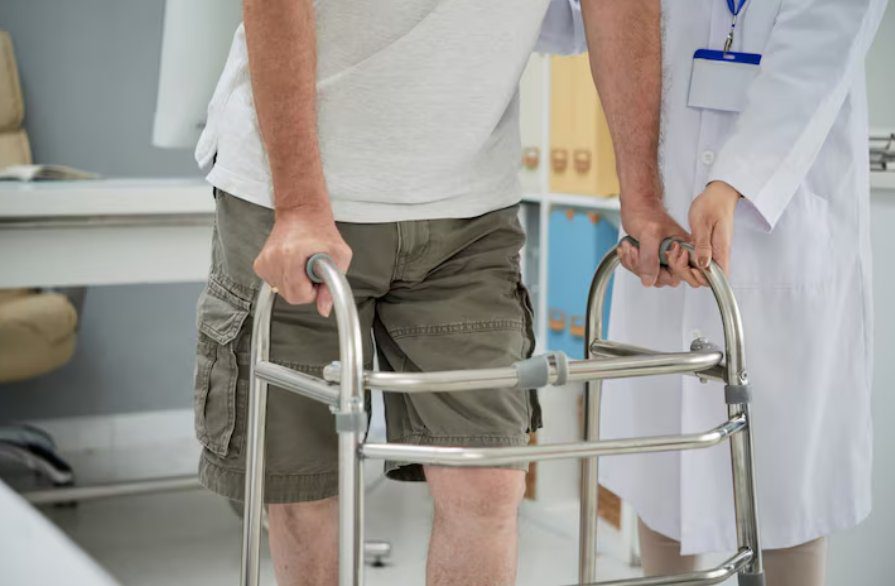
- Weeks 1–4: Passive range-of-motion exercises and immobilisation. Physiotherapy focuses on preventing stiffness.
- Weeks 4–12: Progressive weight-bearing and active strengthening. Walking distance and stair climbing improve gradually.
- Months 3–6: Return to low-impact activities (walking, swimming, cycling). Most patients are functionally independent.
- Months 6–12: Full functional recovery, though some hesitation or stiffness may persist. Confidence in the knee develops over months.
Key reality: Most people need 3–6 months before feeling confident and “back to normal” after total knee replacement surgery. This is a longer recovery commitment, which is important to consider if you value rapid return to independence.
Why Choose Partial Knee Replacement Surgery?
- Faster functional recovery (weeks vs. months)
- Smaller surgical incision and less tissue trauma
- Preserves natural knee anatomy and proprioception (sense of position)
- Higher return to demanding sports and vigorous activity
- High patient satisfaction and willingness to repeat surgery if needed
- Less blood loss
- Quicker return to independence and daily activities
Trade-off: 10–20% of patients develop arthritis in a previously healthy compartment within 10–15 years, potentially requiring later conversion to total knee replacement surgery.
Why Choose Total Knee Replacement Surgery?
- Highly predictable; the gold standard for severe, multi-compartmental arthritis
- Addresses all three compartments in one surgery (one-and-done approach)
- Handles complex deformity and ligament damage effectively
- Refined surgical technique with decades of long-term data
- Reliable durability when implanted correctly
- Suitable for patients with significant alignment issues
- Eliminates uncertainty about arthritis progression
Trade-off: Longer initial recovery (3–6 months), loss of natural knee feel, and restriction to low-impact activity.
Why Choose Orthokinetics For Your Knee Replacement Decision
Dr. Sean Leo brings 25 years of clinical experience and a subspecialty focus on knee and lower-limb surgery. This matters because partial knee replacement surgery is technically demanding. It requires surgical precision, careful patient selection, and extensive post-operative rehab experience. Not all orthopaedic surgeons perform PKR regularly, which is why consulting an experienced knee replacement specialist in Singapore makes a real difference in outcomes.
Orthokinetics’ approach is evidence-based. Your decision is grounded in current research, not outdated concerns. Equally important is post-operative collaboration with physiotherapists and sports rehab specialists to ensure you achieve full functional recovery and protect long-term joint health. This integrated approach, specialist diagnosis, careful surgery, and structured rehabilitation, is what separates specialist knee care from general orthopaedic care and helps you regain confidence and independence.
Frequently Asked Questions
Will I need revision surgery after partial knee replacement?
Not necessarily. Research data shows revision rates similar to total knee replacement surgery at 5 years. However, 10–20% of patients may develop arthritis in healthy compartments over 10–15 years, which could lead to TKR conversion.
Can I play tennis after a partial knee replacement?
Yes. Many patients return to tennis, skiing, hiking, and other sporting activities (although the advice is to reduce the intensity of play). Total knee replacement patients are typically limited to low-impact activity (walking, swimming, cycling).
How long does surgery take?
Partial knee replacement surgery typically takes 45 minutes to 1 hour. Total knee replacement surgery takes 1.5 to 2 hours.
Will my knee feel normal after replacement?
Partial knee replacement patients report higher rates of natural feel and proprioception. Total knee replacement patients report 80% satisfaction, but approximately 20% say it never feels fully “normal”—though it is pain-free and functional.
Next Steps: Schedule Your Consultation
If you’re experiencing persistent knee pain, limited mobility, clicking, locking, or reduced function affecting your independence, the first step is a specialist assessment. Dr. Sean Leo and the Orthokinetics team will review your imaging, test your knee stability, and discuss which option aligns with your anatomy, lifestyle, and recovery goals.
Dr Sean Leo at Orthokinetics brings over 25 years of clinical experience with a clinical focus on knee and lower limb surgery, covering everything from structured non-surgical knee treatment to ACL reconstruction, meniscus repair, and knee replacement. Every case starts with an honest, individual assessment.
- Orthosports at Novena: 38 Irrawaddy Road, #10-41, Mount Elizabeth Novena Specialist Centre, Singapore 329563. Tel: +65 6734 8168
- Orthosports at Connexion: 1 Farrer Park Station Road, #15-17 Connexion, Singapore 217562. Tel: +65 6435 0015
- WhatsApp: +65 8439 2120 | Email: appointment@orthokinetics.sg
Arrange a knee assessment at Orthokinetics

Dr Sean Leo is a knee and lower limb specialist with over 25 years of clinical experience. His practice covers partial and total knee replacement, ACL reconstruction, and meniscus repair, with an emphasis on careful patient selection and structured post-operative rehabilitation.
| Disclaimer This article is for informational purposes only and does not constitute medical advice. Consult a qualified medical professional for assessment and treatment of any knee condition. |
Reference
- Riverside Health. (2025, April 15). Partial vs. total knee replacement | pros & cons explained. Riverside Health System. https://www.riversideonline.com/patients-and-visitors/healthy-you-blog/blog/p/partial-vs-total-knee-replacement
- Beard, D. J., Davies, L. J., Cook, J. A., et al. (2020, April). Total versus partial knee replacement in patients with medial compartment knee osteoarthritis: the TOPKAT RCT. NIHR Journals Library. (Health Technology Assessment, No. 24.20). https://www.ncbi.nlm.nih.gov/books/NBK556481/