Personalised Rotator Cuff Tear Care in SingaporeRotator Cuff Tear Surgery & Recovery

Injured your rotator cuff? Dr Sean Leo is an orthopaedic surgeon that provides specialized care for Shoulder injuries, combining 25+ years of clinical experience as a doctor with innovative surgical techniques. Our specialist in Singapore provides diagnosis and treatment for rotator cuff tears, from non-surgical management to advanced arthroscopic repair surgery.
Man with short black hair and glasses wearing a dark shirt, smiling at camera.

Dr. Sean Leo

Orthopedic Surgeon Singapore
https://orthokinetics.sg/wp-content/uploads/2025/11/What-is-a-Rotator-Cuff-Tear_-visual-selection-1-640x330.png

What is a Rotator Cuff Tear?

Understanding Rotator Cuff Tears with Dr. Sean Leo.

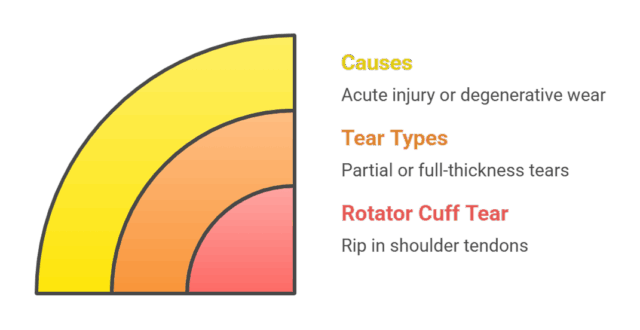
A rotator cuff tear is a rip in the group of four tendons and their attached muscles that stabilize the shoulder joint. These tears can be partial (the tendon is frayed) or full-thickness (a complete tear through the tendon). They can result from an acute injury or develop gradually over time due to wear and tear (degenerative tear). 

What are the Symptoms of a Rotator Cuff Tear?

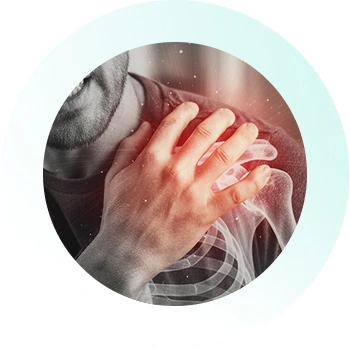
A rotator cuff tear often causes a deep, aching shoulder pain that worsens at night, along with weakness when lifting or rotating the arm. You may feel a catching or grinding sensation and struggle to raise your arm for everyday tasks. The pain can also radiate down the arm, further limiting movement.
https://orthokinetics.sg/wp-content/uploads/2025/11/shoulderpainsymptom.webp
Deep, aching pain in the shoulder, often worse at night

This type of pain tends to linger and intensify when lying down, especially on the affected side. It often disrupts sleep and is a common sign of inflammation or a tear within the rotator cuff.

Weakness when lifting or rotating your arm

Tears in the rotator cuff can significantly reduce strength, making actions like lifting objects, reaching overhead, or rotating the arm feel challenging or unstable.

A "catching" or "grinding" sensation when moving your shoulder

You may feel or hear a catching, clicking, or grinding as the shoulder moves. This can occur when damaged tissues or irregular joint movement interfere with smooth motion.

Inability to lift your arm to perform certain movements

As the tear progresses, lifting the arm—especially above shoulder height—can become difficult or impossible, often affecting daily tasks like dressing or reaching for items.

Pain that radiates down the arm

Shoulder pain may travel down the outer arm due to irritation of surrounding structures or nerves, making the discomfort feel more widespread and persistent.

Rotator Cuff Tear
Treatment and Recovery

The best treatment depends on the tear's size, location, and your activity level.
  • Non-Surgical Treatments
  • Surgical Treatments

What are the treatment options for Rotator Cuff Tears?

Surgical vs Non-surgical
  • Rest and Activity Modification: Using a sling for a short period. 
  • Physiotherapy: Crucial for strengthening the surrounding muscles. 
  • Pain Management: Anti-inflammatory medications or corticosteroid injections. 

When would you need surgery?

Act Promptly for Better Outcomes
  • Arthroscopic Rotator Cuff Repair: The gold standard. A minimally invasive procedure where the surgeon reattaches the torn tendon to the bone using small anchors and sutures. 

Recovery from surgery requires wearing a sling for 4-6 weeks to protect the repair, followed by a prolonged and guided physiotherapy program to regain full strength and function, which can take 6-9 months. 

Repair Your Rotator Cuff, Restore Your Strength.

Don't ignore a torn rotator cuff. Our specialist can assess your injury and recommend the best path to recovery, whether surgical or non-surgical.