Introduction
Sports injuries · Tendon problems
Quadriceps Tendonitis: Causes, Treatment and Recovery

Dr Sean LeoOrthopaedic Surgeon, Singapore
Clinic enquiries · Not an emergency service
Illustrative image

Pain above the kneecap
Pain above the kneecap
Pain above the kneecap: what this page covers
- Quadriceps tendonitis is an overuse problem of the tendon just above the kneecap — the part of your knee’s extensor mechanism that straightens the leg.
- It causes activity-related pain at the front of the knee, usually worse with stairs, squatting, running or jumping.
- Most quadriceps tendon trouble settles with structured load management and progressive strengthening rather than surgery.
- OrthoKinetics is Dr Sean Leo’s professional brand; clinical consultations and treatment are provided through OrthoSports Orthopaedic & Sports Surgery.
What’s covered on this webpage
Follow the route in order, or jump to the stop you need. Stops you have read are marked.
What quadriceps tendonitis is
What quadriceps tendonitis is
What quadriceps tendonitis is
The term people commonly use — “tendonitis” — usually describes a gradual, degenerative change in the tendon from repeated loading, not a sudden bout of inflammation. Clinically, this is closer to what is called tendinopathy: the tendon’s fibres have worn and adapted poorly to the load placed on them, rather than becoming acutely inflamed the way a cut or infection would.
The quadriceps tendon sits above the kneecap, where the four quadriceps muscles come together and attach to its upper pole. It is part of the same extensor mechanism as the patellar tendon, which sits below the kneecap — but the two are distinct structures, and this page is about the one above.

How it develops
How it develops
How it develops
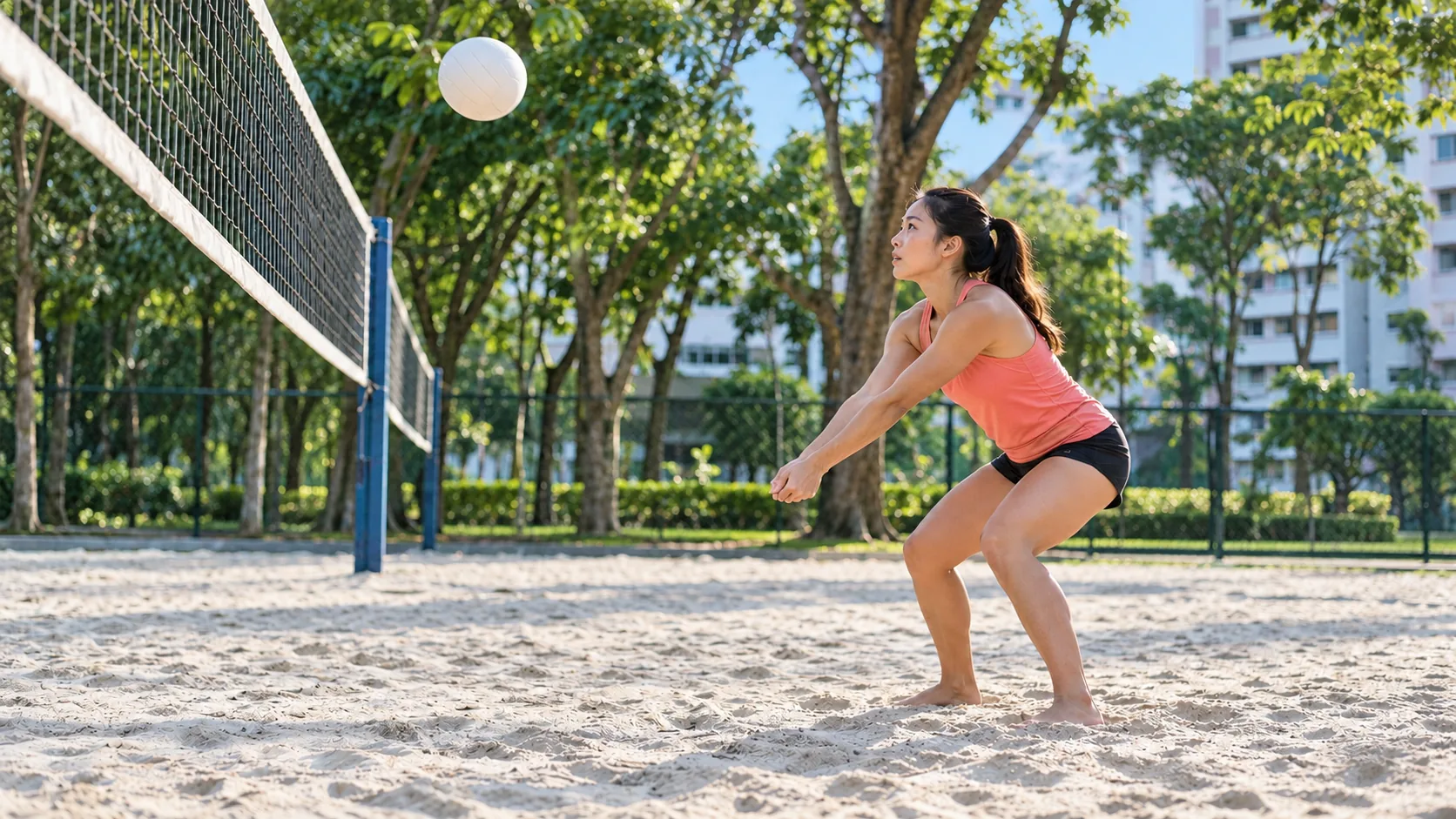
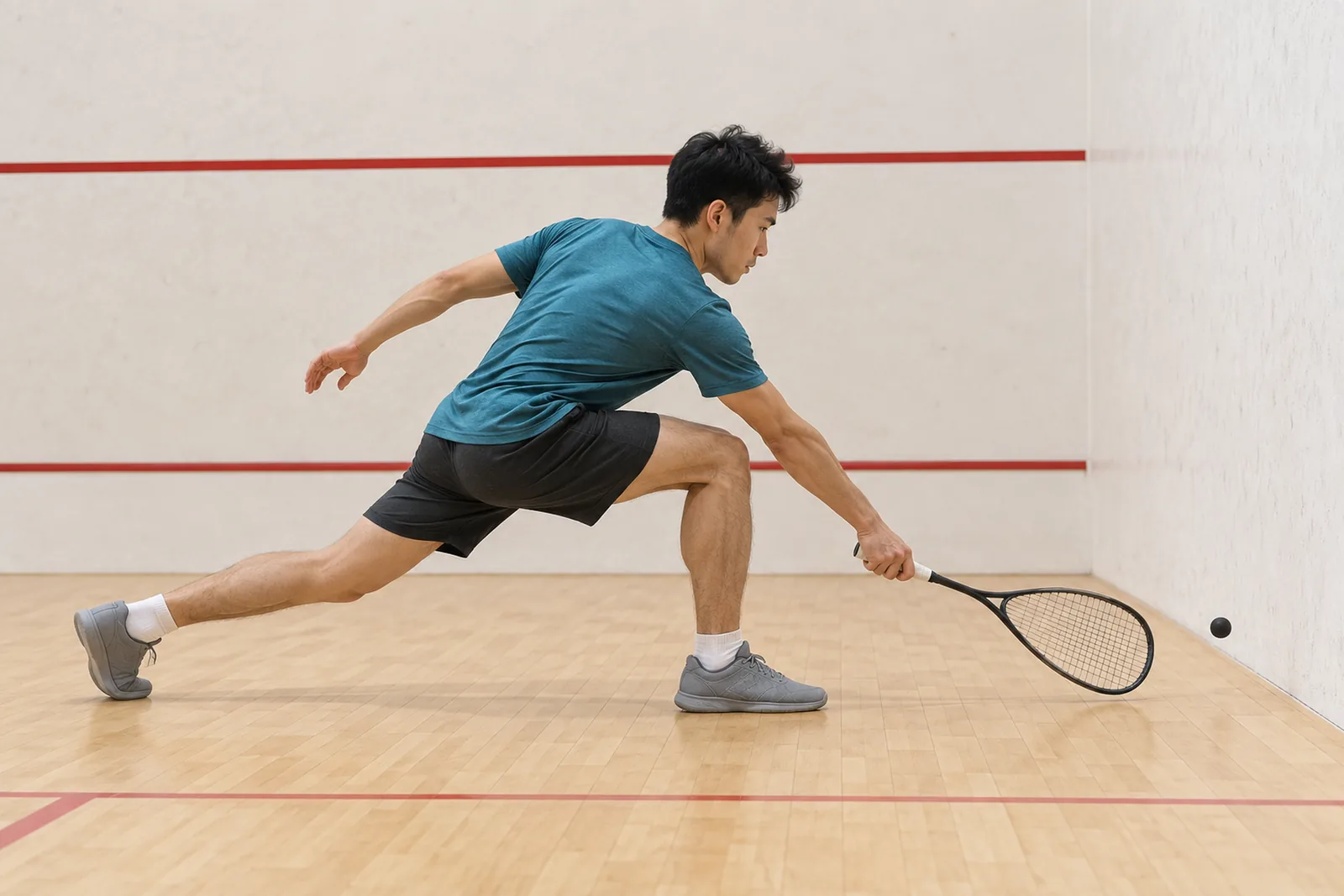
Repeated loading — jumping, squatting, kicking, prolonged knee flexion — asks the quadriceps tendon to absorb more than it can currently adapt to. Over time, that mismatch between load and capacity produces the gradual, degenerative change described above. Football and volleyball are among the sports associated with it, though people who develop it often cannot point to one specific injury that caused it.
Who it affects
Who it affects
Who it affects
Quadriceps tendonitis is most often seen in active people who load the knee repeatedly — but it is not only a young athlete’s injury. It affects people across a wide range of ages, including non-athletes whose daily activities involve repeated knee loading.
It is recognised as less common, and considerably less studied, than patellar tendonitis, and there is no universally agreed staging system for it.

Symptoms of quadriceps tendonitis
Symptoms of quadriceps tendonitis
Symptoms of quadriceps tendonitis
- Pain and tenderness just above the kneecap
- Worse with stairs, squatting, running, jumping, or after prolonged sitting
- Stiffness and a feeling of weakness in the knee
These are useful clues, but they overlap with other causes of anterior knee pain — pain above the kneecap is a reasonable prompt for assessment, not a diagnosis on its own.
What to do if you suspect it
What to do if you suspect it
What to do if you suspect it
- Relative rest — reduce, rather than eliminate, the activity that aggravates it.
- Ice can help settle discomfort.
- Anti-inflammatory tablets can ease pain in the short term, but they do not heal the underlying tendon; your doctor or pharmacist advises on dosing.
Early self-care settles symptoms and protects the tendon while you arrange a proper assessment. It is not a substitute for one, and it will not tell you whether something more is going on.
When to see a specialist
When to see a specialist
When to see a specialist
It is reasonable to arrange an assessment if pain persists despite relative rest, keeps coming back, is limiting your walking, running or stairs, or if you are simply unsure what is going on.
Safety: A sudden “pop” or an inability to straighten the knee is a different problem from gradual tendon overload — it may signal a tear, and should be assessed promptly rather than managed as ordinary tendon irritation. Website or messaging contact is not an emergency-response service.

How it is assessed
How it is assessed
How it is assessed
History
Your story comes first — what the pain feels like, what brings it on, and how it is affecting your activity.
Examination
The diagnosis is made clinically: tenderness where the tendon meets the top of the kneecap, and pain when the knee is straightened against resistance from a deeply bent position, are the typical findings on examination.
Imaging
More on imaging
Ultrasound or MRI can show tendon thickening, dark (hypoechoic) areas and increased blood flow around the tendon. These findings support the clinical picture and can help rule out a tear, but they are not the diagnosis by themselves — tendon changes on a scan can also be found in people without symptoms. A scan is not required to make the diagnosis.

Treatment
Treatment
Treatment: from settling it to building it back
For most people, the plan starts non-operatively and works through stages:
- Settle the irritation — relative rest, load modification.
- Graded loading and progressive strengthening, guided by physiotherapy. This loading-based (eccentric) approach is drawn from research in patellar and Achilles tendinopathy — there is no separately validated quadriceps-specific protocol, but the underlying loading principle is well supported.
- NSAIDs, if used, are for short-term symptom relief only — they have not been shown to change the long-term course of the tendon; your doctor or pharmacist advises on dosing.
- Gradual return to activity, guided by how the tendon responds rather than a fixed date.
For the small number of people whose symptoms do not settle with a genuine course of non-operative care, surgery is considered — see below.
Surgical treatment
Surgical treatment
Surgical treatment
Surgery is reserved for a small minority of people whose symptoms remain severe and limiting after a genuine, sustained course of non-operative care (commonly three months or more).
The operation that is actually supported for this condition is surgical debridement / excision of degenerative tissue — not “tendon repair.” Repair describes reconstructing a tendon that has acutely ruptured, which is a different problem in a different patient group. The outcome evidence for debridement/excision is drawn largely from patellar tendon surgery rather than quadriceps-specific studies, so outcomes are not promised.
Recovery and returning to activity
Recovery and returning to activity
Recovery
Recovery and returning to activity
Recovery is gradual and guided by how the tendon responds to load, not by a calendar. Activity is reintroduced in steps, and a setback is usually managed by adjusting the load rather than starting over. Where a general timeframe is useful, conservative care for overuse tendon problems of this kind typically takes several months — this is not a guarantee, and it is not a quadriceps-specific figure.
Some sources report that quadriceps or patellar tendon trouble left unaddressed can linger and, in some athletes, shorten sporting careers — but the long-term data behind that message comes from a study of a patellar tendon cohort, not from a quadriceps-tendon cohort. No equivalent long-term quadriceps study exists, so that figure should not be read as specific to the quadriceps tendon.
Quadriceps vs patellar tendonitis
Quadriceps vs patellar tendonitis
Quadriceps vs patellar tendonitis (and jumper’s knee)
Pain above the kneecap points to the quadriceps tendon; pain below it points to the patellar tendon. (“Jumper’s knee” is often used as if it means only the patellar tendon, but it is actually an umbrella term that has historically covered both.) The two tendons work together but are distinct structures.
Quadriceps tendinopathy is honestly the less-studied of the two: much of the research that gets applied to it — including some commonly given guidance — is drawn from patellar tendon studies, because dedicated quadriceps research is limited.
If your pain sits below the kneecap rather than above it, the patellar tendonitis page may be the more relevant one to read.
For pain around the front of the knee more widely, including what is often called runner’s knee, see pain at the front of the knee.
Preventing recurrence
Preventing recurrence
Preventing recurrence
The same principle that helps a quadriceps tendon problem settle — graded load within the tendon’s current tolerance — is what tends to keep it from returning. Progressing activity gradually and maintaining strength are sensible general habits; there is no single validated prevention programme specific to this condition.
Structure / Patient / Goal
Structure / Patient / Goal
Deciding together
Structure / Patient / Goal (How options are weighed)
S
Structure
What is affected — the quadriceps tendon, its location above the kneecap, and the surrounding extensor mechanism.
P
Patient
How it affects you — your symptoms, activity level, general health, preferences and circumstances.
G
Goal
What you hope to return to — daily walking, running, or a particular sport.
Your plan
No single factor, and no scan result on its own, decides the plan. These three considerations are weighed together.

Recovery Reflection
Recovery reflection
If your knee still hurt tomorrow, what would tell you whether you were improving?
Progress in a tendon problem rarely announces itself in a single moment. It tends to show up in smaller signs — a stair climbed without wincing, a squat held a little longer, a walk that doesn’t need to be shortened. Watching for those markers, rather than waiting for the pain to disappear all at once, is often a more honest way to track how things are actually going.
What would it mean to trust the process even on a day the tendon feels no different?
A tendon adapting to load does not always feel different day to day, even while it is genuinely changing underneath. That gap between how something feels and what is actually happening can be unsettling. It does not mean the plan has failed — it usually means the timescale is simply longer than a single day can show.
Progress with a loading tendon is rarely linear, and a plateau is not a verdict on your effort. The useful questions when things stall are practical ones — what was loaded, what changed, what needs more time — not a judgement on how hard you have tried.
Illustrative image

 With you through the seasons
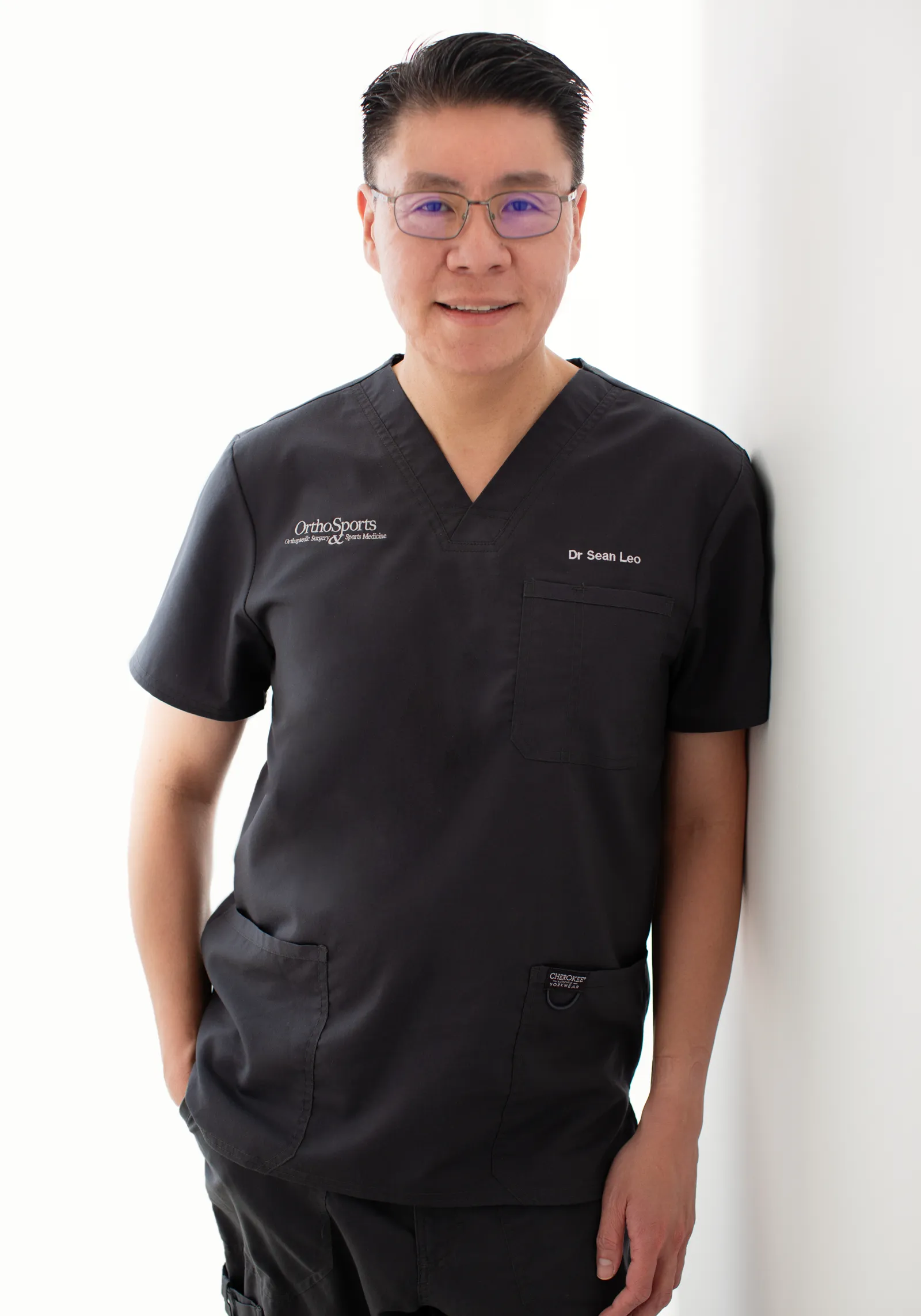
Meet Dr Sean Leo
Meet Dr Sean Leo
A consultant orthopaedic surgeon whose clinical focus is the knee, sports injuries and the lower limb.
- Dr Sean Leo is a consultant orthopaedic surgeon. OrthoKinetics is his professional brand; clinical services are provided through OrthoSports Orthopaedic & Sports Surgery at Mount Elizabeth Novena Specialist Centre and Connexion, Farrer Park Hospital.
- His clinical interests include sports injuries, including those in adolescent athletes; ligament reconstruction; realignment surgery; cartilage repair and joint-preservation approaches; knee replacement; and technology-assisted hip and knee surgery.
- The consistent aim is to return people to meaningful function and activity while avoiding unnecessary downtime.
- Qualifications: MBBS, MRCS (Ed), MMed (Ortho), FRCSEd (Ortho).
More detail: Meet Dr Sean Leo
- Training and career: Dr Leo trained in medicine at the National University of Singapore and served in the Singapore Armed Forces Medical Corps from 2000 to 2012, where his work included the care of soldiers in physically demanding roles. He completed postgraduate orthopaedic training in 2009 and a one-year clinical fellowship at Royal North Shore Hospital in Sydney, Australia, before joining Changi General Hospital as an orthopaedic consultant in 2012, where he later held the positions of Senior Consultant and Director of the Hip and Knee Service. With seniority, his educational contribution has evolved towards mentorship and support for junior doctors.
Questions people often ask
Common quadriceps tendonitis questions
Common quadriceps tendonitis questions
What is the main cause of quadriceps tendonitis?
Repeated loading of the knee — through activities like jumping, squatting or running — that outpaces the tendon’s ability to adapt.
Quadriceps tendonitis develops from repetitive loading and stress on the extensor mechanism of the knee, often through activities such as squatting, prolonged knee flexion, football or volleyball. It usually builds gradually rather than following one specific injury.
How long does it take to heal?
Typically several months with conservative care — there is no guaranteed timeline, and no quadriceps-specific recovery figure exists.
Most overuse tendon problems of this general kind improve over a period of months with relative rest, load management and progressive strengthening. This is a general figure for overuse tendinopathy, not a quadriceps-specific statistic, and it is not a promise for any individual.
Can it heal on its own without treatment?
Most people improve with active management — relative rest, load modification and physiotherapy — rather than by simply waiting it out.
“On its own” understates what actually helps: a structured period of relative rest, activity modification and progressive strengthening. Ignoring ongoing pain and continuing full loading is more likely to prolong the problem than resolve it.
What exercises help recovery?
Progressive, loading-based strengthening exercises, guided by a physiotherapist.
Loading-based (eccentric) strengthening is the mainstay of exercise therapy for tendon problems like this. The specific evidence for the quadriceps tendon is extrapolated from research on the patellar and Achilles tendons rather than a dedicated quadriceps trial, so a physiotherapist tailors the programme to how your tendon responds rather than following a fixed prescription.
What exercises should I avoid?
Activities that clearly reproduce your pain, until your tendon has been assessed and a load-management plan is in place.
There is no fixed “avoid list” that applies to everyone — the right approach is to modify the load that is aggravating the tendon (often deep squatting, jumping or repeated stairs) while working with a physiotherapist to reintroduce it gradually.
What is the difference between quadriceps and patellar tendonitis?
Quadriceps tendonitis affects the tendon above the kneecap; patellar tendonitis affects the tendon below it. “Jumper’s knee” is sometimes used as if it means only the patellar tendon, but it is actually an umbrella term that has historically covered both.
Both are extensor-mechanism tendons that work together, but they are anatomically distinct, and quadriceps tendinopathy is far less studied. Much of the research literature applied to the quadriceps tendon is actually drawn from patellar tendon studies.
Can I still walk or exercise?
Usually yes, within limits — the aim is to modify aggravating load rather than stop moving altogether.
Complete rest is not typically the goal. Reducing or modifying the specific activities that clearly aggravate the tendon, while staying otherwise active, is generally the better approach — but this page cannot give you a personal clearance, and persistent or worsening symptoms are a reason to be assessed.
When should I see a specialist?
If the pain persists despite relative rest, keeps recurring, or is limiting your activity — see the When to see a specialist section above for more detail, including the important difference between gradual tendon pain and a sudden tear.
Persistent pain, pain that keeps limiting stairs, running or squatting, or simple uncertainty about what is going on are all reasonable reasons to arrange an assessment. A sudden “pop” or inability to straighten the knee is different from ordinary tendon overload and needs prompt assessment. You may also find it useful to read about cartilage damage or kneecap tracking problems, which can present with similar anterior knee pain.
Does wearing a knee brace help?
There is no quadriceps-specific evidence either way; some people find a support helpful for comfort, but it is not a treatment for the underlying tendon.
Bracing has not been studied specifically for the quadriceps tendon. Anecdotally, some people find a support or strap useful for comfort during activity, but this does not treat the underlying degenerative change — load management and strengthening remain the core of treatment.
Can it become a serious injury or tear if left untreated?
Ongoing tendon overload without attention can, in some cases, progress toward a more significant tendon problem — but “tendonitis” and a tear are not the same thing, and a sudden tear typically has a distinct, more dramatic onset.
Chronic tendon overload and an acute tear are different processes, though a degenerated tendon may in principle be more vulnerable. If you experience a sudden “pop,” a clear loss of strength, or cannot straighten your knee, that is a different presentation from gradual tendon pain and needs prompt assessment rather than routine self-management — see the safety note above.
What do people mean by a “knee specialist”?
“Knee specialist” is an everyday phrase many people use when looking for a doctor for a knee problem. In Singapore, doctors may only use the specialist titles accredited by the Specialist Accreditation Board (SAB) of the Ministry of Health (MOH). Orthopaedic Surgery is an accredited specialty; the knee is an area of clinical interest within it. “Knee specialist” is not a separate specialist registration; however, individual orthopaedic surgeons may have particular clinical interests within their specialty. The doctor most people have in mind is an orthopaedic surgeon whose practice focuses on knee conditions. Dr Sean Leo is registered as a specialist in Orthopaedic Surgery, and his clinical interest is the knee. He completed a postgraduate knee fellowship programme in Sydney, Australia, at the Royal North Shore Hospital under Dr Myles Coolican and Dr David Parker from 2009 to 2010. Dr Leo was also Director of the Hip and Knee Service at Changi General Hospital from 2014 to 2018.
Costs and insurance
Costs and insurance
Practicalities
Costs and practical arrangements
A cost estimate for surgery can be given only after a consultation and assessment, once a surgical plan has been developed; the cost of non-surgical care also depends on the plan agreed after assessment. Each individual case is unique — the specific care needed, time involved and other factors contribute to the overall estimate. The clinic will provide a written estimate should you proceed with treatment, and this can also assist with pre-authorisation from insurance where applicable.
Insurance panels. Dr Sean Leo, Orthopaedic Surgeon, is on the specialist panels of Great Eastern (GE Panel), HSBC Life (HSBC Life Shield) and Singlife (Singlife Shield), and on the Prudential Panel. AXA Insurance Singapore became part of HSBC Life in 2023, and former AXA Shield plans are now HSBC Life Shield plans.
Corporate health plans. Dr Leo is on the panels of both Alliance Medinet and iXchange, which administer medical benefits for many company health plans. If your company plan uses either panel, you can see Dr Leo as a panel doctor.
If your company uses a different panel. Some company plans still let you see a doctor of your choice outside their panel, then claim reimbursement. This varies from plan to plan, as may the co-payment, so please check your benefits with your company’s HR department.
Panel arrangements change from time to time, so please confirm with your insurer or your company’s plan administrator before your appointment.
Dr Leo is on the panels shown. If your insurer is not listed, you may ask whether co-management with an Orthosports surgeon partner on that panel is clinically and administratively appropriate. Orthosports surgeon partners are collectively on the panels of all Shield plans.
Arrange a consultation: the appointment section is further down this page.
Sources
References
References
- King D, Yakubek G, Chughtai M, Khlopas A, Saluan P, Mont MA, Genin J. Quadriceps tendinopathy: a review, part 1: epidemiology and diagnosis. Ann Transl Med. 2019 Feb;7(4):71. doi:10.21037/atm.2019.01.58. PMID 30963066.
- King D, Yakubek G, Chughtai M, Khlopas A, Saluan P, Mont MA, Genin J. Quadriceps tendinopathy: a review, part 2—classification, prognosis, and treatment. Ann Transl Med. 2019 Feb;7(4):72. doi:10.21037/atm.2019.01.63. PMID 30963067.
- Simpson M, Smith TO. Quadriceps tendinopathy — a forgotten pathology for physiotherapists? A systematic review of the current evidence-base. Phys Ther Rev. 2011;16(6):455-461. doi:10.1179/1743288X11Y.0000000035.
- Andres BM, Murrell GA. Treatment of tendinopathy: what works, what does not, and what is on the horizon. Clin Orthop Relat Res. 2008 Jul;466(7):1539-1554. doi:10.1007/s11999-008-0260-1. PMID 18446422.
- Wilson JJ, Best TM. Common overuse tendon problems: a review and recommendations for treatment. Am Fam Physician. 2005 Sep 1;72(5):811-818. PMID 16156339.
- Sprague A, Epsley S, Silbernagel KG. Distinguishing quadriceps tendinopathy and patellar tendinopathy: semantics or significant? J Orthop Sports Phys Ther. 2019 Sep;49(9):627–630. doi:10.2519/jospt.2019.0611. PMID 31475629.
- Kettunen JA, Kvist M, Alanen E, Kujala UM. Long-term prognosis for jumper’s knee in male athletes: a prospective follow-up study. Am J Sports Med. 2002 Sep-Oct;30(5):689-692. doi:10.1177/03635465020300051001. PMID 12239003.
Final next step
Final next step
Next step
Final next step
Reading about a problem is a starting point. An assessment brings together the history, an examination where needed and any useful tests, and helps you and your clinician decide what to do next. How much physical examination is needed is a matter of clinical judgement. It may be limited when pain makes an examination unreliable, or when imaging clearly shows a problem that matches the symptoms, such as a fracture seen on an X-ray or an MRI scan that clearly shows an injury consistent with the symptoms. The Singapore Medical Council and the UK General Medical Council both allow remote medical consultations, where a physical examination is not possible, with safeguards: the doctor must be clear about the limits of an opinion formed without an examination, and whether an in-person examination is needed, or referral to other services, is left to the clinical judgement of the attending doctor.
Signs that need urgent help
Some symptoms should not wait for a routine appointment. Each item below says where to go.
After an injury
- The kneecap has slipped out of place and is still out, or the knee looks deformed. Go to an emergency department. If the kneecap went back into place by itself, arrange an early assessment.
- The leg looks twisted or bent, a bone is showing, there is a deep cut, or the foot or leg turns cold, pale, numb, blue or white. Go to an emergency department or call 995.
- You cannot lift your leg up with the knee kept straight, and you may feel a gap just above or just below the kneecap. Arrange an urgent same-day assessment.
At any time
- The knee is stuck and will not straighten, or it is very painful and you cannot move it or put weight on it. Arrange an urgent same-day assessment.
- The knee is suddenly very painful, hot, red and swollen, especially with a fever or feeling generally unwell. Go to an emergency department or call 995.
- One calf or thigh is newly painful and swollen. Arrange an urgent same-day assessment. If you also feel short of breath or have chest pain, call 995.
After knee surgery
- The operated knee becomes more painful, swollen or red, a wound is leaking, or you develop a fever. Contact your surgical team straight away. If you cannot reach them the same day, go to an emergency department. If you feel very unwell, go to an emergency department. If you are short of breath or have chest pain, call 995.
If you are admitted by the doctor at the urgent care centre of one of these private hospitals, the Parkway Pantai hospitals (Mount Elizabeth Orchard, Mount Elizabeth Novena, Gleneagles and Parkway East), Farrer Park Hospital and Thomson Medical Centre, you may ask for Dr Sean Leo to be your attending orthopaedic surgeon. If you are instead discharged and referred for orthopaedic follow-up, you may contact the clinic to arrange an appointment. Both are subject to the hospital’s admission processes and to Dr Leo’s availability.
Was this page helpful?
Arrange a consultation
Appointments are arranged through the OrthoSports clinic team. Send your details below, or message or call the clinic.
Leave your details and the clinic team will reply to arrange a time.
Message the clinic on WhatsApp
-
38 Irrawaddy Road, #10-41 Mount Elizabeth Novena Specialist Centre, Singapore 329563 Map for Orthosports@Novena (opens Google Maps)
-
1 Farrer Park Station Road, #15-17 Connexion, Singapore 217562 Map for Orthosports@Connexion (opens Google Maps)
WhatsApp is for clinic enquiries only. It is not an emergency service and is not monitored for urgent care. Website or messaging contact is not an emergency-response service. For a medical emergency, use your local emergency service.
- OrthoKinetics does not provide emergency or urgent care through this webpage or its WhatsApp contact.