

AAOS OrthoInfo says shoes that are too tight, too loose, or without enough support can lead to unwanted stress on the feet, ankles, lower leg and hip [1]. For plantar fasciitis, the NHS advises wearing shoes with cushioned heels and good arch support [3]. AAOS OrthoInfo says not to buy a shoe based only on the size [1].
AAOS OrthoInfo says shoes that are too tight, too loose, or without enough support can lead to unwanted stress on the feet, ankles, lower leg and hip [1].
This page covers what to look for in a shoe, and what the sources say about shoes and common foot problems. For several of these problems the sources do not point to shoes as the only cause. The NHS pages on plantar fasciitis and ingrown toenails cited here describe care in the UK.
- What should I look for in a shoe?
- What shoe features relate to heel pain?
- What shoe features relate to toe problems?
- What shoe features relate to pain in the ball of the foot?
- When is urgent help needed?
- What should I do next?
What should I look for in a shoe?
AAOS OrthoInfo says a shoe should both conform to the shape of your foot and align with the activities that you do, such as standing for long periods of time or walking long distances [1].
AAOS OrthoInfo says you should have 1/2 inch (about 1.3 cm) of space between your longest toe and the tip of the shoe [1].
AAOS OrthoInfo says not to buy a shoe based only on the size [1].
How should a shoe be fitted?
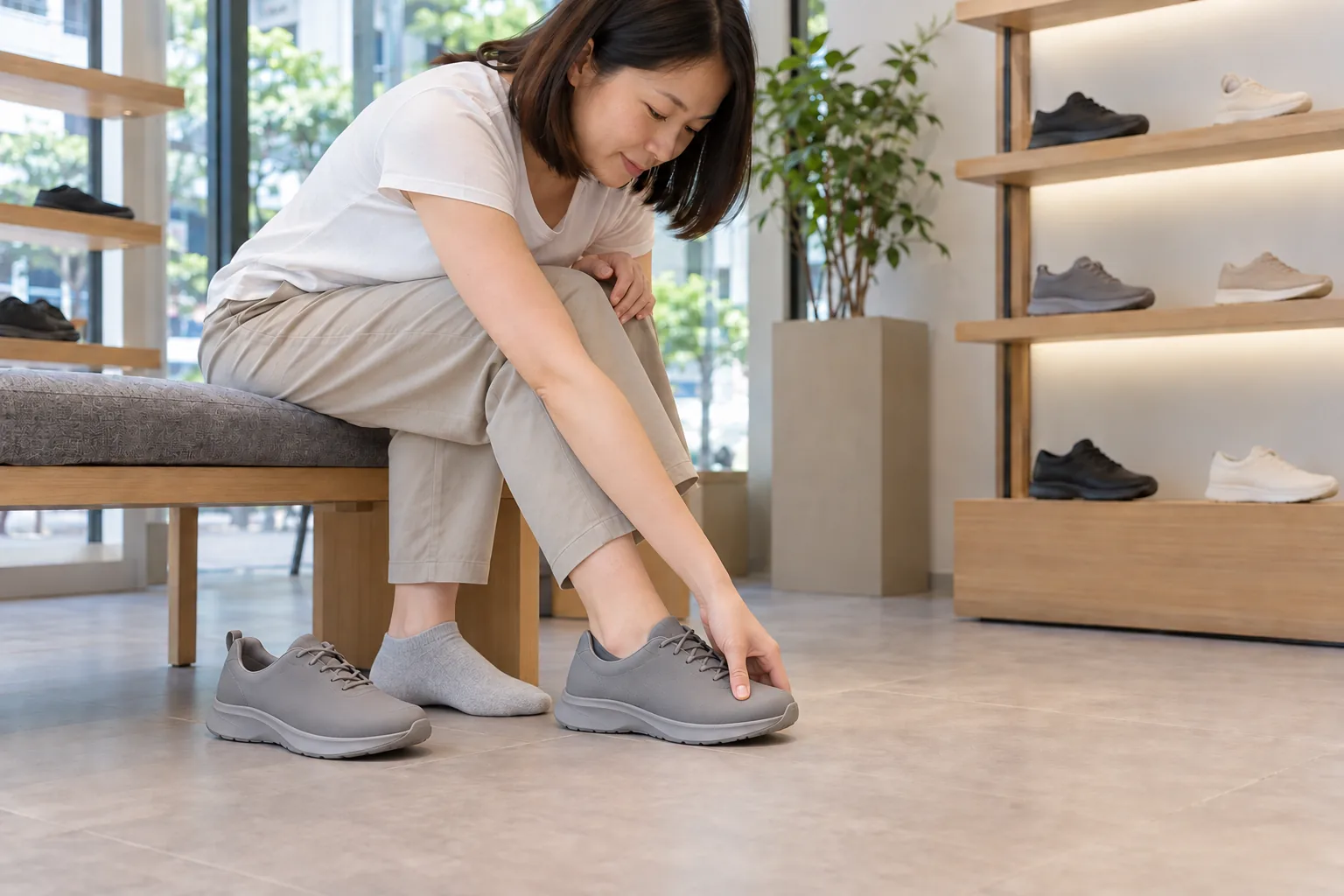
AAOS OrthoInfo says your feet may swell throughout the day (up to 8%), so you should purchase shoes toward the end of the day to ensure maximum comfort [1].
AAOS OrthoInfo says feet can grow as we age, so have your feet measured every year [1].
AAOS OrthoInfo says to stand while having your feet measured, because the full weight of your body will expand your feet [1].
AAOS OrthoInfo says high-heeled shoes place tremendous pressure on the fat pad under the ball of the foot, and that the higher the heel, the greater the pressure and the likelihood for injury [1].
What shoe features relate to heel pain?
AAOS OrthoInfo says plantar fasciitis is one of the most common causes of pain on the bottom of the foot at the heel [2].
AAOS OrthoInfo says plantar fasciitis occurs when the plantar fascia, a strong band of tissue that supports the arch of your foot, becomes irritated and inflamed [2].
AAOS OrthoInfo says it can cause pain with the first few steps after getting out of bed in the morning, or after a long period of rest [2].
AAOS OrthoInfo says that in most cases, plantar fasciitis develops without a specific, identifiable reason [2].
AAOS OrthoInfo says your doctor may order imaging tests to help make sure your heel pain is caused by plantar fasciitis and not another problem [2].
For plantar fasciitis, the NHS advises wearing shoes with cushioned heels and good arch support [3].
The NHS advises not wearing high heels or tight pointy shoes, and not wearing flip-flops or backless slippers [3].
AAOS OrthoInfo says shoes with thick soles and extra cushioning can reduce pain with standing and walking [2].
What about heel spurs?
AAOS OrthoInfo says heel spurs can be seen on an X-ray [2].
AAOS OrthoInfo says a heel spur can be the result of longstanding tension on the plantar fascia insertion, the spot on the heel bone where the plantar fascia attaches [2].
AAOS OrthoInfo says most people who have heel spurs do not have heel pain [2].
What if the pain is at the back of the heel?
AAOS OrthoInfo lists pain on the back of the heel when you wear shoes among the symptoms of Achilles tendinitis, which it defines as acute inflammation of a tendon [4].
Read more in What causes pain in the Achilles tendon and about Achilles tendonitis.
When should shoes be replaced?
AAOS OrthoInfo says to avoid shoes that do not provide support or are worn out [2].
AAOS OrthoInfo says to replace your old athletic shoes before they wear out and no longer support your feet [2].
What shoe features relate to toe problems?
Shoe fit comes up in several toe problems. Each one below is a short summary of what the sources say.
How do shoes relate to bunions?
AAOS OrthoInfo describes a bunion as a painful bony bump that develops on the inside of the foot at the big toe joint [5].
AAOS OrthoInfo says that in most cases, bunion pain is relieved by wearing wider shoes with enough toe room and by using other simple treatments to reduce pressure on the big toe [5].
AAOS OrthoInfo says nonsurgical treatment cannot actually reverse a bunion, but it can help reduce pain and keep the bunion from getting worse [5].
How do shoes relate to hammer toes?
AAOS OrthoInfo describes a hammer toe as a deformity of the second, third, or fourth toes, in which the toe is bent at the middle joint so that it resembles a hammer [6].
AAOS OrthoInfo says hammer toe is the result of a muscle imbalance that puts pressure on the toe tendons and joints [6].
AAOS OrthoInfo says wearing shoes that do not fit properly is a common cause of this imbalance [6]. It adds that other times, some of the small muscles in the foot can weaken over time and cause an imbalance [6].
AAOS OrthoInfo says shoes should be one-half inch (about 1.3 cm) longer than your longest toe, which for many people is the second toe, and have a soft, roomy toe box [6]. AAOS OrthoInfo describes the toe box as the front area of the shoe where the toes rest [1].
How do shoes relate to ingrown toenails?
The NHS describes an ingrown toenail as a common problem where the nail grows into the toe [7].
AAOS OrthoInfo says most ingrown toenails are caused by tight shoe wear, or improper grooming and trimming of the nail [8].
The NHS advises wearing wide, comfortable shoes or sandals [7]. In its advice on preventing ingrown toenails, the NHS says not to wear shoes that are too tight or do not fit properly [7].
The NHS says your toe can also get infected, and that signs of an infected toe include pus coming out of it and feeling hot or shivery [7].
The NHS says to see a doctor (the NHS says a GP) if your toe is painful and swollen with pus coming out of it, or if you have a very high temperature, or you feel hot, cold or shivery [7].
How do shoes relate to corns and calluses?
The NHS describes corns and calluses as hard or thick areas of skin that can be painful [9].
The NHS advises wearing wide, well-fitting, supportive shoes with a low heel and soft sole that do not rub [9].
What shoe features relate to pain in the ball of the foot?
The NHS says pain in the ball of your foot is known as metatarsalgia [10].
The NHS says pain in the ball of your foot is often caused by exercise, such as running, wearing shoes that are too tight or a condition such as arthritis [10].
The NHS advises wearing shoes with plenty of room for your feet, which have a low heel and soft sole [10].
How do shoes relate to Morton’s neuroma?
AAOS OrthoInfo describes Morton’s neuroma as a thickening of the tissue surrounding one or more small nerves leading to the toes [11].
AAOS OrthoInfo says there may be numbness or an unpleasant tingling in the toes [11].
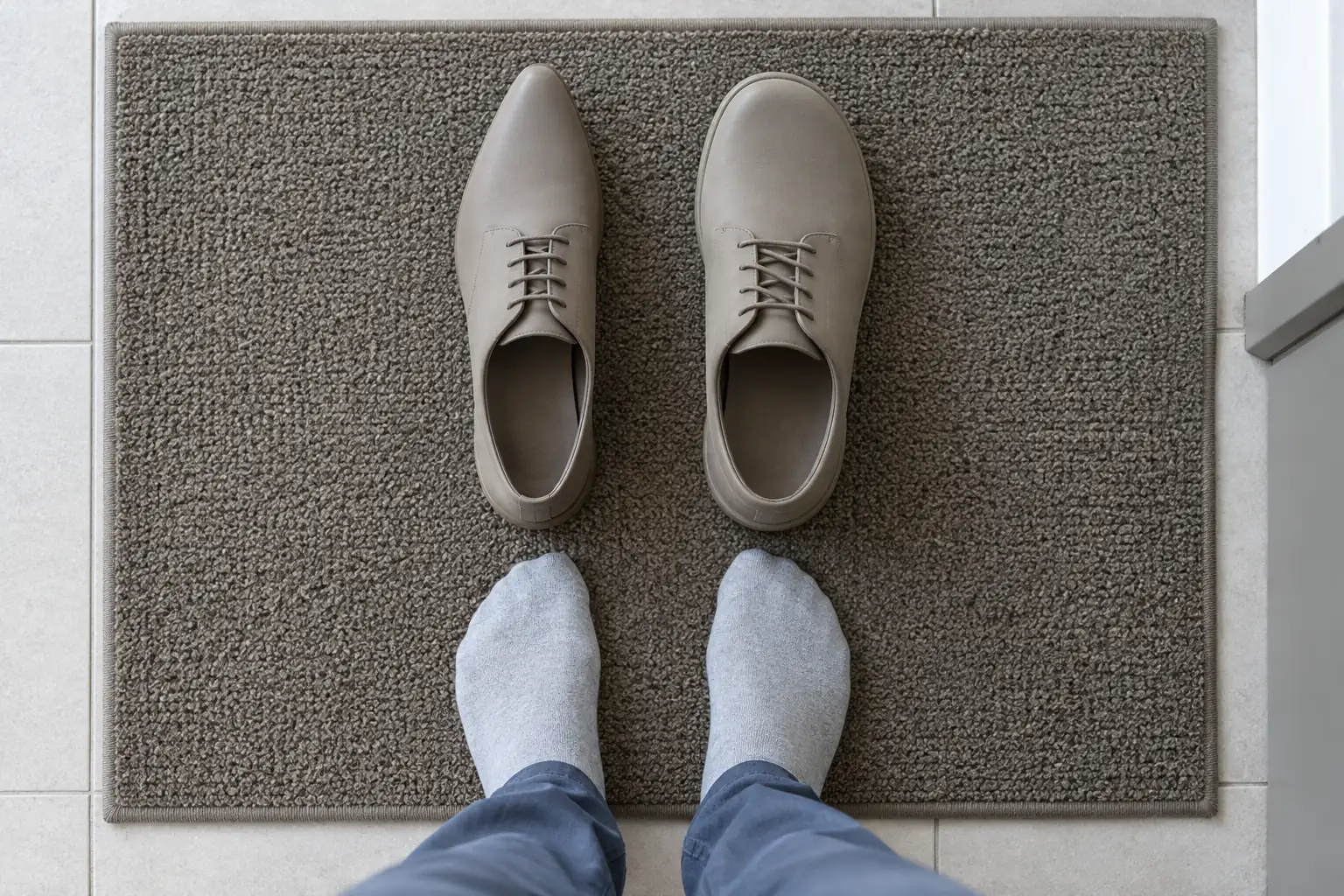
AAOS OrthoInfo says high-heeled shoes can aggravate the condition, and that tight, narrow shoes also aggravate it by compressing the toe bones and pinching the nerve [11].
AAOS OrthoInfo advises choosing wider shoes with a wide toe box (the front area of the shoe where the toes rest), lower heels and a soft sole [11]. AAOS OrthoInfo describes the toe box this way in its shoe-fitting advice [1].
AAOS OrthoInfo says you should see an orthopaedic surgeon if you have continued pain, tingling, or discomfort in your forefoot, which AAOS OrthoInfo also calls the ball of your foot [11].

When is urgent help needed?
The list below covers the signs that should not wait for a routine appointment.
What should I do next?
If foot pain is not settling, or you are unsure what is causing it, an assessment is a sensible next step. The assessment brings together the patient’s story, an examination and any tests that help, so that the patient and the surgeon can decide together. It looks at the structure involved, the patient as a whole person and the goal they want to return to. An appointment supports an informed decision. It is not a commitment to surgery.
- Read about the Foot and Ankle Hub.
- Read about preventing common ankle injuries.
This page provides general information and cannot diagnose an individual condition. OrthoKinetics does not provide emergency or urgent care through this webpage or its WhatsApp contact.
References
- AAOS OrthoInfo. Shoes: Finding the Right Fit. https://www.orthoinfo.org/staying-healthy/shoes-finding-the-right-fit
- AAOS OrthoInfo. Plantar Fasciitis and Bone Spurs. https://orthoinfo.aaos.org/en/diseases–conditions/plantar-fasciitis-and-bone-spurs/
- NHS. Plantar fasciitis. https://www.nhs.uk/conditions/plantar-fasciitis/
- AAOS OrthoInfo. Achilles Tendinitis. https://www.orthoinfo.org/diseases–conditions/achilles-tendinitis
- AAOS OrthoInfo. Bunions. https://orthoinfo.aaos.org/en/diseases–conditions/bunions/
- AAOS OrthoInfo. Hammer Toe: Comprehensive Guide. https://orthoinfo.aaos.org/en/diseases–conditions/hammer-toe/
- NHS. Ingrown toenail. https://www.nhs.uk/conditions/ingrown-toenail/
- AAOS OrthoInfo. Ingrown Toenail. https://www.orthoinfo.org/diseases–conditions/ingrown-toenail
- NHS. Corns and calluses. https://www.nhs.uk/conditions/corns-and-calluses/
- NHS. Pain in the ball of the foot. https://www.nhs.uk/conditions/metatarsalgia/
- AAOS OrthoInfo. Morton’s Neuroma. https://www.orthoinfo.org/diseases–conditions/mortons-neuroma
Was this page helpful?