
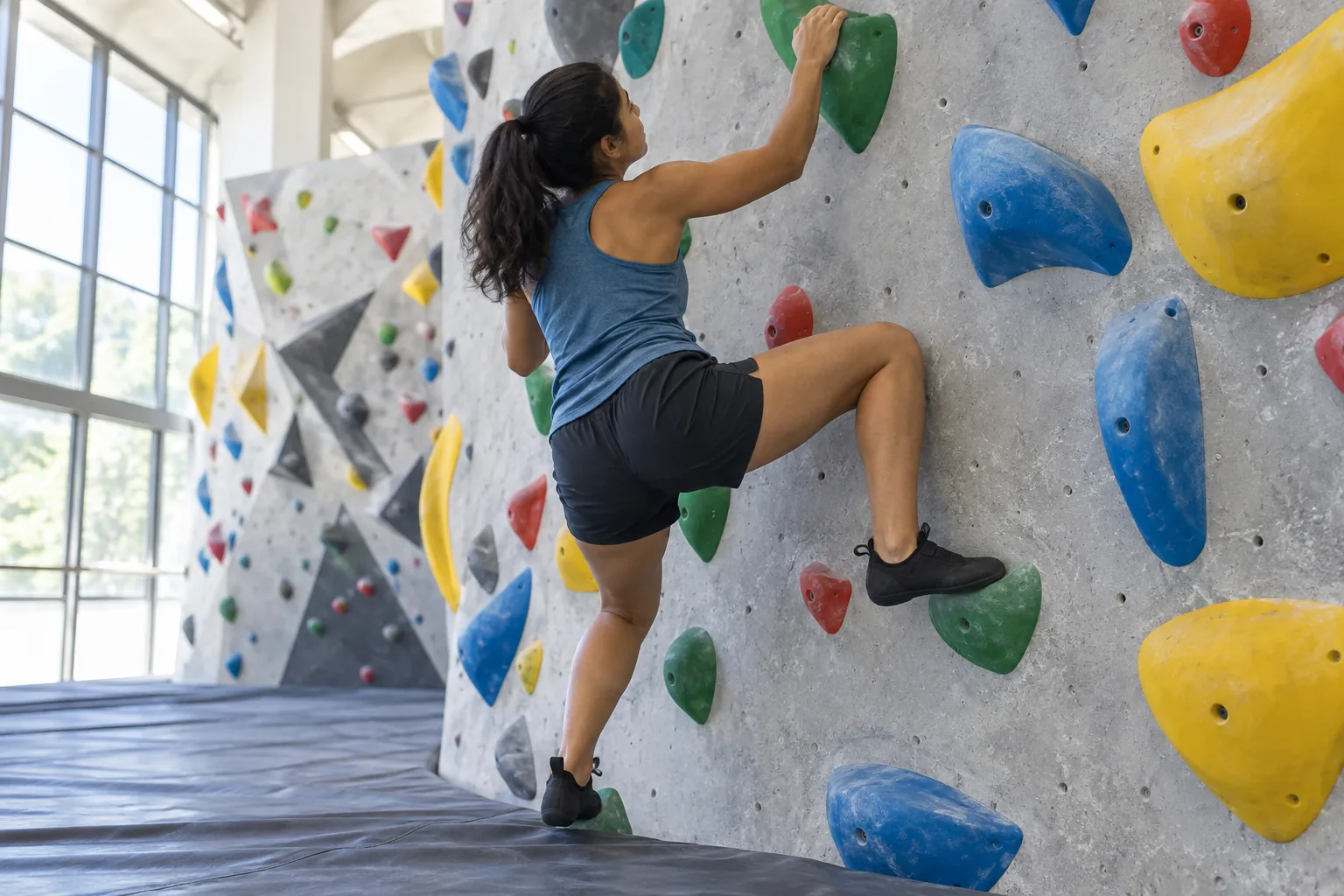
One case series of acute knee injuries in climbing athletes recorded 71 patients (35% competitive athletes, 65% noncompetitive athletes) with 77 independent acute knee injuries [2]. In one case series, the largest share of the 77 injuries (46.8%) came from indoor bouldering. This is a share of injuries seen in that series, not a measure of risk to climbers [2].
AAOS OrthoInfo says the knee is the largest joint in the body, and one of the most easily injured [1]. The authors of one case series of acute knee injuries in climbing write: “Increased attention should be placed on the climber’s knee, especially given the worldwide rise of indoor bouldering.” [2]
- What is inside the knee?
- Which climbing movements were recorded?
- What do the sources suggest?
- When is urgent help needed?
- What should I do next?
What is inside the knee?
AAOS OrthoInfo says three bones meet to form your knee joint: the femur (thighbone), the tibia (shinbone), and the patella (kneecap) [1].
It says two wedge-shaped pieces of meniscal cartilage act as shock absorbers between your femur and tibia, and that when people talk about torn cartilage in the knee, they are usually referring to a torn meniscus [1].
It says the four main ligaments in your knee act like strong ropes to hold the bones together and keep your knee stable [1].
Which climbing movements were recorded?
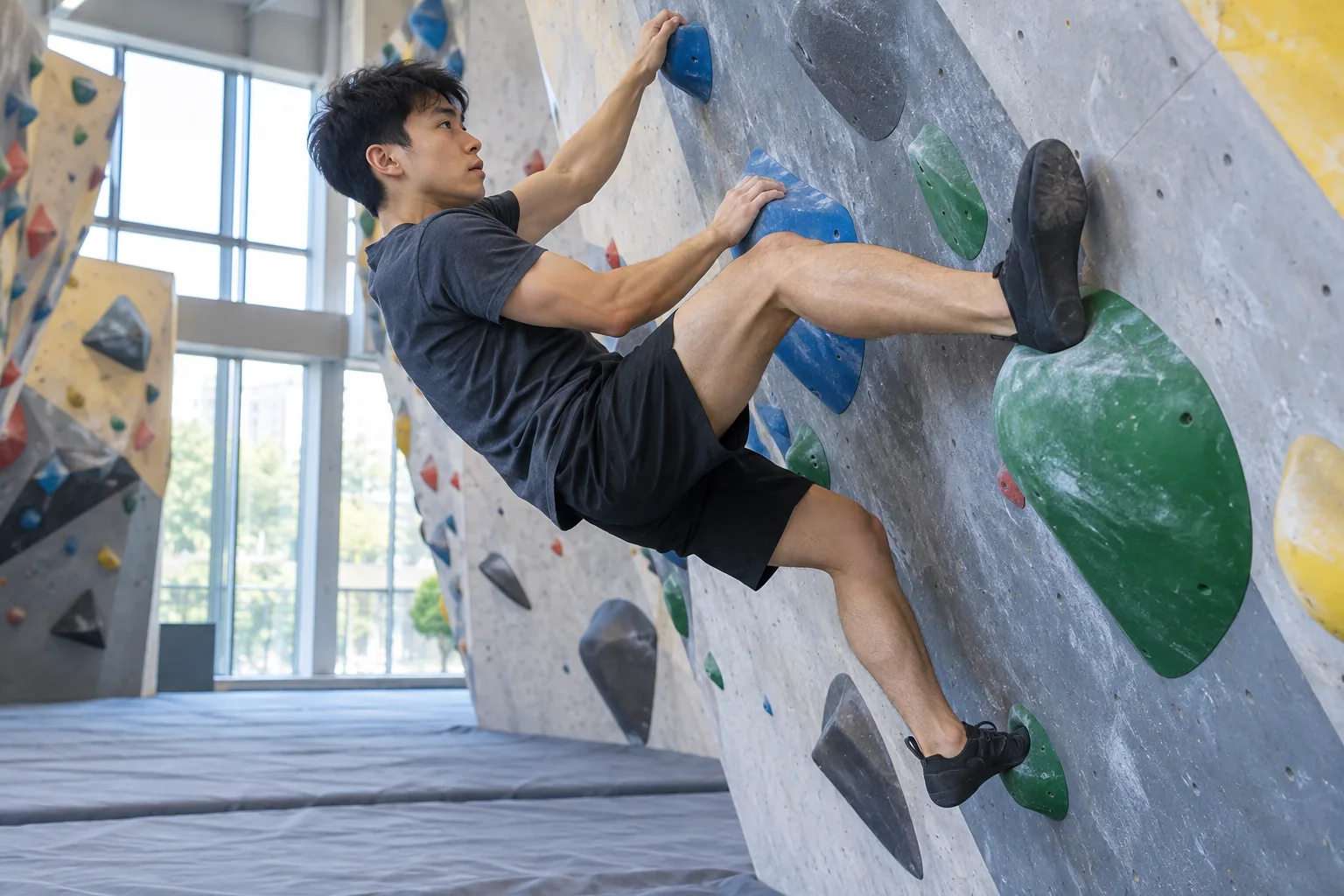
One case series of acute knee injuries in climbing athletes recorded 71 patients (35% competitive athletes, 65% noncompetitive athletes) with 77 independent acute knee injuries [2]. The journal abstract labels the design “Case series; Level of evidence, 4” [2].
In that series, four trauma mechanisms were identified: high step (20.8%), drop knee (16.9%), heel hook (40.3%), and (ground) fall (22.1%) [2]. These are shares of the 77 injuries seen in that one case series. They are not a measure of risk to climbers and do not show which movement is riskiest.
The abstract also reports that the largest share of the injuries (46.8% of the 77 injuries) came from indoor bouldering [2]. Again, this is a share of the injuries seen in one case series, not a measure of risk to climbers.
About the study
The authors describe the work as a retrospective multicenter analysis of acute knee injuries in competitive and noncompetitive climbing athletes over a 4-year period [2].
The leading structural damage was a medial meniscal tear (28.6% of the 77 injuries) [2].
More on the heel hook
A second source is a conference abstract (Orthopaedic Journal of Sports Medicine, 2018). Its authors write: “Among 50 climbing athletes with unspecific knee pain, we identified 9 patients with injuries of the lower extremities after performing a heel hook.” [3] That is a count among climbers who already had knee pain, not a measure of risk.
What do the sources suggest?
The authors of the conference abstract write: “Warm-up routine, an avoidance of muscular imbalances, and flexibility training can help to avoid injuries during heel hook.” [3] It is the authors’ conclusion.
AAOS OrthoInfo’s general page on sprains, strains and other soft-tissue injuries, which is not about climbing, advises: “Schedule regular days off from vigorous exercise and rest when tired.” [4]
More on rest
On the same general page, AAOS OrthoInfo says: “Fatigue and pain are good reasons not to exercise.” [4]
When is urgent help needed?
The list below covers the signs that should not wait for a routine appointment.

What should I do next?
If knee pain is not settling, or you are unsure what is causing it, an assessment is a sensible next step. The assessment brings together the patient’s story, an examination and any tests that help, so that the patient and the surgeon can decide together. It looks at the structure involved, the patient as a whole person and the goal they want to return to. An appointment supports an informed decision. It is not a commitment to surgery.
- Read about the Knee Hub.
- Read about sports injuries.
This page provides general information and cannot diagnose an individual condition. OrthoKinetics does not provide emergency or urgent care through this webpage or its WhatsApp contact.
References
- AAOS OrthoInfo. Common Knee Injuries. https://www.orthoinfo.org/diseases–conditions/common-knee-injuries
- Lutter C, Tischer T, Cooper C, Frank L, Hotfiel T, Lenz R, Schoffl V. Mechanisms of Acute Knee Injuries in Bouldering and Rock Climbing Athletes. Am J Sports Med. 2020 Mar;48(3):730-738. PMID 32004071. doi:10.1177/0363546519899931. https://pubmed.ncbi.nlm.nih.gov/32004071/
- Lutter C, Popp D, Schoffl V. Knee injuries in Rock climbing and Bouldering – An Update. Orthop J Sports Med. 2018 Apr 27;6(4 suppl2):2325967118S00019. doi:10.1177/2325967118S00019. https://pmc.ncbi.nlm.nih.gov/articles/PMC5954325
- AAOS OrthoInfo. Sprains, Strains & Other Soft-Tissue Injuries. https://www.orthoinfo.org/diseases–conditions/sprains-strains-and-other-soft-tissue-injuries
Was this page helpful?