
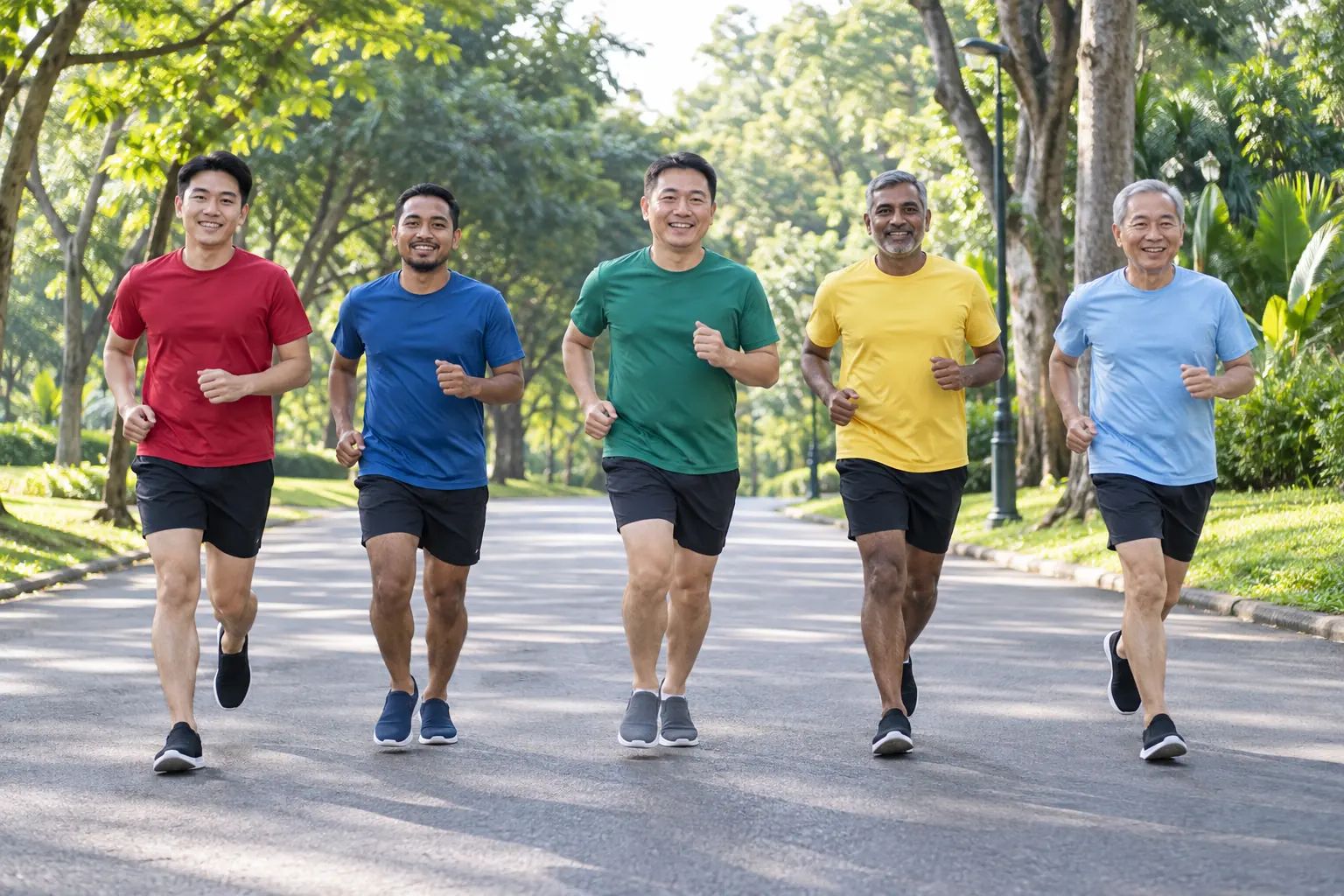
A cardiology patient page on marathon training says: “To avoid injury, runners need to be fully recovered from any and all injury or illness before running a marathon. Injury risk is also minimized by a training program that gradually increases distance and intensity.” [1]
A cardiology patient page on marathon training says: “To avoid injury, runners need to be fully recovered from any and all injury or illness before running a marathon. Injury risk is also minimized by a training program that gradually increases distance and intensity.” [1] AAOS OrthoInfo, on a general page about sprains, strains and other soft-tissue injuries, says injuries often occur when people suddenly increase the duration, intensity, or frequency of their activities [2].
This page is built from patient-information pages, not from marathon trials. Only the first source is about marathon training; the AAOS pages on rest, warm-up, cross training and shoes are general pages about exercise and sport, and the AAOS page on kneecap pain is about a knee condition. None of these AAOS pages is about marathons.
- How do patient pages describe building up?
- Why do rest and warm-up come up?
- Can sudden changes affect the knee?
- What does AAOS say about shoes?
- When is urgent help needed?
- What should I do next?
How do patient pages describe building up?
The cardiology patient page on marathon training says: “Injury risk is also minimized by a training program that gradually increases distance and intensity.” [1]
More on the 10 percent rule
AAOS OrthoInfo, writing about exercise in general rather than marathons, says: “Try to follow the ’10 percent rule’: Increase how often, how long, and how intensely you exercise by no more than 10% each week.” [3] It gives this as advice; the sources read for this page do not test it.
 Owner clinical review required · not a release asset
Why do rest and warm-up come up?
On its general page about sprains, strains and other soft-tissue injuries, which is not about marathons, AAOS OrthoInfo advises that you schedule regular days off from vigorous exercise and rest when tired [2].
It also advises that you warm up to prepare for exercise, even before stretching [2].
Can sudden changes affect the knee?
AAOS OrthoInfo says patellofemoral pain syndrome (PFPS) is a broad term used to describe pain in the front of the knee and around the patella, or kneecap [4]. It adds that PFPS can also be caused by a sudden change in physical activity, which can be related to the frequency of activity (e.g., increasing the number of days you exercise each week) or to the duration or intensity of activity (e.g., running longer distances) [4].
What does AAOS say about shoes?
On its athletic shoes page, which is about sport in general rather than marathons, AAOS OrthoInfo says that wearing the appropriate athletic shoe for specific sports activities can improve comfort and performance and, most important, prevent injuries [5]. The sentence quoted here does not say what “appropriate” means.
When is urgent help needed?
The list below covers the signs that should not wait for a routine appointment.
What should I do next?
If knee pain is not settling, or you are unsure what is causing it, an assessment is a sensible next step. The assessment brings together the patient’s story, an examination and any tests that help, so that the patient and the surgeon can decide together. It looks at the structure involved, the patient as a whole person and the goal they want to return to. An appointment supports an informed decision. It is not a commitment to surgery.
- Read about the Knee Hub.
- Read about injuries runners can get.
- Read about sports injuries.
This page provides general information and cannot diagnose an individual condition. OrthoKinetics does not provide emergency or urgent care through this webpage or its WhatsApp contact.
References
- Cardiology patient page. How to train for a marathon. Circulation. 2014 (published online 9 September 2014). https://www.ahajournals.org/doi/10.1161/circulationaha.114.008708
- AAOS OrthoInfo. Sprains, Strains & Other Soft-Tissue Injuries. https://www.orthoinfo.org/diseases–conditions/sprains-strains-and-other-soft-tissue-injuries
- AAOS OrthoInfo. Cross Training. https://www.orthoinfo.org/staying-healthy/cross-training
- AAOS OrthoInfo. Patellofemoral Pain Syndrome. https://www.orthoinfo.org/diseases–conditions/patellofemoral-pain-syndrome
- AAOS OrthoInfo. Athletic Shoes. https://www.orthoinfo.org/staying-healthy/athletic-shoes
Was this page helpful?