
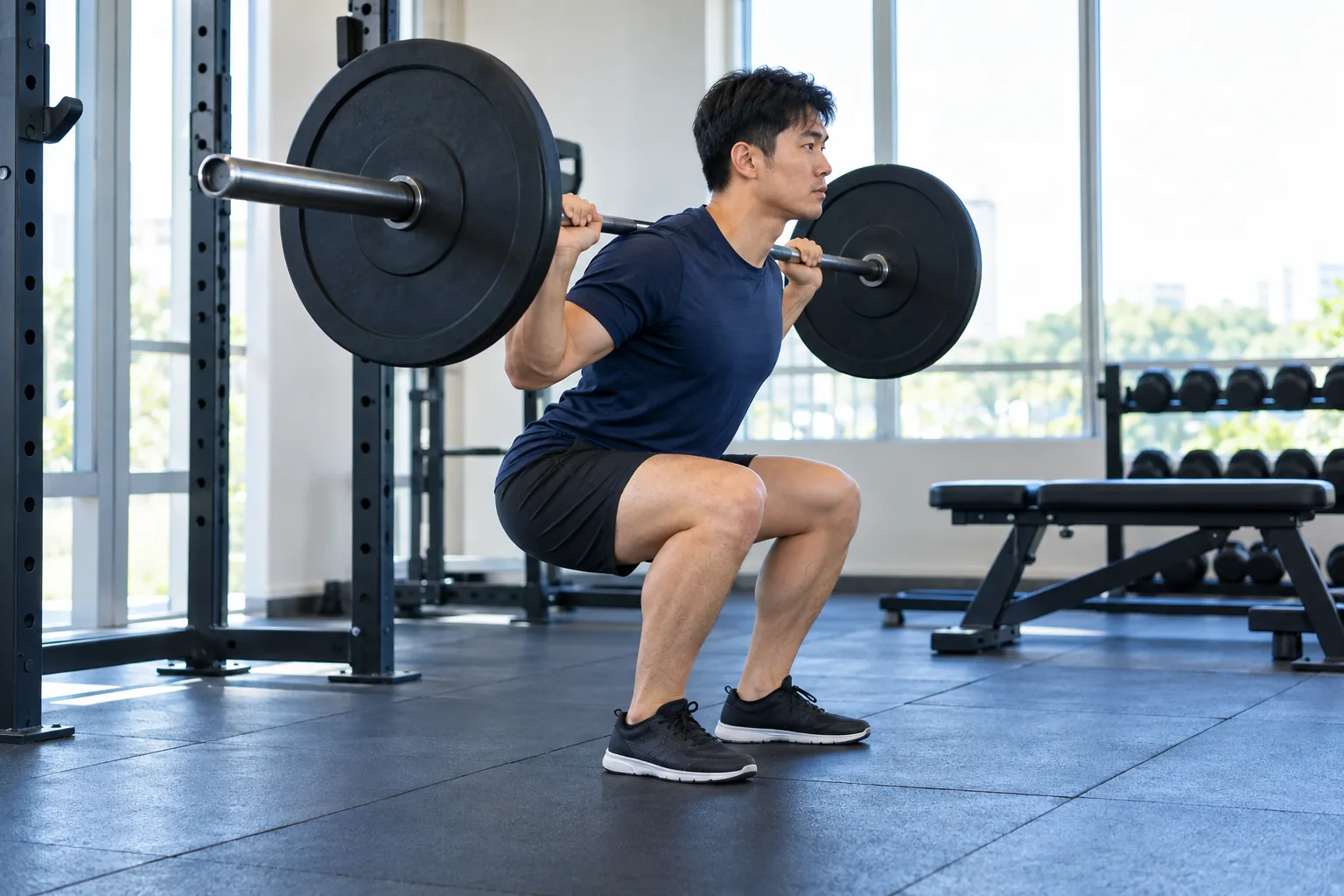
In one laboratory study of ten resistance trained men, the authors reported about a 10% increase in peak power with knee wraps in the back squat, and the wraps changed squat technique [1]. The study’s authors advised that knee wraps should not be worn during strength and conditioning [1].
- What did the study find?
- Did the wraps change how the squat was done?
- What did the authors advise?
- If you have knee pain, should it be checked first?
- When is urgent help needed?
- What should I do next?
What did the study find?
In one laboratory study, ten resistance trained men each did six single back squats at 80% of their one-repetition maximum, three wearing knee wraps and three without [1]. The authors reported about a 10% increase in peak power when the wraps were worn [1]. The study measured lifting mechanics [1]. It did not report on medical knee supports or on people with knee pain [1].
Did the wraps change how the squat was done?
The same study found that wearing knee wraps changed squat technique [1]. The authors said this change could possibly compromise the integrity of the knee joint [1].
The authors’ own words
The authors wrote: “The elastic properties of knee wraps increased mechanical output but altered back squat technique in a way that is likely to alter the musculature targeted by the exercise and possibly compromise the integrity of the knee joint” [1].
What did the authors advise?
The study’s authors advised that knee wraps should not be worn during strength and conditioning, and that a knee that feels weak should be assessed and treated [1].
If you have knee pain, should it be checked first?
If you have knee pain, the NHS (the UK’s National Health Service) says: do not self-diagnose, and see a doctor if you are worried [2]. A doctor can suggest treatment based on what is causing your knee pain [2].
When is urgent help needed?
The list below covers the signs that should not wait for a routine appointment.
What should I do next?
If knee pain is not settling, or you are unsure what is causing it, an assessment is a sensible next step. The assessment brings together the patient’s story, an examination and any tests that help, so that the patient and the surgeon can decide together. It looks at the structure involved, the patient as a whole person and the goal they want to return to. An appointment supports an informed decision. It is not a commitment to surgery.
- Read about the Knee Hub.
- Arrange a knee assessment when you are ready.
- Read about patellar tendonitis.
- Read about quadriceps tendonitis.
- Read about sports injuries.
This page provides general information and cannot diagnose an individual condition. OrthoKinetics does not provide emergency or urgent care through this webpage or its WhatsApp contact.
References
- Lake JP, Carden PJC, Shorter KA. Wearing knee wraps affects mechanical output and performance characteristics of back squat exercise. J Strength Cond Res. 2012;26(10):2844-2849. PMID 22995993. DOI 10.1519/JSC.0b013e3182429840.
- NHS. Knee pain. https://www.nhs.uk/symptoms/knee-pain/
Was this page helpful?