
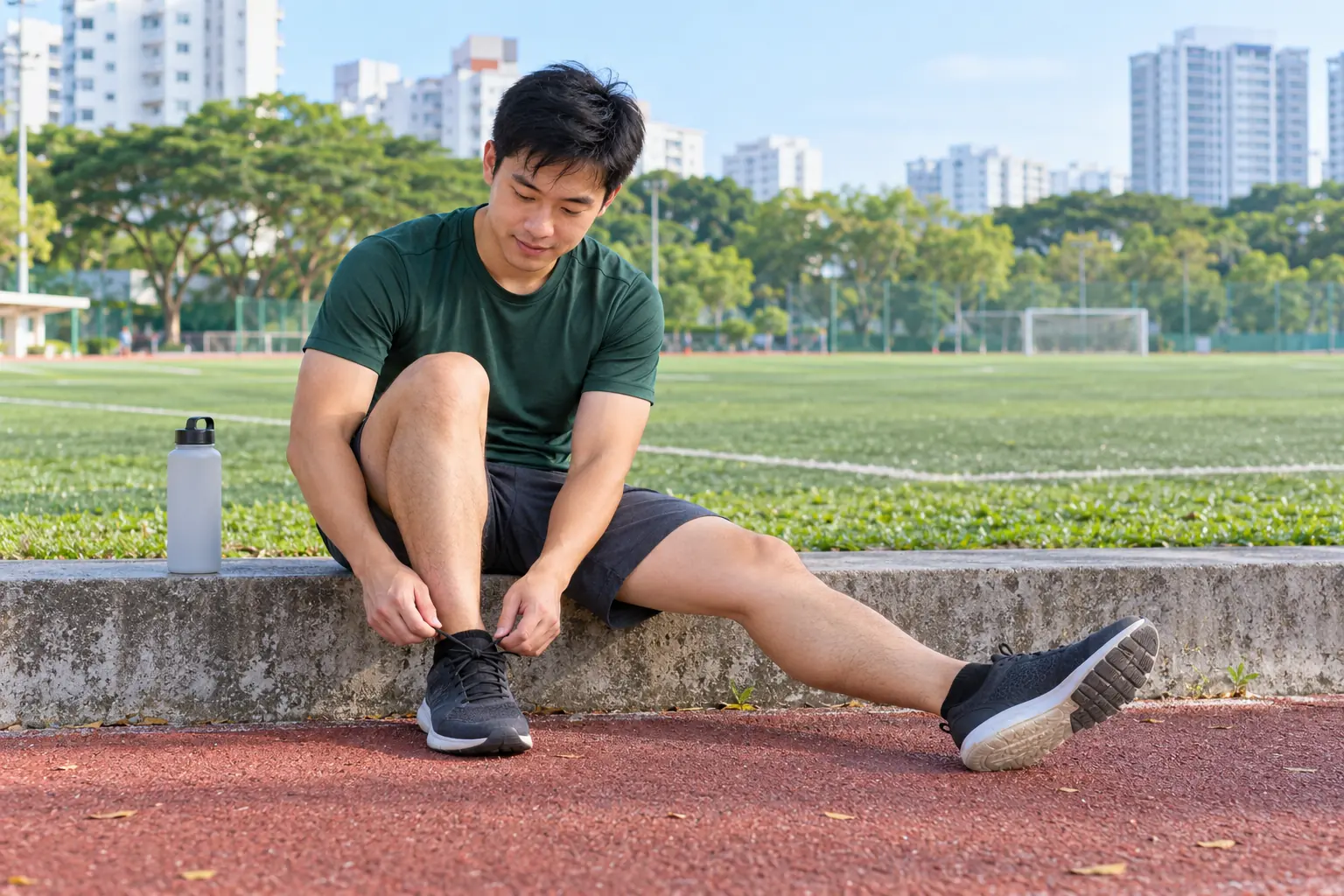
For the first 2 to 3 days after a sprain or strain, follow the 5 steps known as PRICE therapy to help bring down swelling and support the injury [2]. The NHS knee pain page says to see a GP if knee pain does not improve within a few weeks [3].
The self-care steps on this page come from two NHS pages: the sprains and strains page [2] and the knee pain page [3].
- What should you do first after a sprain or strain?
- What does the OPTIKNEE consensus recommend after a traumatic knee injury?
- When should you see a doctor about knee pain?
- When is urgent help needed?
- What should I do next?
What should you do first after a sprain or strain?
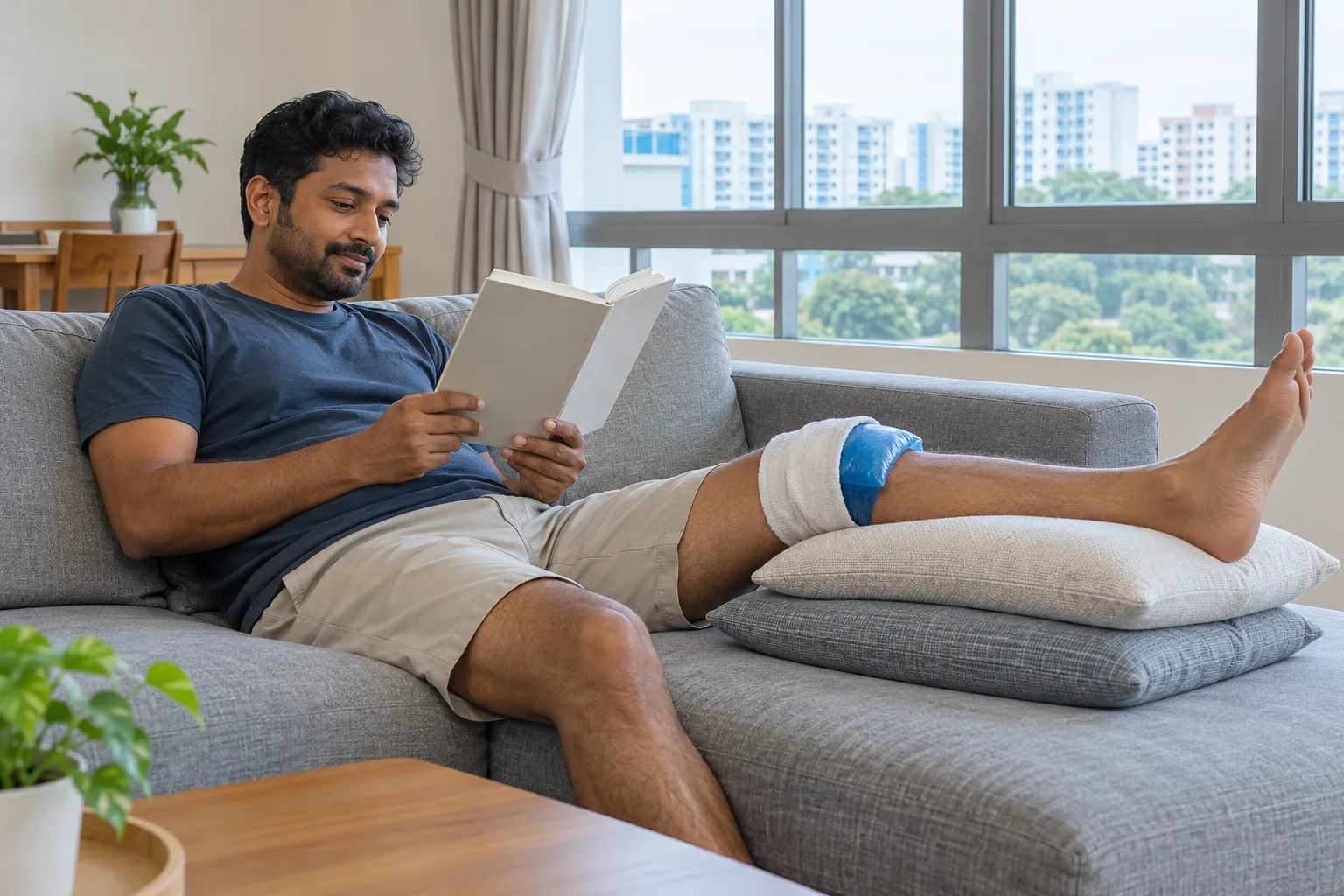
For the first 2 to 3 days after a sprain or strain, follow the 5 steps known as PRICE therapy to help bring down swelling and support the injury [2]:
- Protection – protect the injury, for example by using a support, or shoes that support your foot or ankle [2].
- Rest – stop any exercise or activities and try not to put any weight on the injury [2].
- Ice – apply an ice pack (or a bag of frozen vegetables wrapped in a tea towel) to the injury for up to 20 minutes every 2 to 3 hours [2].
- Compression – wrap a bandage around the injury to support it during the day [2].
- Elevate – keep it raised on a pillow as much as possible [2].
Some signs should not wait for a routine appointment; they are listed below.
More from the NHS on moving and on knee pain
When you can move the injured area without pain stopping you, try to keep moving it so the joint or muscle does not become stiff [2].
If you have knee pain, one of the things the NHS knee pain page says to try at first is to put as little weight as possible on your knee – for example, avoid standing for a long time [3].
What does the OPTIKNEE consensus recommend after a traumatic knee injury?
OPTIKNEE 2022 is one published set of consensus recommendations [1]. The goal of the OPTIKNEE consensus is to improve knee and overall health, to prevent osteoarthritis (OA) after a traumatic knee injury [1].
The consensus recommends person-centred interventions to promote education, self-management, and exercises that mitigate known modifiable risk factors for re-injury and non-traumatic OA, commencing as soon as possible after injury and continuing across the lifespan [1].
More on the OPTIKNEE consensus
The consensus recommends focusing anterior cruciate ligament (ACL) tear management on education and exercise-therapy-based rehabilitation, with optional reconstruction if a patient cannot achieve their acceptable functional level [1].
Varying levels of evidence supported each recommendation [1].

When should you see a doctor about knee pain?
The NHS knee pain page says to see a GP if knee pain does not improve within a few weeks [3]. This is a separate route from the urgent signs; the signs that should not wait for a routine appointment are listed in the urgent-signs section below.
More on clicking in the knee
The NHS knee pain page includes this in its list of reasons to get advice now (from its 111 service, in the UK): “your knee locks, gives way or painfully clicks – painless clicking is normal” [3]. If your knee locks, gives way or clicks painfully, do not wait for it to settle; get advice promptly.

When is urgent help needed?
The list below covers the signs that should not wait for a routine appointment.
What should I do next?
The assessment brings together the patient’s story, an examination and any tests that help, so that the patient and the surgeon can decide together. It looks at the structure involved, the patient as a whole person and the goal they want to return to. An appointment supports an informed decision. It is not a commitment to surgery.
- Read about the Knee Hub.
- Read about the ACL reconstruction surgery.
- Read about the meniscus repair surgery.
- Read about treatment options for sports knee injuries.
This page provides general information and cannot diagnose an individual condition. OrthoKinetics does not provide emergency or urgent care through this webpage or its WhatsApp contact.
References
- Whittaker JL et al. OPTIKNEE 2022: consensus recommendations to optimise knee health after traumatic knee injury to prevent osteoarthritis. Br J Sports Med. 2022;56(24):1393-1405. doi: 10.1136/bjsports-2022-106299. PMID 36379676.
- NHS. Sprains and strains. https://www.nhs.uk/conditions/sprains-and-strains/ (accessed 5 October 2026).
- NHS. Knee pain. https://www.nhs.uk/symptoms/knee-pain/ (accessed 5 October 2026).
Was this page helpful?