
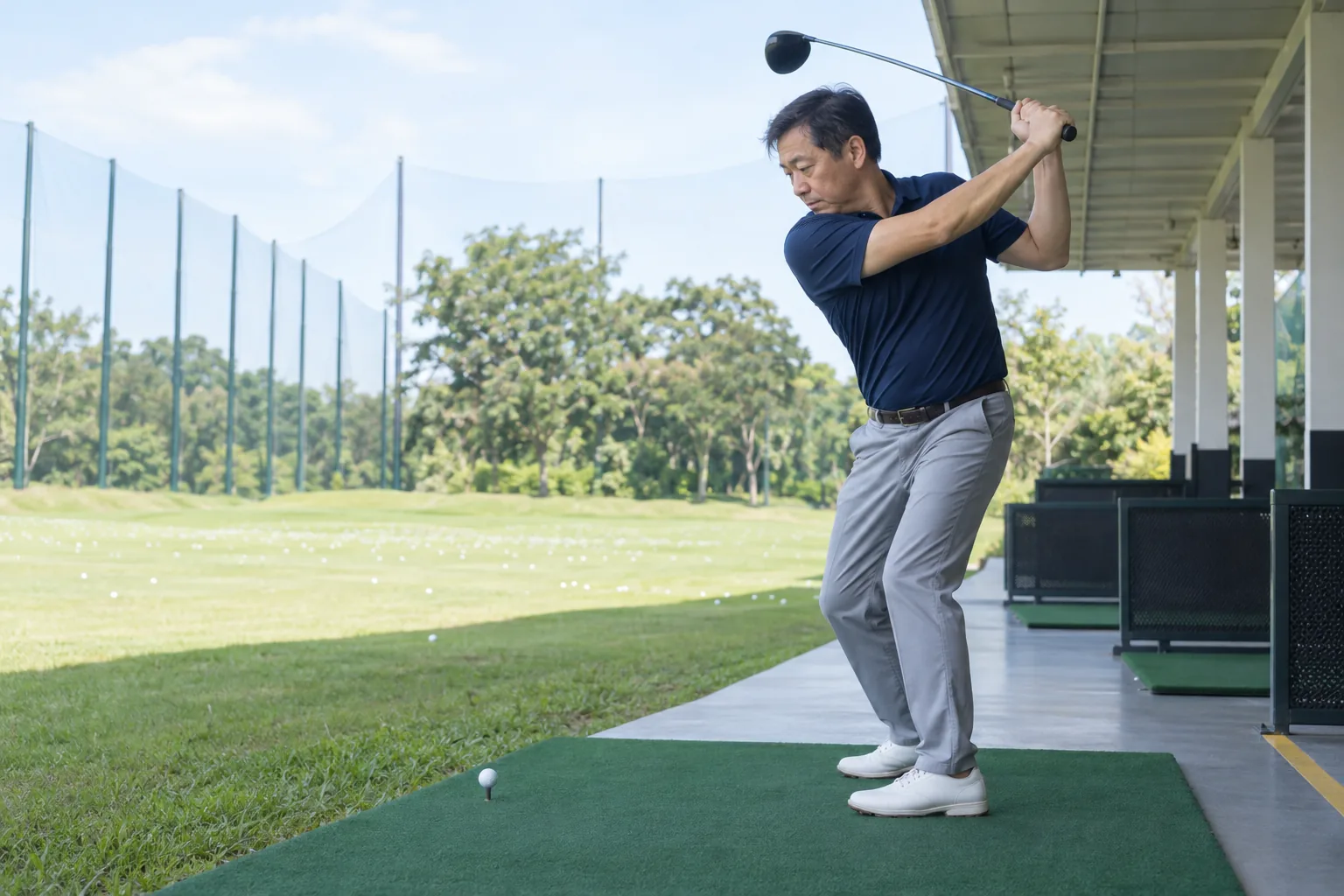
The review says injuries to the knee are thought to account for up to 18% of all injuries in golf [1]. Reports from the literature suggest that high joint loading and complex motions may increase risk of injury, especially in the lead (target-side) knee [1]. The review also says the mechanisms contributing to knee injuries during golf are unknown [1].
A systematic review of risk factors for knee injury in golf notes that golf is considered a low-impact sport, resulting in the common perception that only low loads and stresses are placed upon the body and that players are subject to only a minor risk of injury [1]. It goes on to say that it seems that the current interpretation of the literature regarding the prevalence of injury among both amateur and professional golfers, the loads that act in the knee during golf, and the likelihood of these loads causing injury is somewhat misleading [1].
The review says injuries to the knee are thought to account for up to 18% of all injuries in golf [1]. The review quotes that figure from an earlier source on amateur golfers; across the studies it covers, the range reported is 3 to 18% of all injuries [1].
The review also notes that most studies reporting injuries in golf have been based on data from retrospective and self-reported surveys that were not sufficiently specific with regard to anatomical location and mechanism of injury [1].
- What does golf ask of the knee?
- Should I play with a sore knee?
- What do the NHS pages say about warming up and strength?
- Which knee problems can show up?
- When is urgent help needed?
- What should I do next?
What does golf ask of the knee?
Reports from the literature suggest that high joint loading and complex motions may increase risk of injury, especially in the lead (target-side) knee [1]. The review also says the mechanisms contributing to knee injuries during golf are unknown [1].
Should I play with a sore knee?
Think carefully about playing or returning to golf when knee pain is present, or after a knee injury or surgery, especially when the lead knee is of concern [1]. The NHS knee pain page says to see a GP if knee pain does not improve within a few weeks [2].
 Owner clinical review required · not a release asset
What do the NHS pages say about warming up and strength?
Sprains and strains are common injuries affecting the muscles and ligaments [3]. Not warming up before exercising is a common cause of sprains and strains [3].
More on strengthening
The NHS physical activity guidelines for adults aged 19 to 64 say to do strengthening activities that work all the major muscle groups on at least 2 days a week [4]. This is a general adult guideline, not advice specific to golf or to an injured knee. Speak to your doctor first if you have not exercised for some time, or if you have medical conditions or concerns [4].

Which knee problems can show up?
When people talk about torn cartilage in the knee, they are usually referring to a torn meniscus [5]. The most common symptoms of a meniscus tear include catching or locking of your knee and the sensation of your knee giving way [5].
More on inner knee pain
The medial collateral ligament (MCL) is on the inner side of the knee [6]. If there is an MCL injury, the pain will be on the inside of the knee [6].
When is urgent help needed?
The list below covers the signs that should not wait for a routine appointment.
What should I do next?
The assessment brings together the patient’s story, an examination and any tests that help, so that the patient and the surgeon can decide together. It looks at the structure involved, the patient as a whole person and the goal they want to return to. An appointment supports an informed decision. It is not a commitment to surgery.
- Read about the Knee Hub.
- Read about the meniscus repair surgery.
- Read about the MCL reconstruction surgery.
- Read about sports injuries.
This page provides general information and cannot diagnose an individual condition. OrthoKinetics does not provide emergency or urgent care through this webpage or its WhatsApp contact.
References
- Risk Factors for Knee Injury in Golf: A Systematic Review. DOI 10.1007/s40279-017-0780-5; PMID 28884352. https://link.springer.com/article/10.1007/s40279-017-0780-5
- NHS. Knee pain. https://www.nhs.uk/symptoms/knee-pain/
- NHS. Sprains and strains. https://www.nhs.uk/conditions/sprains-and-strains/
- NHS. Physical activity guidelines for adults aged 19 to 64. https://www.nhs.uk/live-well/exercise/physical-activity-guidelines-for-adults-aged-19-to-64/
- AAOS OrthoInfo. Meniscus Tears. https://orthoinfo.aaos.org/en/diseases–conditions/meniscus-tears/
- AAOS OrthoInfo. Collateral Ligament Injuries. https://www.orthoinfo.org/diseases–conditions/collateral-ligament-injuries
Was this page helpful?