

Hip “wear and tear” is a common name for osteoarthritis of the hip, which involves the whole joint.[1][2] The most common symptom is pain, most often felt in the groin or thigh.[2] Not all hip pain is osteoarthritis. Severe hip pain after a fall or injury, or being unable to put weight on your leg, needs urgent medical care.[7][8]
- What does hip wear and tear mean?
- What are the symptoms of hip osteoarthritis?
- What causes hip osteoarthritis?
- Could my hip pain be something else?
- How is hip osteoarthritis diagnosed?
- How is hip osteoarthritis treated?
- When is surgery considered?
- When should I get hip pain checked?
- What should I do next?
What does hip wear and tear mean?
Osteoarthritis is sometimes called wear-and-tear arthritis.[2] It is a common condition that many people develop as they age, and it most often develops in weight-bearing joints such as the hip.[2]
The hip is a ball-and-socket joint.[2] The ball is the femoral head, the upper end of the thighbone, and the socket is formed by the acetabulum, which is part of the large pelvis bone.[2]
In osteoarthritis, the cartilage in the hip joint gradually wears away over time.[2] The joint space between the bones decreases, and this can result in bone rubbing on bone.[2] Osteoarthritis involves the whole joint. The cartilage breaks down, the bone changes and the joint lining becomes inflamed.[1]

What are the symptoms of hip osteoarthritis?
The most common symptom of hip osteoarthritis is pain.[2] It is felt most often in the groin, or in the thigh, and it can spread to the buttocks or the knee.[2] Pain and stiffness may be worse in the morning, or after sitting or resting for a while.[2]
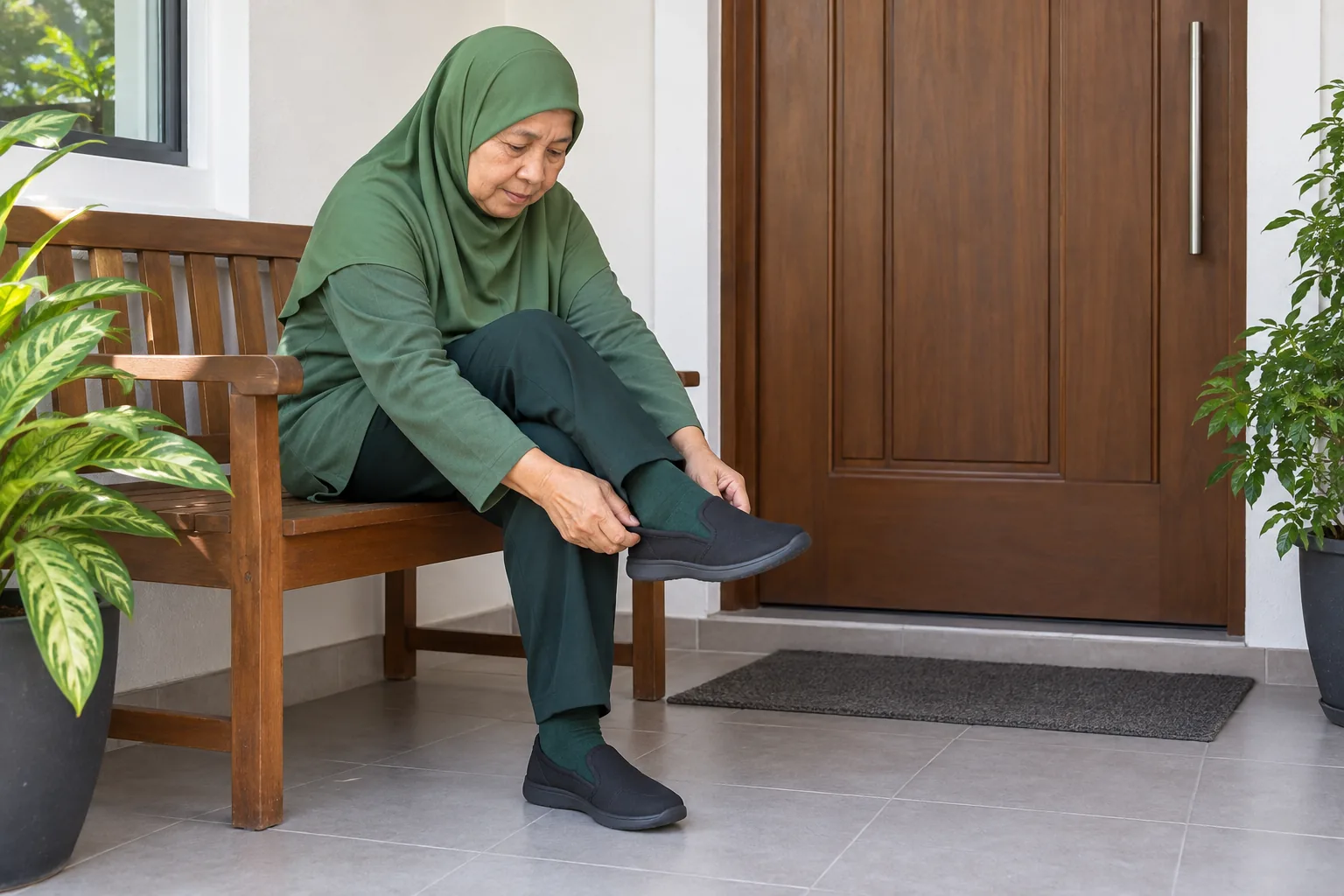
Hip osteoarthritis can make everyday activities hard, such as bending over to tie a shoe, rising from a chair or taking a short walk.[2] How much it affects you can vary greatly from person to person.[3]
What causes hip osteoarthritis?
Osteoarthritis has no single specific cause.[2] Some factors may make you more likely to develop it.[2]
Factors linked with hip osteoarthritis
Could my hip pain be something else?
Yes. Hip pain has other causes, and groin or thigh pain does not on its own tell you the cause.
Pain at the outside of the hip. A small sac called a bursa covers the bony point of the hip bone, which is called the greater trochanter.[5] Bursae are small, jelly-like sacs that act as cushions to help reduce friction during joint motion.[5] The gluteal tendons attach around the same point. The bursa and the tendons are often affected together.[6] The main symptom is pain at the point of the hip, and it is typically worse at night, when lying on the affected hip, and when getting up from a chair after sitting for a while.[5] The initial treatment does not involve surgery.[5] The outer hip pain page covers this in more detail.
A broken hip. A broken hip (hip fracture) is serious and needs treatment in hospital straight away.[7] It usually happens because of a fall or injury, and it is more common in older people and in people who have osteoporosis, a condition of weaker bones.[7] The hip fracture page covers this.
How is hip osteoarthritis diagnosed?
A GP may suspect osteoarthritis if you are aged 45 or older, your joint pain gets worse the more you use your joints, and the stiffness in your joints is not there in the mornings or lasts less than 30 minutes.[3] If your symptoms are slightly different, this may indicate another joint condition.[3] X-rays and blood tests are not usually necessary, but they may be used to rule out other possible causes.[3]
Sorting out which cause applies is what an assessment is for. It cannot be done reliably from a description on a webpage.
How is hip osteoarthritis treated?
There is no cure for osteoarthritis, but there are a number of treatments to help relieve the symptoms.[4] The main treatments are lifestyle measures such as maintaining a healthy weight and exercising regularly, medication to relieve your pain, and supportive therapies to help make everyday activities easier.[4]
Exercise is one of the most important treatments for people with osteoarthritis, whatever your age or level of fitness.[4] A US guideline strongly recommends exercise for hip osteoarthritis, and strongly recommends weight loss for hip osteoarthritis in people who are overweight or obese.[1]
Medicines are covered on the how to manage arthritis pain page.
When is surgery considered?
Surgery for osteoarthritis is only needed in a small number of cases, where other treatments have not been effective or where daily life is seriously affected.[4] Even then, surgery cannot be guaranteed to get rid of your symptoms altogether.[4] Joint replacement is most commonly done to replace hip and knee joints.[4] The hip replacement page covers that operation.
When should I get hip pain checked?
Pain that keeps coming back, is getting worse, or is getting in the way of your daily activities is a reasonable reason to be assessed. So is being unsure what is causing it.
What should I do next?
If hip pain is not settling, or you are unsure what is causing it, an assessment is a sensible next step. The assessment brings together the patient’s story, an examination and any tests that help, so that the patient and the surgeon can decide together. It looks at the structure involved, the patient as a whole person and the goal they want to return to. An appointment supports an informed decision. It is not a commitment to surgery.
- Read about hip osteoarthritis in more detail.
- Browse the hip care hub for other hip problems.
- Arrange a hip assessment when you are ready.
This page provides general information and cannot diagnose an individual condition. OrthoKinetics does not provide emergency or urgent care through this webpage or its WhatsApp contact.
References
- Kolasinski SL, Neogi T, Hochberg MC, et al. 2019 American College of Rheumatology/Arthritis Foundation guideline for the management of osteoarthritis of the hand, hip, and knee. Arthritis Care Res (Hoboken). 2020;72(2):149-162. doi:10.1002/acr.24131. PMID 31908149. PMC11488261.
- American Academy of Orthopaedic Surgeons (AAOS). Osteoarthritis of the Hip. OrthoInfo. https://orthoinfo.aaos.org/en/diseases–conditions/osteoarthritis-of-the-hip
- NHS. Osteoarthritis. https://www.nhs.uk/conditions/osteoarthritis/
- NHS. Osteoarthritis: treatment and support. https://www.nhs.uk/conditions/osteoarthritis/treatment/ (page last reviewed 20 March 2023).
- American Academy of Orthopaedic Surgeons (AAOS). Hip Bursitis. OrthoInfo. https://orthoinfo.aaos.org/en/diseases–conditions/hip-bursitis
- O’Rourke R, El Bitar Y. Femoroacetabular Impingement. StatPearls. NBK547699. https://www.ncbi.nlm.nih.gov/books/NBK547699/
- NHS. Broken hip. https://www.nhs.uk/conditions/broken-hip/ (page last reviewed 29 July 2026).
- NHS. Hip pain in adults. https://www.nhs.uk/symptoms/hip-pain/ (page last reviewed 20 November 2025).
Was this page helpful?