

Common Trampoline Injuries and How to Treat Them | Orthokinetics

Contributed by Dr Sean Leo, Orthopaedic Surgeon at Orthokinetics
A trampoline injury can happen in seconds. Your child bounces confidently, lands awkwardly, and suddenly you’re in the emergency room. Or you’re a young adult at a trampoline park when a bad landing changes everything. Trampoline injuries happen far more often than parents realise. A major orthopaedic hospital tracked 556 trampoline injury cases over three years.
Fractures and sprains topped the injury list. Most accidents occurred on the mat itself, not from falling off. Children aged six to ten face the highest risk. Understanding what trampoline park injuries happen most, why they occur, and how to treat them helps keep your family safe. This guide covers the five most common trampoline injuries and what you need to know.
Key Takeaways
- Ankle sprains are the most frequent trampoline injury, occurring in 20% of all cases
- Child knee injury from trampolines is a serious risk, especially in children aged six to ten
- Fractures account for 36% of trampoline park injuries—fractures are the second most common diagnosis
- Soft tissue injuries represent another 36% of cases
- Most trampoline injuries happen on the mat through awkward landings, not from falling off
- Lack of adult supervision and overcrowding dramatically increase injury severity
- Proper assessment prevents long-term complications and permanent damage
The Five Most Common Trampoline Injuries
1. Ankle Sprains—The Most Frequent Trampoline Injury
Ankle ligament sprains are the single most common diagnosis in trampoline injury cases. They account for 20% of all injuries treated in emergency departments.
What happens: A jumper lands at an awkward angle. The foot twists. Ligaments stretch or tear. Swelling appears within minutes.
Warning signs you’ll notice:
- Immediate swelling around the ankle
- Bruising develops within hours
- Pain when bearing weight or moving
- Difficulty moving the foot side to side
- Ankle feels loose or unstable
Why they occur:
- Uneven landings on padded mats
- Landing whilst another person jumps
- Catching the foot on frame edges
- Lack of coordination in younger children
What to do immediately:
- Stop jumping and rest the ankle completely
- Apply ice to reduce swelling
- Wrap with a compression bandage for support
- Keep the leg elevated above heart level
- Avoid putting any weight on the ankle
Most ankle sprains heal without needing surgery. Recovery requires time and rest. If swelling worsens after one week or your child cannot bear weight at all, contact a specialist for assessment.
2. Fractures—The Second Most Common Trampoline Injury
Fractures account for 36% of all trampoline injuries. These range from simple breaks that heal with casting to complex fractures requiring surgery and hospital admission.
Research showed that children under ten were much more likely to experience broken bones than older jumpers. Young children have weaker bones that break more easily, increasing child knee injury risk from impacts.
| Injury Location | Percentage | What Causes It |
|---|---|---|
| Elbow fractures | 7% of cases | Landing on outstretched arm |
| Forearm and wrist fractures | Common | Falling off or trying to break fall |
| Ankle fractures | Common | Hard impact landing on mat |
| Lower leg fractures | Frequent | Direct impact from jumping |
Why fractures are serious:
- Nearby nerves become compressed, causing numbness
- Blood vessels rupture inside, sometimes requiring emergency surgery
- Bones heal improperly if not aligned correctly
- Chronic pain and weakness develop over months if untreated
- Child knee injury from fractures can affect growth and development
Treatment for trampoline injury fractures: X-rays confirm the exact location and severity. Simple fractures stabilise with a cast or splint. Complex fractures require hospital admission and may need surgical fixation to ensure proper healing.
3. Soft Tissue and Ligament Injuries
Soft tissue injuries represent 36% of trampoline injuries recorded. These include torn ligaments, strained muscles, and tendon damage from impact.
Common soft tissue injuries from trampoline accidents:
- Knee ligament tears (from twisting during landing)
- Shoulder muscle and ligament strains
- Leg muscle strains from sudden impact
- Ankle ligament tears (more severe than simple sprains)
Why soft tissue injuries matter: There’s no bone break visible on X-rays, but the tissue damage is still serious. Untreated knee injury from ligament tears causes instability and chronic pain for years.
You’ll notice these warning signs:
- Swelling appears within minutes
- Bruising develops within hours
- Sharp pain when moving the joint
- Weakness or giving way sensation
- Feeling that something is loose inside
How they’re managed: Most heal with rest, ice, compression, and elevation. Recovery allows tissues to repair naturally. Surgery is rarely needed unless the ligament is completely torn.
4. Bruises and Contusions—Common Trampoline Injuries
Severe bruises from direct impact account for 20% of trampoline park injuries cases. They seem minor compared to fractures, but deep bruising causes serious problems.
What happens: The padded mat absorbs some impact, but repeated bouncing and collisions still damage tissue beneath the skin. Blood vessels rupture, creating large purple and yellow bruises.
Why deep bruises matter:
- Pressure from swelling compresses nerves or blood vessels
- Fluid buildup sometimes requires medical drainage
- Swelling and pain can last two to three weeks
- Skin breaks increase infection risk
What to do:
- Apply ice to reduce swelling
- Use gentle compression wrapping
- Elevate the limb above heart level
- Most resolve without medical intervention
Watch carefully for warning signs: pain that seems far too severe compared to what you see on the skin, tingling, numbness, or skin that darkens significantly.
5. Head and Neck Injuries—The Most Serious
Head and neck injuries represent 17% of trampoline injuries but are the most dangerous. Most are minor strains, but serious injury does happen.
Research documented:
- Two cases of actual neck fractures
- One case of atlantoaxial subluxation (partial dislocation of the top two neck vertebrae) caused by attempting somersaults
- Multiple cases of concussion
Types of head and neck injury from trampolines:
- Mild neck strain (pain and stiffness without fracture)
- Concussion (head impact causing confusion, dizziness, or memory problems)
- Actual neck fractures (rare but life-changing)
- Spinal cord injuries (from flips or hard collisions)
Why these injuries are dangerous: Even “minor” neck symptoms can hide fractures. Spinal injuries can cause permanent paralysis if not treated immediately.
Seek emergency care right away if:
- Your child loses consciousness
- Severe headache develops
- Neck cannot move or causes pain
- Tingling or numbness in arms or legs
- Loss of bladder or bowel control
Do not move the person’s neck. Call an ambulance immediately. Spinal injuries require emergency stabilisation in hospital.
Why Trampoline Injuries Happen—The Real Risk Factors
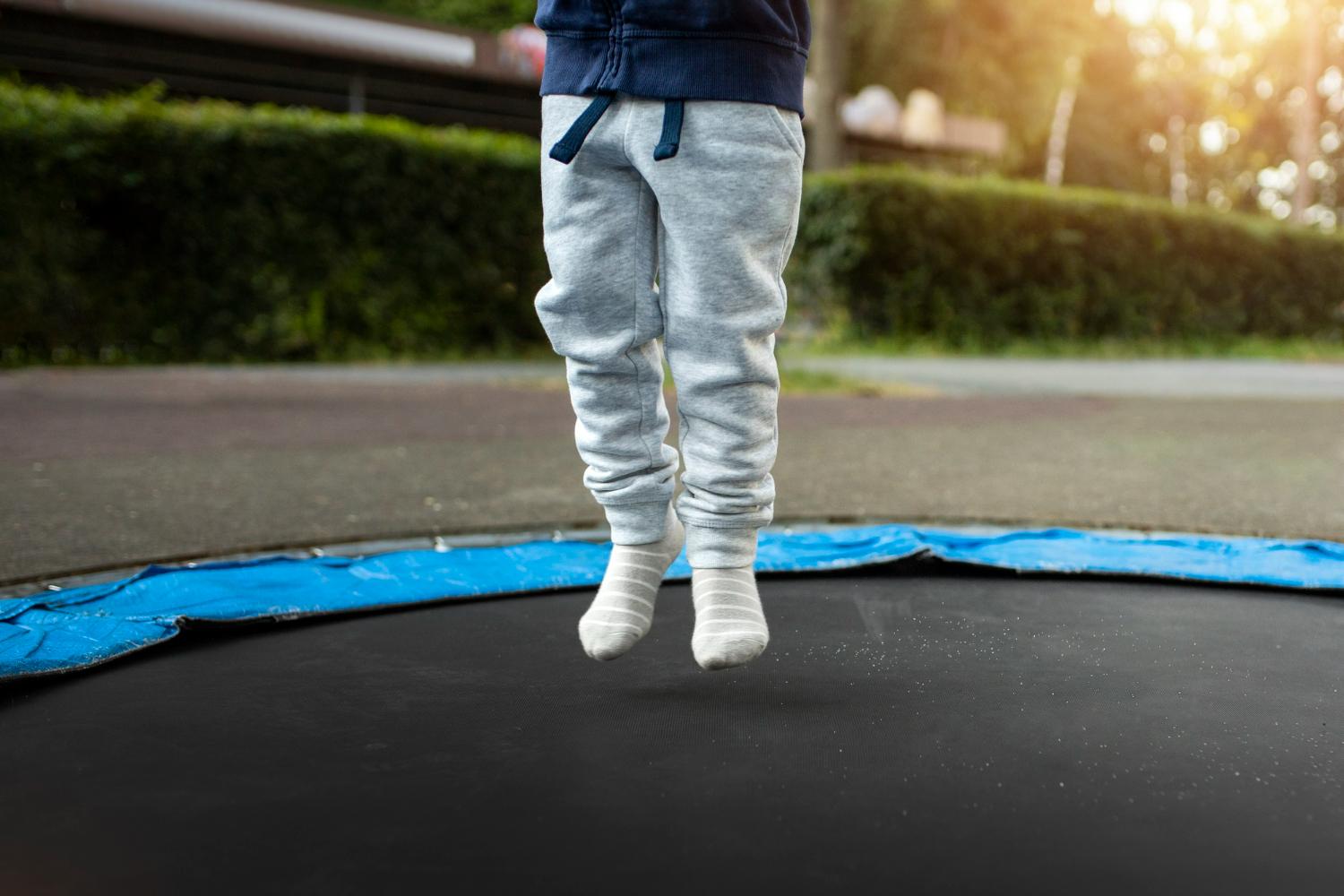
Research identified specific factors that dramatically increase trampoline injury risk and severity.
Lack of Adult Supervision
Only 22% of children under eleven were supervised by an adult when injured. Unsupervised children take bigger risks and receive no immediate first aid (Ebensen et al., 2006).
Overcrowding
In 74% of trampoline park injuries cases, more than two people were jumping at the same time. One documented case had nine people on one trampoline. Multiple jumpers create unpredictable landings and collisions that cause severe injuries.
Landing Location
77% of trampoline injuries happened directly on the mat through awkward landings or collisions with other jumpers. The 22% who fell off the trampoline experienced significantly more severe injury.
Attempting Advanced Tricks
Neck injuries specifically linked to attempting flips and somersaults. Children lack the spatial awareness and neck strength for safe execution.
Age and Bone Development
Children aged six to ten made up 40% of all injured jumpers. Their developing coordination and weaker bones mean they fracture more easily. This age group experiences more child knee injury from impact than older children.
Trampoline Injuries: Different for Different Ages
For Parents of Young Children
Child knee injury and fractures are your primary concern. Children’s bones are still developing and break more easily. Younger children also lack coordination, increasing landing mistakes.
Focus on: strict supervision, single-jumper rules, age-appropriate use only.
For Young Adults at Trampoline Parks
Your injury risk differs. You’re less likely to fracture bones, but more likely to suffer severe ligament damage and strains. Complex injuries happen when confidence outpaces safety awareness.
Focus on: warm-up before jumping, knowing your physical limits, stopping if you feel unstable.
How to Prevent Trampoline Injuries
Research shows specific safety measures reduce trampoline park injury risk dramatically and prevent child knee injury.
Essential Safety Rules:
- Adult supervision at all times (non-negotiable for children)
- One jumper at a time (eliminates collisions entirely)
- Use safety nets around the entire frame
- Pad the frame edges thoroughly
- Ban flips and somersaults for children under 12
- Inspect equipment weekly for tears and damage
- Age limits: children under six should not jump
Frequently Asked Questions
How do I know if my child’s trampoline injury needs emergency care?
Seek emergency care immediately if your child loses consciousness, cannot move a limb, has severe pain, cannot bear weight, or has any neck pain. Do not wait to see if swelling goes down.
Can a child knee injury from a trampoline cause permanent damage?
Yes. Fractures healing improperly cause chronic pain and weakness. Ligament tears create lasting instability in the joint. Neck injuries can result in permanent nerve damage. Early proper treatment by a specialist prevents these complications.
What should I do immediately after a trampoline injury?
Stop jumping. Rest the injured area. Apply ice. Use compression wrapping. Elevate above heart level. Avoid putting weight on the injury. Seek professional assessment if pain, swelling, or inability to move persists.
When is surgery needed for trampoline injuries?
Surgery is considered for severely displaced fractures, completely torn ligaments, nerve or blood vessel damage, or when conservative treatment hasn’t worked after several weeks.
As a young adult, will I recover fully from a serious trampoline injury?
Most young adults recover fully with proper early assessment and expert guidance. The key is getting accurate diagnosis and following professional treatment recommendations.
Orthokinetics’ Approach to Trampoline Injury Care
Dr. Sean Leo brings 25 years of orthopaedic experience to trampoline injury assessment. Every injury is different.
Our approach focuses on three essentials:
- Accurate Diagnosis: We use clinical examination and imaging to confirm the exact nature of your injury—whether it’s a sprain, strain, fracture, or complex damage. Misdiagnosis leads to poor recovery and long-term problems.
- Conservative Care First: Most trampoline injuries heal without surgery. We design personalised rest and recovery plans that get you or your child back to safe activity without unnecessary procedures.
- Expert Coordination: Recovery requires specialist assessment and clear guidance. We explain what happened, what to expect, and how to return safely to jumping or sport.
Explore Our Other Services
If you’ve sustained a trampoline injury, these specialist services support complete recovery:
- Sports Injury Treatment — Comprehensive assessment and care for young athletes and active people recovering from trampoline park injuries.
- Knee Arthroscopy — Diagnostic imaging to clarify complex knee injury cases from trampoline accidents.
- ACL Reconstruction — If ligament damage from trampoline injury requires surgical repair for stability.
- Post-Surgery Recovery — Structured guidance after trampoline injury surgery.
- Cartilage Repair — If cartilage damage requires specialist assessment.
Get Expert Care for Your Trampoline Injury
A trampoline injury can seem minor until complications develop weeks later. Early, accurate assessment prevents long-term problems and supports faster recovery.
Dr Sean Leo at Orthokinetics brings over 25 years of clinical experience with a clinical focus on knee and lower limb surgery, covering everything from structured non-surgical knee treatment to ACL reconstruction, meniscus repair, and knee replacement. Every case starts with an honest, individual assessment.
- Orthosports at Novena: 38 Irrawaddy Road, #10-41, Mount Elizabeth Novena Specialist Centre, Singapore 329563. Tel: +65 6734 8168
- Orthosports at Connexion: 1 Farrer Park Station Road, #15-17 Connexion, Singapore 217562. Tel: +65 6435 0015
- WhatsApp: +65 8439 2120 | Email: appointment@orthokinetics.sg
Arrange a knee assessment at Orthokinetics

Dr Sean Leo is an orthopaedic surgeon with over 25 years of clinical experience and a subspecialty focus on knee and lower limb surgery. He manages the full spectrum of knee conditions, from structured non-surgical care to ACL reconstruction, meniscus repair, and knee replacement, with every case beginning from an honest, individual assessment.
| Disclaimer This article is for informational purposes only and does not constitute medical advice. Consult a qualified medical professional for assessment and treatment of any knee condition. |
Reference
1 Ebensen, A., Rokkum, M., & Solheim, E. (2006). Trampoline injuries. British Journal of Sports Medicine, 40(11), 932–935. Retrieved from British Journal of Sports Medicine