
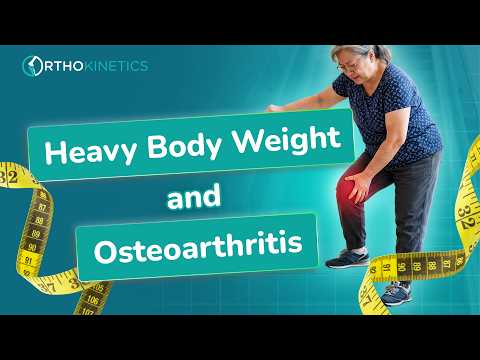
About this video
Last updated: 9 October 2026
The video says the knee does not experience body weight simply: forces through the joint when walking, climbing stairs or standing can be several times body weight. It says that even a small increase in weight results in a much larger increase in pressure inside the joint.
Key points
- It says that over time this pressure is absorbed by the cartilage, which accelerates degeneration in osteoarthritis.
- The video says that as cartilage becomes less effective, symptoms such as stiffness, swelling and discomfort begin to appear more consistently.
- It says fat tissue produces inflammatory chemicals that circulate throughout the body and make the joint environment more reactive, with more swelling and irritation.
- The video says weight management is not just about willpower or restrictive dieting, and names structured, medically supervised approaches including tailored exercises, nutrition and, in selected cases, medication.
Questions this video answers
How does body weight affect the knee in osteoarthritis?
The video describes two ways. Mechanically, it says forces through the knee can be several times body weight, and that pressure is absorbed by the cartilage. It also says fat tissue produces inflammatory chemicals that make the joint environment more reactive.
What weight-management approaches does the video mention?
It says weight management is not just about willpower or restrictive dieting. It names structured, medically supervised approaches including tailored exercises, nutrition and, in selected cases, medication.


