

Knee cartilage has a limited ability to repair itself [1]. For knee osteoarthritis, guidelines start with education, exercise and weight management [2][3]. Repair procedures exist for damaged cartilage that needs surgery, and the choice is made after an assessment [1].
What is knee cartilage damage?
Knee cartilage damage means damage to the cartilage that lines the knee joint. The knee has two kinds of cartilage.
- Articular cartilage is the smooth layer that coats the ends of the thigh bone and the shin bone, so they move without grinding.
- The meniscus is a C-shaped disc of cartilage between those bones. It spreads weight and absorbs impact.
What does this page cover?
- What is knee cartilage damage?
- Can knee cartilage heal on its own?
- What causes knee cartilage damage?
- What are the symptoms?
- How is knee cartilage damage diagnosed?
- How is it treated without surgery?
- When is surgery considered?
- How long does recovery take?
- When is urgent help needed?
- What should I do next?

Can knee cartilage heal on its own?
Cartilage has a limited ability to repair and renew itself. It has no blood supply of its own, and this is part of the reason [1].
More on why cartilage repairs slowly
One review describes mature articular cartilage as having a limited ability to renew and repair because it is avascular (without blood vessels), lacks nerve supply and has few cells [1].

What causes knee cartilage damage?
Cartilage can be damaged by wear, tears and sports injuries [1]. Osteoarthritis is one common route.
- Osteoarthritis (OA) is the most common form of arthritis [2].
- OA affects the whole joint, including the cartilage, and it has several risk factors [2].
- Risk factors include age, a previous joint injury and excess body weight [2].
- In adults, obesity means a body mass index (BMI) of 30 or more [4].
Body weight is a risk factor that can be changed. Weight loss is strongly recommended for people with knee OA who are overweight or obese [2].
More on weight and the knee
- When you walk across level ground, the force on your knees is about 1½ times your body weight [6].
- In a secondary analysis of an 18-month diet and exercise trial, 142 sedentary, overweight or obese older adults with knee OA were studied. Each unit of weight lost was associated with about 4 units less force through the knee [5].
What are the symptoms?
Knee cartilage problems can cause pain, swelling, a catching or locking feeling, and a knee that gives way.
- Pain, during or after activity, and sometimes at rest.
- Swelling in the knee.
- Catching or locking: the joint feels snagged or stuck.
- Giving way: the knee seems to buckle on stairs or uneven ground.
A knee that is stuck and will not straighten is on the urgent list in the section on urgent help below.
How is knee cartilage damage diagnosed?
Diagnosis starts with your story and an examination of the knee. For osteoarthritis, NICE advises diagnosing it clinically, without imaging, in people aged 45 or over with activity-related joint pain and either no morning stiffness or morning stiffness lasting no longer than 30 minutes [8]. NICE advises against routine imaging unless there are atypical features [8].
- An X-ray can show narrowing of the space between the bones [7].
- An X-ray does not show cartilage directly.
- An MRI scan is a detailed scan that can show cartilage, menisci and ligaments.
More on grading osteoarthritis on X-ray
One system grades osteoarthritis on X-ray from 0 to 4, where 0 means no osteoarthritis. It is called the Kellgren-Lawrence system. Grade 1 is doubtful narrowing of the joint space with possible bone spurs. Grade 4 is the most severe, with large bone spurs, marked narrowing and definite deformity [7].
How is it treated without surgery?
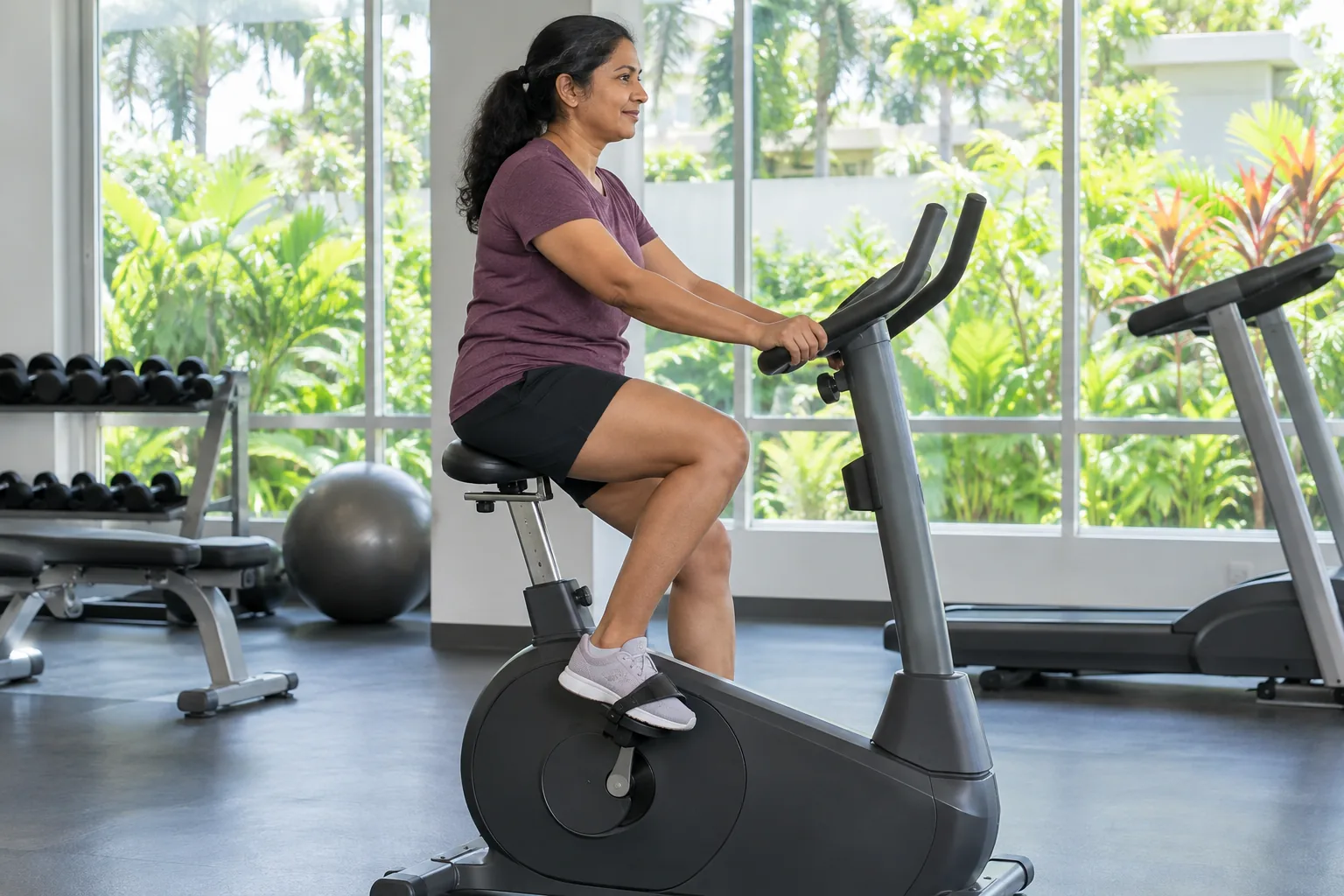
For knee osteoarthritis, guidelines start with education and structured exercise, with weight management where it applies [3].
- Exercise is strongly recommended for people with knee, hip or hand OA [2].
- Weight loss is strongly recommended for people with knee or hip OA who are overweight or obese [2].
- Topical NSAIDs (non-steroidal anti-inflammatory drugs applied on the skin) are strongly recommended for knee OA. Oral NSAIDs are strongly recommended for knee, hip or hand OA [2].
- A tibiofemoral knee brace, which supports the joint between the thigh bone and the shin bone, is strongly recommended when OA in one or both knees affects walking, joint stability or pain enough to warrant an assistive device [2].
Injections into the knee are covered in knee injections for osteoarthritis.
When is surgery considered?
Surgery is for cartilage damage that needs it, and your surgeon decides this after an assessment. Repair options for a localised area of damaged cartilage include marrow stimulation and cartilage grafting [1].
- Debridement: smoothing the rough edges of a localised area of damaged cartilage.
- Marrow stimulation: making small holes in the bone so that new tissue can form.
- Cartilage grafting: transplanting healthy cartilage from another source.
The cartilage repair surgery page explains each option. A damaged meniscus is covered on the meniscus repair surgery page. Knee replacement for osteoarthritis is covered on the total knee replacement page.

How long does recovery take?
There is no single recovery time for knee cartilage damage. It depends on the cause and on the treatment chosen. After an assessment, your surgeon explains the expected timeline for your own plan.
When is urgent help needed?
The list below applies to any knee problem.
What should I do next?
Pain, swelling, catching, locking or giving way that does not settle is a reason to arrange an assessment. It brings together the patient’s story, an examination and any tests that help, so that the patient and clinician can decide what to do next. The assessment looks at the structure involved, the patient as a whole person and the goal they want to return to. An appointment supports an informed decision. It is not a commitment to surgery.
- Read about the cartilage repair consultation.
- Arrange a knee assessment when you are ready.
- Browse the Knee Hub for other knee problems, or more articles.
- Read more about Dr Sean Leo, who is named as the author of this page.
This page provides general information and cannot diagnose an individual condition. OrthoKinetics does not provide emergency or urgent care through this webpage or its WhatsApp contact.
References
- Liu Y, Shah KM, Luo J. Strategies for Articular Cartilage Repair and Regeneration. Front Bioeng Biotechnol. 2021;9:770655. PMC8719005.
- Kolasinski SL, et al. 2019 American College of Rheumatology/Arthritis Foundation Guideline for the Management of Osteoarthritis of the Hand, Hip, and Knee. Arthritis Care Res. 2020;72(2):149-162. PMC11488261.
- Bannuru RR, Osani MC, Vaysbrot EE, et al. OARSI guidelines for the non-surgical management of knee, hip, and polyarticular osteoarthritis. Osteoarthritis Cartilage. 2019;27(11):1578-1589. PMID 31278997.
- World Health Organization. Obesity and overweight (fact sheet). https://www.who.int/news-room/fact-sheets/detail/obesity-and-overweight
- Messier SP, et al. Weight loss reduces knee-joint loads in overweight and obese older adults with knee osteoarthritis. Arthritis Rheum. 2005;52(7):2026-2032. PMID 15986358.
- Harvard Health Publishing. Why weight matters when it comes to joint pain. 2019. https://www.health.harvard.edu/pain/why-weight-matters-when-it-comes-to-joint-pain
- Kohn MD, Sassoon AA, Fernando ND. Classifications in Brief: Kellgren-Lawrence Classification of Osteoarthritis. Clin Orthop Relat Res. 2016;474(8):1886-1893. PMC4925407.
- National Institute for Health and Care Excellence. Osteoarthritis in over 16s: diagnosis and management (NG226). 2022. https://www.nice.org.uk/guidance/ng226
Was this page helpful?