
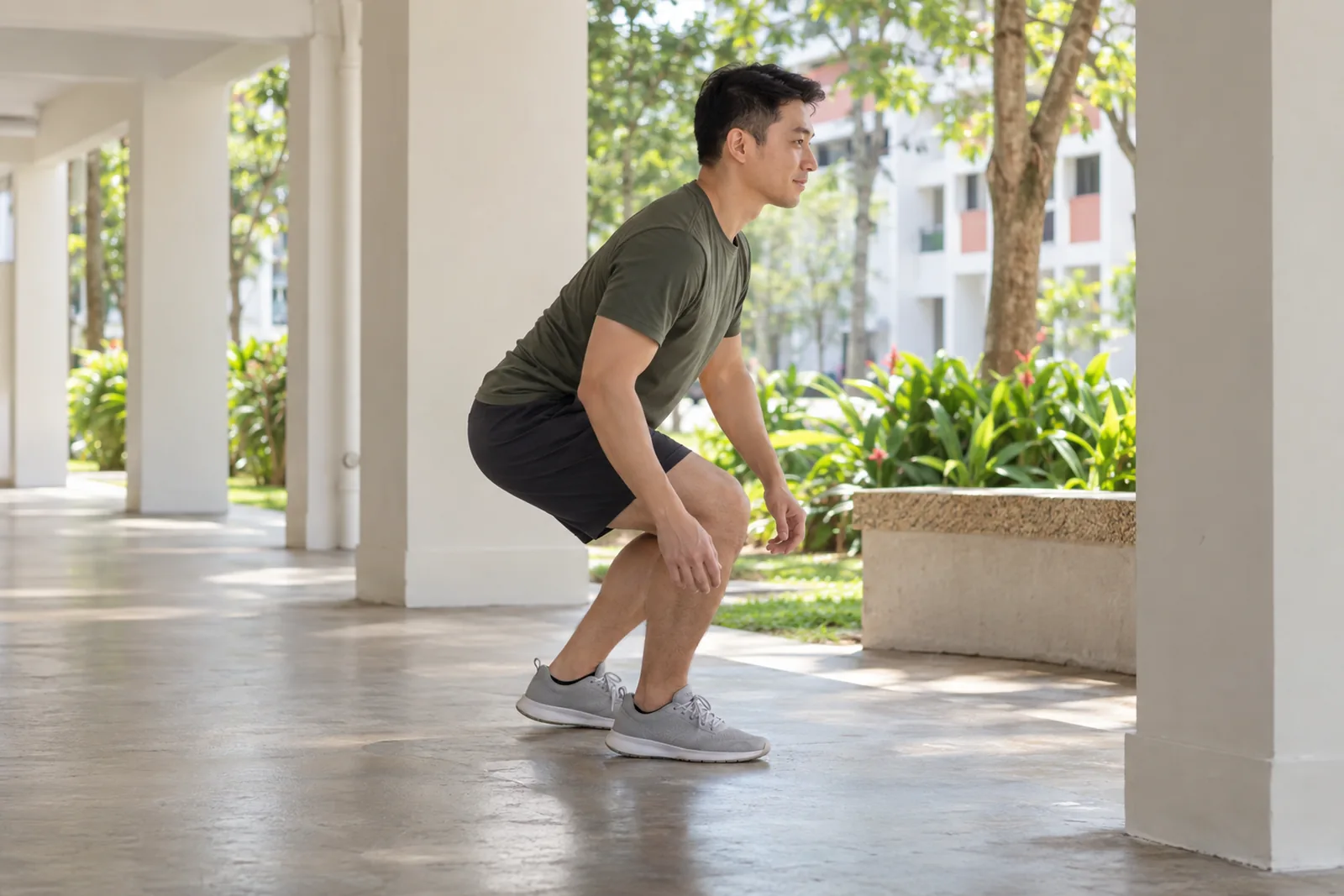
A systematic review of knee crepitus (a popping, cracking or grinding noise or sensation from the joint) found it in about 4 in 10 people in the general population, including about 36% of people without pain. A sound on its own does not say what is causing it.
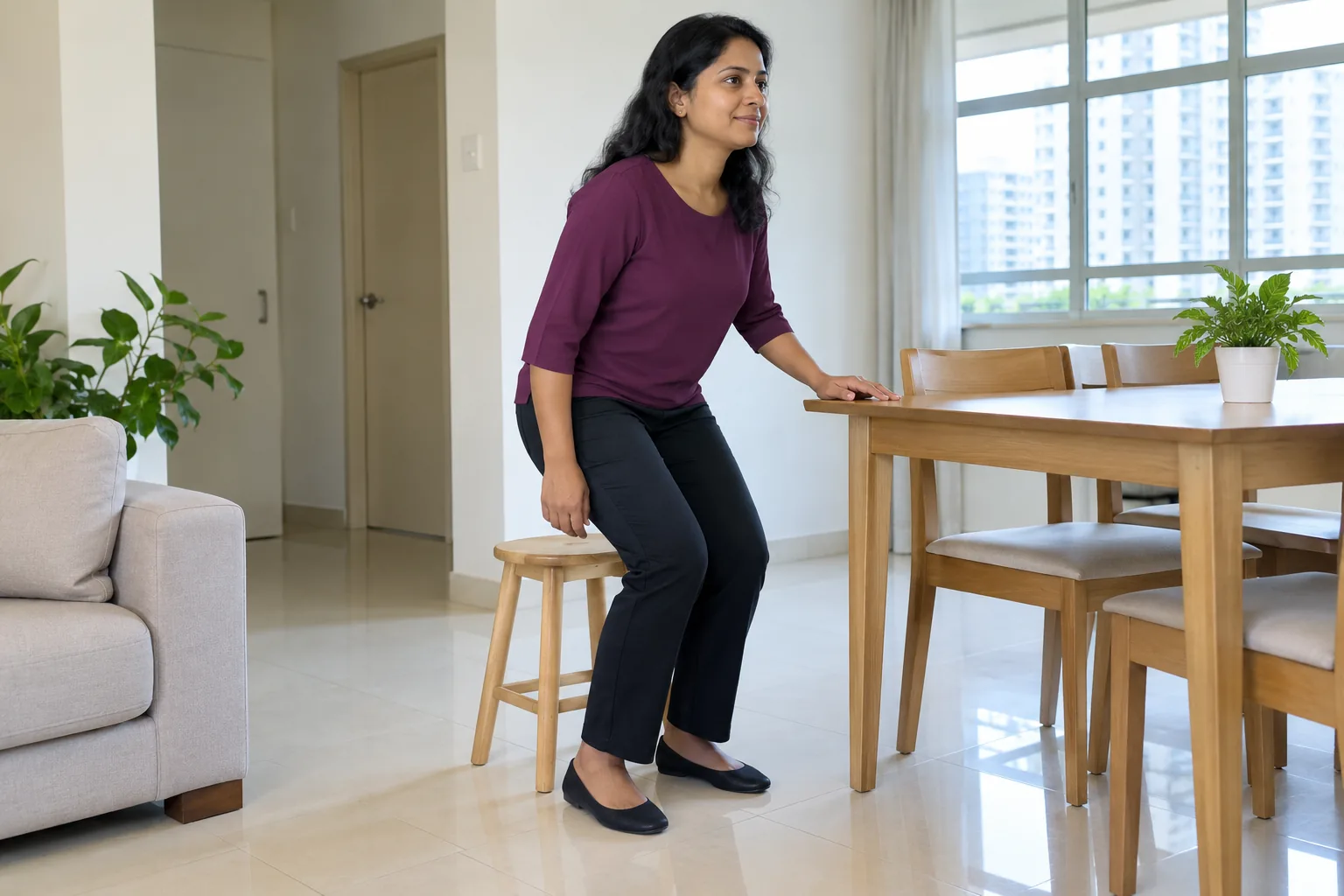
Is a popping or cracking knee normal?
It is common. A systematic review of knee crepitus (a popping, cracking or grinding noise or sensation from the joint) found it in about 4 in 10 people in the general population, including about 36% of people without pain. The certainty of that evidence is very low, so the figures are a rough guide, not a rule [1].
- Knee crepitus is also seen in people with no pain and no underlying joint problem [1].
- A sound on its own does not say what is causing it. The review found crepitus across a range of knee conditions [1].
- Noises that come with catching, locking or a knee that will not straighten are a different matter, covered below.
More on what the review found
The pooled estimate of knee crepitus was 41% in the general population, 36% in pain-free people, 81% in people diagnosed with knee osteoarthritis (wear-and-tear arthritis of the joint), and between 35% and 61% in other musculoskeletal knee conditions. The certainty of the evidence was very low, and these are group figures, not a prediction for any one knee. They do not show that a noisy knee is always harmless [1].
What does this page cover?
- Is a popping or cracking knee normal?
- Can knee noises be linked to osteoarthritis?
- Could popping be a meniscus problem?
- Does a pop at the moment of injury mean a ligament injury?
- What about pain at the front of the knee?
- When is urgent help needed?
- What should I do next?
Can knee noises be linked to osteoarthritis?
They can be. Crepitus is more common in knees with osteoarthritis (wear-and-tear arthritis of the joint): about 81% in the pooled estimate. It is also linked with more than three times the odds of osteoarthritis showing on X-ray. The evidence is of very low certainty, and crepitus can occur without pain [1].
- Osteoarthritis is the most common type of arthritis. It is common from around age 45, and it is not a regular part of ageing [2].
More on osteoarthritis and where to read further
Arthritis UK has a general overview for patients: osteoarthritis information from Arthritis UK. For how running relates to knee arthritis, see does running cause knee arthritis?.
Could popping be a meniscus problem?
It can be, but a noise alone does not show it. Catching, locking, clicking, or a knee that will not fully straighten can go with a meniscus tear (a tear in the C-shaped cartilage cushion of the knee). An examination, and sometimes magnetic resonance imaging (MRI, a detailed scan of the knee), is needed [3].
- Each knee has two menisci: C-shaped cartilage cushions between the thigh bone and the shin bone, one on the inner side and one on the outer side. They spread body weight, help absorb shock and steady the joint [4].
More on assessing a possible meniscus tear
For how a meniscus tear is assessed and what the treatment options are, see the meniscus repair surgery page.
Does a pop at the moment of injury mean a ligament injury?
It can be associated with one. A pop felt at the moment of injury, with rapid swelling of the knee during a high-impact activity or trauma, is associated with an anterior cruciate ligament (ACL) tear, sometimes together with a meniscus tear [3].
- Read how an ACL injury is assessed on the ACL reconstruction surgery page.

What about pain at the front of the knee?
Pain at the front of the knee, often called runner’s knee or patellofemoral pain (pain around the kneecap), is diagnosed once other causes have been ruled out [5][6].
When is urgent help needed?
Knee noises can occur in people with no pain and no underlying problem. Catching, locking, a knee that will not fully straighten, or giving way can go with a meniscus tear, and a knee that will not straighten needs prompt assessment.
What should I do next?
For anyone with a knee that makes noises and wants to know whether it matters, an assessment is a sensible next step. It brings together the patient’s story, an examination and any tests that help, so that the patient and clinician can decide what to do next. An appointment supports an informed decision. It is not a commitment to surgery.
- Arrange a knee assessment when you are ready.
- Browse the Knee Hub for other knee problems, or more articles.
- Read about the symptoms of a torn meniscus.
- Read about what the meniscus does in the knee.
- Read more about Dr Sean Leo, who is named as the author of this page.
This page provides general information and cannot diagnose an individual condition. OrthoKinetics does not provide emergency or urgent care through this webpage or its WhatsApp contact.
References
- Couch JL, King MG, De Oliveira Silva D, Whittaker JL, Bruder AM, Serighelli F, Kaplan S, Culvenor AG. Noisy knees – knee crepitus prevalence and association with structural pathology: a systematic review and meta-analysis. Br J Sports Med. 2025;59(2):126-132. doi:10.1136/bjsports-2024-108866. PMID:39375004. https://pubmed.ncbi.nlm.nih.gov/39375004/
- Centers for Disease Control and Prevention. Osteoarthritis. Page reviewed 26 January 2024. https://www.cdc.gov/arthritis/osteoarthritis/index.html
- Raj MA, Bubnis MA. Knee Meniscal Tears. StatPearls [Internet]. Treasure Island (FL): StatPearls Publishing. Bookshelf ID NBK431067. https://www.ncbi.nlm.nih.gov/books/NBK431067/ Last updated: July 17, 2023.
- Fox AJS, Wanivenhaus F, Burge AJ, Warren RF, Rodeo SA. The human meniscus: a review of anatomy, function, injury, and advances in treatment. Clin Anat. 2015;28(2):269-287. doi:10.1002/ca.22456. PMID:25125315.
- Chondromalacia Patella. StatPearls [Internet]. Treasure Island (FL): StatPearls Publishing. Bookshelf ID NBK459195. https://www.ncbi.nlm.nih.gov/books/NBK459195/
- Patellofemoral Syndrome. StatPearls [Internet]. Treasure Island (FL): StatPearls Publishing. Bookshelf ID NBK557657. https://www.ncbi.nlm.nih.gov/books/NBK557657/
Was this page helpful?