

Patients with a dislocation typically present with an obvious deformity of the knee and an inability to extend, or straighten, the knee [4]. After a first dislocation, treatment without surgery is the usual starting point, except when there is a fracture or recurrent episodes [3][4].
In a kneecap (patella) dislocation, the kneecap moves out of place, most often towards the outer side of the knee [1][5]. Most episodes result from a twisting injury to the knee without contact [1]. After a first dislocation, treatment without surgery is the usual starting point, except when there is a fracture or recurrent episodes [3][4].
What is a kneecap dislocation?
In a kneecap (patella) dislocation, the kneecap moves out of place, most often towards the outer side of the knee [1][5]. Patellar instability is the wider term, and it covers a range from partial slips (subluxations) to full dislocation [4].
- Patella dislocations account for 3% of all knee injuries [5].
- One StatPearls article says most patients with patellar instability are aged 10 to 16 years and female [5].
- The injury often goes with damage to the soft tissue on the inner side of the knee and to the cartilage [1].
More on who is affected
In one US population study of 609 people with a first dislocation, the mean age was 21.4 years and 54.4% of patients were female [1].
What’s covered on this webpage
- What is a kneecap dislocation?
- What causes a kneecap dislocation?
- What are the symptoms of a dislocated kneecap?
- How is a kneecap dislocation diagnosed?
- How is a dislocated kneecap treated?
- Can a kneecap dislocate again?
- When is surgery considered?
- When is urgent help needed?
- What should I do next?

What causes a kneecap dislocation?
Most episodes result from a noncontact twisting injury to the knee [1]. A direct blow can also cause one [5].
- A direct blow can come from a knee-to-knee collision or a helmet to the side of the knee [5].
- Trochlear dysplasia, a shallow groove at the end of the thigh bone, is the main risk factor most often linked with patellar instability [3].
More on risk factors
In one US study of 609 people with a first dislocation, trochlear dysplasia was associated with repeat dislocation [1]. This shows an association. It does not show that one thing causes the other.
What are the symptoms of a dislocated kneecap?
Patients with a dislocation typically present with an obvious deformity of the knee and an inability to extend, or straighten, the knee [4].
- Complaints of instability, a feeling that the kneecap may slip, are part of the picture [5].
- A knee that is stuck and will not straighten is on the urgent list in the section on urgent help below.
How is a kneecap dislocation diagnosed?
In one guideline review, imaging is used to look for a fracture of the kneecap or the thigh bone [3].
- Radiographs (X-rays) can help to look for loose bodies, which are loose fragments in the joint [5].
- In the apprehension test, the examiner pushes the kneecap towards the outer side. A person with a history of kneecap instability feels anxious and resists [3].
- The J-sign is the kneecap disengaging from its groove, the trochlea, as the knee straightens [3].
More on MRI
In one guideline review, MRI (a detailed scan) is indicated in an emergency only in skeletally immature patients, those whose bones are still growing. It is used to rule out osteochondral fractures, which are breaks involving bone and cartilage and which need immediate surgery [3].
 Owner clinical review required · not a release asset
How is a dislocated kneecap treated?
After a first dislocation, treatment without surgery is a suitable plan for most people [2]. This applies when there is no osteochondral injury (an injury to bone and cartilage) or significant abnormality in the shape of the knee [2].
- In most cases it can be managed with physiotherapy and bracing, except when there is a fracture or recurrent episodes [4].
- Most simple cases of kneecap dislocation go back into place on their own [5].
- Imaging is still used to look for a fracture or loose bodies [3][5].
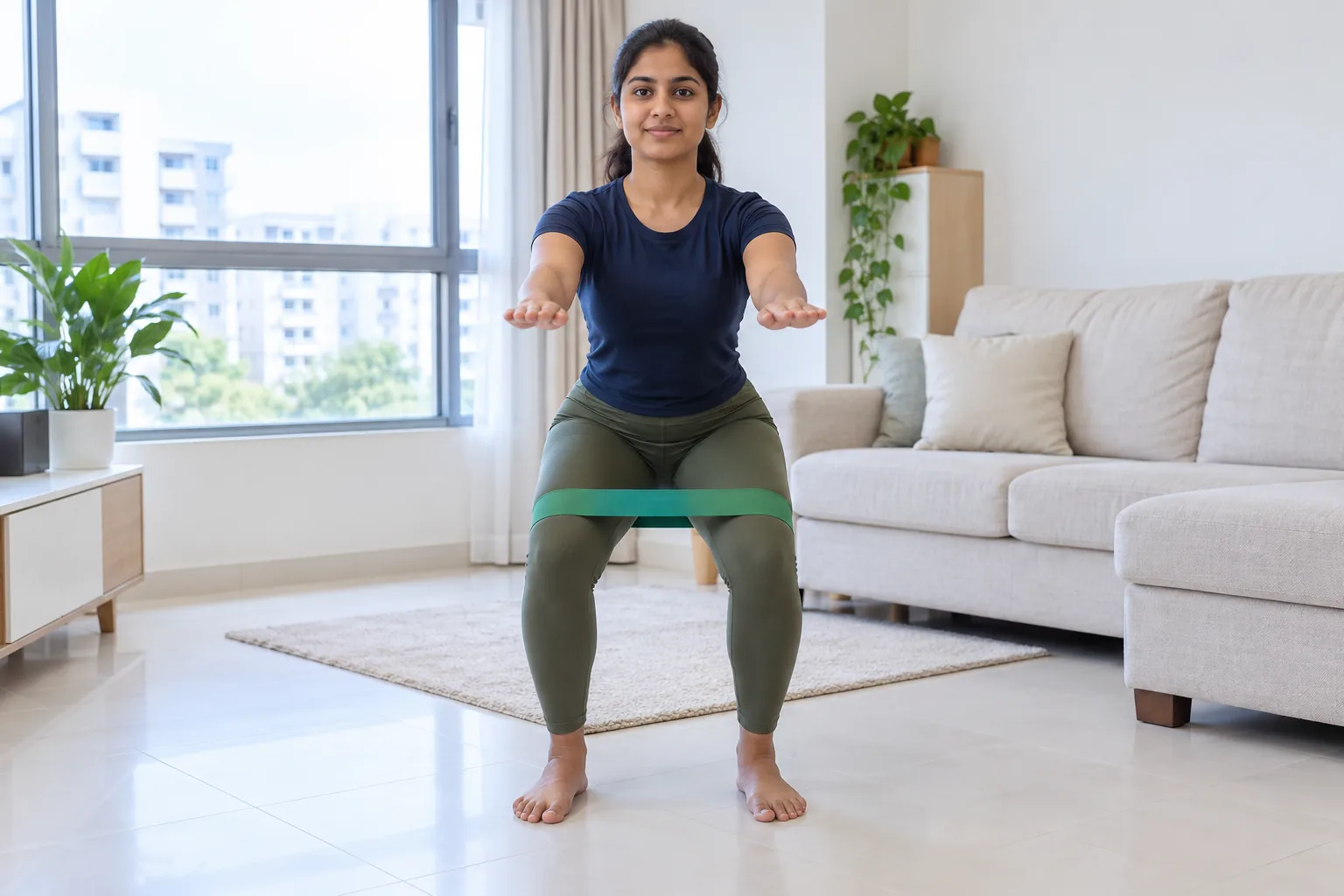
- No single rehabilitation plan is preferred over the others. Early movement and strengthening exercises are important principles [2].
- In the early phase, cold therapy and compression are used to manage swelling in the joint [2].
- For sprains and strains, the NHS advises applying an ice pack (or a bag of frozen vegetables wrapped in a tea towel) for up to 20 minutes every 2 to 3 hours during the first 2 to 3 days.[6]
- Systematic reviews cited in one paper found no significant difference in redislocation rates between partial and full weight-bearing protocols [2].
- In one study of 74 people after a first-time dislocation, 58 in 100 still had some limitation in strenuous sport at 6 months.[7]
Can a kneecap dislocate again?
After non-operative care, recurrence is around 3 in 10 overall.[8]
- In a 2004 prospective cohort of people presenting with a kneecap dislocation, about 17 in 100 whose first episode it was had further instability episodes over the following years, compared with about 49 in 100 of those who already had a history of instability.[9]
When is surgery considered?
Surgery is considered for an injury to bone and cartilage with a loose fragment, for chronic instability, or when non-surgical treatment has failed [5].
- In one US study, 10.8% of 609 people had surgery for recurrent instability, and 2.3% had a bone-and-cartilage fragment removed in the acute phase [1].
- Whether surgery leads to better outcomes and a lower risk of redislocation than non-surgical care is debated [3].
- Surgical options for an unstable kneecap are described on the MPFL reconstruction and kneecap realignment pages.
When is urgent help needed?
Even if the kneecap goes back by itself, any sign in the list below should not wait for a routine appointment.
What should I do next?
For anyone who has dislocated a kneecap, an assessment is a sensible next step. It brings together the patient’s story, an examination and any tests that help, so that the patient and clinician can decide what to do next. The assessment looks at the structure involved, the patient as a whole person and the goal they want to return to. An appointment supports an informed decision. It is not a commitment to surgery.
- Read about the kneecap instability consultation.
- Read about patella alta and patella baja.
- Arrange a knee assessment when you are ready.
- Browse the Knee Hub for other knee problems, or more articles.
- Read more about Dr Sean Leo, who is named as the author of this page.
This page provides general information and cannot diagnose an individual condition. OrthoKinetics does not provide emergency or urgent care through this webpage or its WhatsApp contact.
References
- Sanders TL, Pareek A, et al. Incidence of First-Time Lateral Patellar Dislocation: A 21-Year Population-Based Study. Sports Health. 2018;10(2):146. doi:10.1177/1941738117725055. PMID:28795924.
- Batheja, Robles, et al. Physical Therapy Management of the First-Time Patellar Instability Event. Video J Sports Med. 2025;5. doi:10.1177/26350254241299459. PMID:40308992.
- Dejour DH, Mesnard G, Giovannetti de Sanctis E. Updated treatment guidelines for patellar instability: “un menu à la carte”. J Exp Orthop. 2021;8:109. doi:10.1186/s40634-021-00430-2. PMID:34837157.
- StatPearls. Patella Dislocation. Bookshelf ID NBK538288. PMID:30855872. https://pubmed.ncbi.nlm.nih.gov/30855872/
- StatPearls. Patellar Instability. Bookshelf ID NBK482427. PMID:29494034. https://pubmed.ncbi.nlm.nih.gov/29494034/
- NHS. Sprains and strains. https://www.nhs.uk/conditions/sprains-and-strains/
- Return to Play Considerations After Patellar Instability. Curr Rev Musculoskelet Med. 2022. doi:10.1007/s12178-022-09792-1. PMID:36367684. PMCID:PMC9789273.
- Recurrence after non-operative care: pooled meta-analyses (PMID 36372845; 25636989; 37349852).
- Fithian DC, Paxton EW, Stone ML, et al. Epidemiology and natural history of acute patellar dislocation. Am J Sports Med. 2004;32(5):1114-1121. PMID 15262631.
Was this page helpful?