appointment@orthokinetics.sg
Emergency Call +65 8439 2120

That sharp pain when you twist. The catching sensation mid-movement. The swelling that won’t settle. Recognising meniscus tear symptoms early makes the difference between straightforward recovery and months of limitation.
Dr Sean Leo draws on 25+ years of clinical experience with subspecialty expertise in knee and lower limb surgery to guide active Singaporeans through successful meniscus tear treatment. Advanced minimally invasive arthroscopic techniques restore natural knee movement.
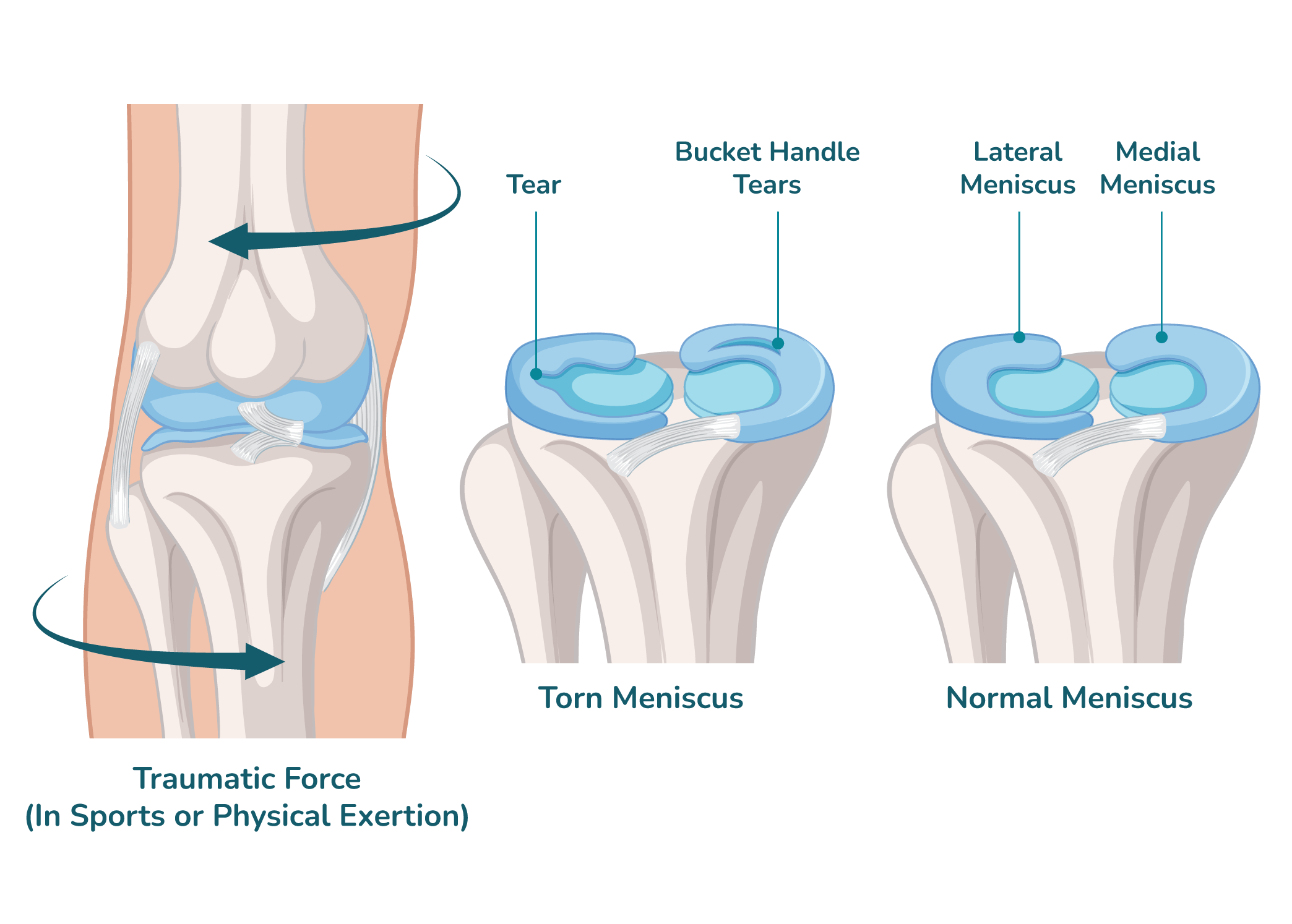
Picture two crescent-shaped cushions within your knee joint. One inner (medial meniscus), one outer (lateral meniscus). These rubbery wedges absorb impact with every step, stabilise every pivot, and distribute forces that would otherwise grind bone against bone.
When a meniscus tears, that shock absorption system fails. The torn fragment can flip, catch, or block normal movement.
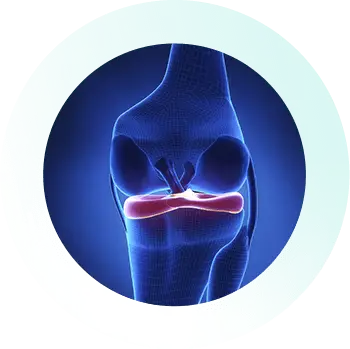
Sharp, localised pain along the joint line—precise, not vague
Gradual swelling building over 24-48 hours
“Pop” sensation at moment of injury
Mechanical catching or locking: joint catches mid-motion, requiring you to shake your leg to free it
Reduced range of motion: can’t fully straighten or deeply bend
Instability: knee feels unreliable on uneven ground
Joint line tenderness: sharp pain when pressing inner or outer knee edge
Unlike ACL tears (immediate severe instability), meniscus tear symptoms develop gradually. Unlike arthritis (diffuse ache), meniscus tears produce sharp, localised discomfort.
Individuals may experience difficulty fully bending or straightening the knee. The joint may feel tight or locked, limiting daily activities such as kneeling, climbing stairs, or getting up from a seated position.
A torn meniscus can interfere with the smooth movement of the knee, leading to a sensation of catching, clicking, or locking during motion.
Some people may notice that their knee feels unstable or gives way, particularly when walking on uneven surfaces or during sudden changes in direction.
Treatment for meniscus tears depends on factors such as the tear’s size, location, and severity, as well as the patient’s age and activity level. Non-surgical options may include rest, physiotherapy, and medication to reduce pain and improve function.
If symptoms persist or the tear is unlikely to heal on its own, surgical treatment may be recommended. Meniscus repair surgery is often preferred for suitable tears, as it preserves the natural tissue and supports long-term knee health. In some cases, a partial meniscectomy may be performed to remove the damaged portion.
A thorough evaluation by an orthopaedic specialist can help determine the most appropriate treatment plan.
Meniscus repair surgery may be recommended for individuals with a meniscus tear that causes ongoing pain, swelling, or limited knee movement.
Factors that suggest the need for surgery include:
Early evaluation by an orthopaedic specialist is important to determine if meniscus repair is the appropriate treatment based on the type and severity of the tear.
Recovery from meniscus repair surgery generally takes between 3 to 6 months, though timelines can vary based on the tear’s severity, the surgical technique used, and individual healing responses. A structured rehabilitation program plays a key role in achieving the best outcomes.
The recovery journey includes several key phases:
Initial phase (0-2 weeks)
Focuses on protecting the repair site, managing swelling, and beginning gentle movement with the help of crutches or a brace.
Early rehabilitation (2-6 weeks)
Involves gradually increasing range of motion and starting light strengthening exercises under medical supervision.
Intermediate phase (6-12 weeks)
Aims to restore strength, balance, and functional movement patterns for daily activities.
Return to activity (3-6 months)
Patients may resume low-impact sports and active routines, depending on their progress and guidance from their orthopaedic specialist.
Close follow-up and adherence to the rehabilitation plan are essential for optimal recovery and long-term knee health.
Meniscus repair achieves strong success rates when performed on appropriate tear patterns. Research shows 80-85% of meniscus repairs remain successful long-term, meaning most patients avoid future knee problems when tissue can be preserved rather than removed.
Title: Meniscal Repair Outcome in 3829 Patients With a Minimum Follow-Up From 2 Years Up to 5 Years: A Meta-Analysis on the Overall Failure Rate and Factors Influencing Failure
Authors: Conradin Schweizer, Carola Hanreich, Philippe M. Tscholl, Samuel Blatter, Reinhard Windhager, Wenzel Waldstein
Published in: The American Journal of Sports Medicine
Publication Date: March 2024 (Epub April 2023)
This landmark meta-analysis gives a clear picture of meniscus tear surgery outcomes, drawing from 51 studies and 3,931 meniscal repairs. The findings show an overall failure rate of 14.8 percent at a mean follow-up of approximately 43 months, translating to a success rate of around 85 percent when success is defined as no repair failure or revision surgery.
For patients experiencing ongoing meniscus tear symptoms despite conservative care, this data helps visualise what effective meniscus tear treatment can achieve at scale. What becomes clear when you look closely at the numbers is how concomitant ACL reconstruction lowers failure rates (8.5 percent versus 14 percent), reinforcing that knee stability is not just a theoretical concept but something that is felt in real-world recovery and function following meniscus tear surgery.
Read the full meta-analysis here →
Title: Nineteen Percent of Meniscus Repairs Are Being Revised and Failures Frequently Occur After the Second Postoperative Year: A Meta-Analysis With a Minimum 5-Year Follow-Up
Authors: Robin Tscholl, Robin Ristl, Sebastian Apprich, Reinhard Windhager, Wenzel Waldstein
Published in: Knee Surgery, Sports Traumatology, Arthroscopy
Publication Date: 2021
This long-term analysis focuses on how meniscus tear surgery holds up over time, particularly after the early postoperative period when many patients expect symptoms to have settled. Reviewing studies with a minimum follow-up of five years, the authors reported a failure rate of approximately 19.1 percent at a mean follow-up of 86 months, corresponding to a long-term success rate of about 80.9 percent.
The findings tell a consistent story: surgical technique matters. Inside-out repair techniques showed lower long-term failure rates compared with all-inside devices, which is important when setting expectations around meniscus tear recovery time and durability of repair. These insights help clinicians and patients better understand how early surgical decisions can influence outcomes that are experienced years later.
Read the long-term outcomes study here →
3. Radial Tear Repair Results (Original Clinical Series)
Title: Clinical Outcomes of Repaired Radial Meniscal Tears: A Retrospective Case Series
Published in: Journal of Orthopaedics and Traumatology
Publication Date: 2025
This retrospective clinical series offers practical insight into radial meniscus tear treatment, evaluating 81 patients who underwent surgical repair with a mean follow-up of approximately 36.7 months. The study reported a clinical failure rate of 19.8 percent, translating to an overall clinical success rate of around 80 percent.
Beyond the headline figures, the analysis helps readers feel how tear type influences recovery, identifying patient- and injury-related risk factors that can affect healing, symptom resolution, and functional return. This context is particularly useful when discussing expected meniscus tear recovery time and setting realistic expectations after meniscus tear surgery.
Read the radial meniscal tear outcomes study here →
Cost of procedure varies based on the complexity of the surgery to be performed and individual insurance panel specifications. These will be discussed with you by Dr Sean’s clinic staff after the consultation should you wish to proceed with surgery. The clinic staff are experienced in assisting with applications for letter of guarantees from various insurance panels and corporate insurance panels.
Cost factors include:

Experience, Expertise, Evidence-Based Care
25+ years of clinical experience with subspecialty expertise in knee and lower limb surgery. Advanced arthroscopic techniques ensure precision that directly impacts meniscus tear recovery time and long-term outcomes.
: Not every meniscus tear requires surgery. Thorough evaluation considers:
You’ll likely feel distinctive sharp pain along your knee joint with a catching sensation that stops you mid-movement. These meniscus tear symptoms include swelling within a day or two, that unsettling feeling of your knee locking or giving way, and sometimes a concerning “pop” that echoes in your memory. Many people notice their knee feels stuck or won’t straighten fully. The good news is early meniscus tear symptoms often settle with rest, gentle movement, and physiotherapy over several weeks. When your knee keeps catching, truly locking, or preventing you from enjoying activities despite conservative meniscus tear treatment efforts, that’s when meniscus tear surgery can restore the smooth, confident movement you’ve been missing. Your body tells you when something needs attention. Persistent mechanical symptoms signal it’s time to seek assessment.
Picture yourself gradually regaining confidence in your knee as meniscus tear recovery time unfolds in stages honouring your body’s natural healing rhythm. Meniscus repair requires walking carefully with support for 4-6 weeks whilst tissue knits together, then feeling strength return through gentle movement and rebuilding exercises over 4-6 months total. Meniscectomy patients often feel relief more quickly, walking comfortably within days and returning to daily routines by 2-3 weeks, though giving your knee the full 3-4 months ensures lasting results. Your meniscus tear recovery time depends on how your body heals, your commitment to physiotherapy that strengthens your knee, and patience to let tissue mature properly. Whether meniscus repair or meniscectomy, your care team guides you through each milestone until you’re moving freely again.
Think of meniscus repair as mending a precious cushion in your knee as well carefully stitch torn tissue back together so it continues protecting your joint for years, giving you that more natural knee feel as you move through life. Meniscectomy gently removes only damaged fragments that can’t heal, offering quicker initial relief though your knee loses some natural shock absorption over time. The path depends on where your meniscus tear sits (peripheral tears with good blood supply heal beautifully, whilst inner tears often need removal), the pattern, and your active lifestyle demands. When meniscus repair is possible, 80-90% of patients feel their knee move smoothly again, preserving protective tissue that helps prevent arthritis. Your surgeon recommends the meniscus tear treatment approach giving your knee the best chance at long-lasting comfort and function.
Many meniscus tears actually settle down beautifully without surgery. Imagine your body’s own healing taking over with the right support and patience. Small tears in areas with good blood supply, degenerative changes from life’s wear and tear, even some partial tears can stabilise with time, gentle strengthening exercises, and smart activity choices. Studies show many people over 40 find their knees comfortable again with dedicated physiotherapy alone, especially when there’s no true locking. Meniscus tear surgery becomes the right choice when your knee keeps catching or locking despite conservative meniscus tear treatment, when pain persists and holds you back, or when you’re young and active needing reliable knee performance. Your care journey starts with the gentlest approach first, moving toward surgery only when your knee clearly needs extra help.
Most patients feel genuinely relieved by how well their knee responds after meniscus tear surgery. Repair succeeds in 80-90% of cases, helping you avoid future problems and keeping that protective cushion intact. What’s truly encouraging is how repair patients maintain healthier joints over the long run, with lower arthritis rates 10-20 years down the road compared to removal. You’ll likely notice your knee feels quite natural again, especially after repair which preserves your original tissue, though about 1 in 10 people experience occasional mild aching that’s manageable. Your individual outcome depends on factors like your age and overall health, how well you commit to the rehabilitation exercises, whether you smoke, and maintaining a healthy weight that doesn’t stress healing tissue. Research following patients for 8-10 years shows these improvements last when proper technique meets dedicated recovery effort.
Imagine yourself gradually building back to the sports you love, with most people successfully returning to their activities after meniscus tear surgery. It’s about respecting your body’s healing timeline. Meniscectomy patients often feel ready for light jogging around 4-6 weeks and receive clearance for their sport by 3-4 months once strength returns. Meniscus repair requires more patience. Those healing sutures need protection, so you’ll stay partially weight-bearing initially, begin impact activities around 3-4 months, and usually get full clearance by 5-6 months for demanding sports. Getting back safely means meeting important milestones: your knee bends and straightens fully, strength matches your other leg, and you can perform sport-specific movements without pain or that unsettling feeling of instability. Working with your physiotherapist, you’ll progress through each phase confidently, knowing you’re building a foundation for years of activity rather than rushing back before your knee is truly ready.
Whilst meniscus tear surgery is quite safe with complications occurring in only 1-5% of cases, it’s natural to want to understand what might happen. Infection is rare (under 1%), blood clots uncommon (1-2%), and some temporary numbness around the incision affects about 1 in 10 people, usually fading over months. Meniscus repair carries the possibility that sutures might not hold in 10-20% of cases depending on tear location, which could mean additional treatment down the road. Some people experience stiffness requiring extra physiotherapy sessions to regain full motion. Factors like diabetes, excess weight, or smoking can affect healing, which is why your surgical team assesses your overall health picture before proceeding. Understanding these possibilities helps you make an informed choice, knowing that most people move through surgery and recovery smoothly with careful technique and proper post-operative care.
Physiotherapy becomes your partner in recovery, guiding you back to confident movement normally over the 3 months your knee needs to fully heal and strengthen. You’ll start within days of meniscus tear surgery with gentle exercises that keep your knee from getting stiff whilst protecting healing tissue. Think controlled movements that gradually restore your range of motion. Meniscus repair patients follow a more protective approach initially, whilst meniscectomy patients can typically progress faster based on how their knee feels. Most people attend sessions 1-2 times weekly during those crucial first 6-8 weeks, then transition to weekly visits as independence grows, always supplemented by home exercises that become part of your daily rhythm. The specific programme your physiotherapist designs honours your unique tear pattern, the surgical technique used, and your personal goals for getting back to the activities that matter to you.
Meniscus tears happen in two main ways: that sudden twisting moment during sport when your foot stays planted whilst your body turns, or gradual wear developing over years of life, activity, and genetics. You might remember that distinctive “pop” feeling with sudden tears, whilst degenerative tears creep up gradually, first noticed during everyday movements like squatting or kneeling. Risk increases with sports involving cutting and pivoting, being over 30, carrying extra weight, and jobs requiring frequent squatting. The encouraging news is you can significantly reduce risk: strong thigh and hip muscles stabilise your knee beautifully, proper warm-ups prepare tissues, good technique during jumping and direction changes protects your meniscus, and maintaining healthy weight reduces joint stress. Whilst not every meniscus tear can be prevented, these strategies help protect your knees, and catching meniscus tear symptoms early allows meniscus tear treatment before small problems become larger.
Meniscus tear surgery costs vary based on whether you need repair (which takes longer) or meniscectomy, where you have surgery performed, anaesthesia requirements, and the physiotherapy that supports your recovery over several months. The good news is most patients with corporate health insurance can use their benefits for medically necessary meniscus tear treatment, and Medisave helps with approved arthroscopic procedures. Your total investment depends on factors like additional procedures if other knee structures need attention, the complexity of your particular tear, and follow-up care ensuring you heal properly. The experienced staff work alongside you from the start, helping with insurance pre-authorisation, obtaining letters of guarantee, coordinating corporate arrangements, and providing clear cost breakdowns during your consultation. Specific costs become clear once your knee is examined and the best surgical approach is determined, ensuring the investment aligns with your long-term knee health goals.
Some small, stable tears settle down on their own, especially in less active individuals, but many meniscus tears progressively worsen when left unattended—imagine abnormal forces wearing down cartilage with each step. Untreated meniscus tears with mechanical catching or locking create a destructive cycle where cartilage damage accelerates, potentially developing into arthritis over 5-10 years. The natural path depends on your tear: stable peripheral tears might heal with dedicated conservative meniscus tear treatment, whilst bucket-handle tears causing true locking won’t improve without meniscus tear surgery and risk progressive damage. Delaying necessary treatment whilst meniscus tear symptoms persist allows secondary problems—cartilage lesions, tears extending further, muscles weakening, and compensatory patterns stressing other joints. Early evaluation when symptoms persist gives you the best opportunity to address the problem whilst joint-preserving options remain available.
RELATED SERVICES
Educational Resources:
