Specialized Shoulder Treatment in Singapore

Treatment for Unstable Shoulder

Dislocated your shoulder? Dr Sean Leo is an orthopaedic surgeon that provides urgent care for shoulder dislocations and treats chronic instability to prevent future dislocations and restore joint security.

Man with short black hair and glasses wearing a dark shirt, smiling at camera.

Dr. Sean Leo

Orthopedic Surgeon Singapore
https://orthokinetics.sg/wp-content/uploads/2025/11/visual-selection-4-1-640x431.png

What is a Shoulder Dislocation?

Understanding Shoulder Dislocation with Dr. Sean Leo.

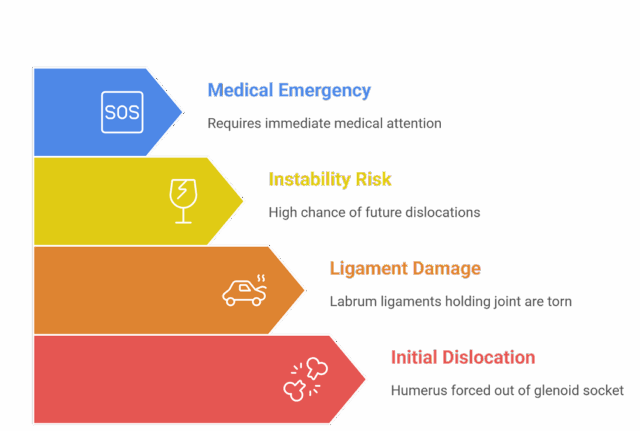
A shoulder dislocation is a severe injury where the ball of the upper arm bone (humerus) is forced completely out of the shoulder socket (glenoid). This often damages the ligaments (labrum) that hold the joint in place, leading to a high risk of repeat dislocations (instability). It is a medical emergency that requires immediate attention. 

What are the Symptoms of a Shoulder Dislocation

A shoulder dislocation usually causes sudden, intense pain and a visible deformity or “bump” where the joint has shifted out of place. Movement becomes very limited, and swelling and bruising often develop quickly. Some people also experience numbness or tingling in the arm or hand, which may indicate nerve involvement.

https://orthokinetics.sg/wp-content/uploads/2025/11/shoulderpainsymptom.webp
Intense, sudden pain in the shoulder

This sharp and immediate pain occurs the moment the joint slips out of place, making the shoulder extremely sensitive to any movement.

A visible deformity or "bump" on the front or back of the shoulder

The displaced bone can create an obvious change in shoulder shape, often appearing as a noticeable bulge or abnormal contour.

Inability to move the joint

Movement becomes very limited or impossible due to pain and the misalignment of the joint, making the arm feel unstable or “stuck.”

Swelling and bruising

Inflammation develops quickly after the injury, leading to swelling and discoloration around the shoulder as the body responds to the trauma.

Numbness or tingling in the arm or hand (indicating possible nerve damage)

This sensation may occur if nearby nerves are stretched or compressed during the dislocation, signaling potential nerve involvement.

Shoulder Disclocation
Treatment and Recovery

Specialized Care by Dr. Sean Leo, Orthopaedic Knee & Sports Injury Specialist
  • Initial Treatment
  • Rehabilitation
  • Surgical Treatments

What are the treatment options for Shoulder Dislocation?

Initial Treatment
  • Closed Reduction: A doctor must gently manoeuvre the arm bone back into the socket. This should never be attempted by a non-medical professional. 
  • Immobilisation: Using a sling to rest the shoulder for a few weeks. 

How does physiotherapy prevent shoulder dislocations?

Act Promptly for Better Outcomes
  • Physiotherapy: Once the initial pain subsides, therapy is vital to strengthen the rotator cuff and shoulder blade muscles to prevent future dislocations. 

When is arthroscopic stabilisation surgery recommended?

What to Expect
  • Arthroscopic Stabilisation Surgery: Recommended for young, active patients or those with recurrent dislocations. The surgeon repairs the torn ligaments and tightens the joint capsule using arthroscopic techniques. 

Recovery from surgery involves a short period of arm sling protection followed by a guided physiotherapy protocol to ensure the shoulder heals properly without losing its range of motion. 

Secure Your Unstable Shoulder.

If you've dislocated your shoulder once, you're at risk for it happening again. Our specialist can assess the damage and provide treatment to stabilise your joint for the long term.