appointment@orthokinetics.sg
Emergency Call +65 8439 2120

Picture the moment your knee gave way. That sharp pop.. the immediate sense that something fundamental shifted. If it happened mid-pivot on the football pitch or landing awkwardly during a tennis match, that instability you’re feeling right now doesn’t have to be permanent.
Dr Sean Leo’s 25+ years of clinical experience, combined with his subspecialty focus in knee and lower limb surgery, has helped restore confident movement to hundreds of active Singaporeans through ACL reconstruction surgery. With 80-90% success rates* and advanced minimally invasive techniques, you can envision yourself returning to the sports and activities you thought were behind you.
*Success rates based on peer-reviewed medical literature. See FAQ section for detailed clinical evidence.
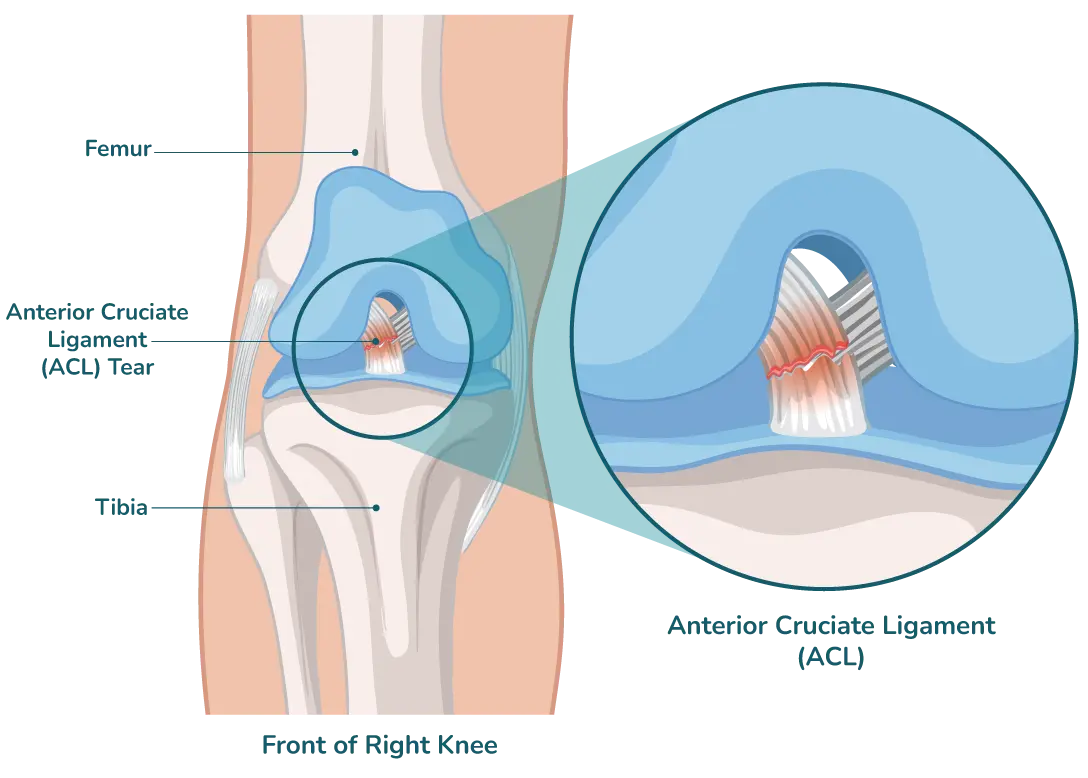
Feel your knee with your hand right now. Deep inside that joint, your anterior cruciate ligament (ACL) acts like a critical stabilising rope, preventing your shin bone from sliding too far forward and controlling rotation when you pivot or twist.
Your ACL sits in the centre of your knee, forming an “X” with another ligament (the PCL). During cutting movements in football, sudden direction changes in basketball, or quick pivots in badminton, your ACL constantly works to keep your knee aligned and stable.
When that rope snaps during an ACL tear, your brain immediately recognises something’s wrong. That “pop” you felt or heard wasn’t imagination as it was ligament fibres rupturing.
✓ Feel your knee buckling during normal activities, not just sports
✓ Play cutting/pivoting sports like football, basketball, tennis, badminton, netball
✓ Between 25-45 with an active lifestyle you’re not willing to abandon
✓ Complete ACL tear confirmed by MRI imaging
✓ Want to return to competitive athletics at your previous level
Here’s the reality: ACL tears don’t heal naturally. The ligament sits surrounded by synovial fluid that interferes with healing. Without ACL reconstruction surgery, active individuals face 50-70% risk of meniscus tears within 5 years from continued instability, plus accelerated arthritis development.
Dr Sean Leo’s joint preservation philosophy means honest evaluation of whether your specific ACL injury, activity goals, and lifestyle genuinely require surgery or if conservative management serves you better.
Imagine stepping back onto the court with the same explosive confidence you once had with no hesitation, no second-guessing whether your knee will hold. For athletes and highly active adults, ACL reconstruction surgery doesn’t just repair a ligament; it restores the freedom to move without limits.
Feel what’s possible again with ACL reconstruction surgery.
Dr Sean Leo’s thorough evaluation examines your unique ACL injury pattern, athletic demands, and performance goals to determine if surgical reconstruction offers your best pathway back to unrestricted, confident movement or if your situation might benefit from alternative approaches.
Your athletic future deserves expert guidance.
Understanding your ACL surgery recovery time sets realistic expectations and maintains focus through the journey ahead.
Imagine yourself just days after surgery. Managing swelling with ice and elevation, using crutches briefly (most walk independently within 1-2 weeks), performing gentle exercises to prevent stiffness. Priority is protecting your graft whilst maintaining basic mobility.
Feel your confidence building as you transition to normal walking, begin stationary cycling, and restore full range of motion. Your knee starts feeling genuinely better.
Picture yourself at three months: walking normally, managing stairs confidently, feeling real stability returning. Progressive resistance training intensifies. Balance exercises help your nervous system relearn complex knee control.
Jogging progressions begin around 4-5 months, carefully monitored. Direction changes are gradually introduced. Sport-specific movement patterns resume. You’re performing activities that resemble your sport.
High-level athletic preparation intensifies like plyometric exercises, cutting drills at progressive speeds, sport-specific training approaching pre-injury intensity. Formal return-to-sport testing evaluates strength symmetry, agility, and psychological readiness.
Feel the satisfaction of that first full training session back with your team. Full return to competitive sports typically occurs between 9-12 months. Research consistently demonstrates that earlier return significantly increases re-tear risk.
Individual progression depends on injury severity (isolated ACL tear vs ACL MCL combination), age, pre-surgery conditioning, and most critically, your rehabilitation commitment.
Picture this outcome: nine months from now, you’re back on the pitch, executing that same cutting move which had previously felt unstable, but this time, your knee holds firm. That’s the reality for 80–90%* of patients after ACL reconstruction surgery.
Re-tear rates with modern ACL reconstruction surgery remain approximately 5-10% over 5 years. Primarily in patients who returned too early or had inadequate rehabilitation.
*Success rates based on peer-reviewed medical literature. See FAQ section for detailed clinical evidence.
Transparent pricing discussions help you plan confidently for your ACL reconstruction surgery journey. Because every ACL injury presents unique considerations, from isolated ACL tear to combined ACL MCL damage, costs naturally vary based on your individual situation.
Several factors shape the investment in restoring knee stability after an ACL injury:
Many insurance plans recognize ACL reconstruction surgery as medically necessary for active individuals experiencing significant instability from ACL tear, particularly when ACL tear symptoms prevent return to sports or impact daily function.
How Orthokinetics supports you:
✓ Insurance coordination – Staff assist with letter-of-guarantee applications for ACL reconstruction surgery
✓ Transparent discussions – Detailed cost breakdowns specific to your ACL injury treatment plan
✓ Flexible guidance – Financial counselling explores options suited to your situation
✓ Coverage verification – Team confirms your panel specifications before proceeding
Your focus should remain on preparing for successful ACL reconstruction surgery and the rehabilitation journey ahead. Let our team handle the financial coordination—that’s part of comprehensive care at Orthokinetics.
Cost considerations shouldn’t delay necessary treatment for ACL injury. Early intervention often means simpler procedures, shorter ACL surgery recovery time, and prevention of secondary damage that complicates both surgery and expenses.
The ideal window for ACL reconstruction surgery is typically 3-6 weeks post-injury. Operating too soon risks stiffness complications; waiting beyond 3-6 months increases secondary meniscus and cartilage damage.
During preparation, you’ll work with physiotherapy to reduce swelling, restore range of motion, and maintain strength, setting the foundation for optimal ACL surgery recovery time.
Feel reassured knowing your ACL reconstruction surgery employs the most appropriate surgical approaches available. Through small incisions (typically 4 portals of 5-10mm each), Dr Sean Leo uses high-definition arthroscopy to work inside your knee with precision.
Every structure inside your knee is thoroughly assessed—menisci, cartilage, remaining ACL fibres. Any associated damage is addressed during the same procedure.
Your torn ACL is replaced with new tissue, typically from your own body:
Dr Sean Leo creates anatomically accurate tunnels in your tibia and femur using precise surgical techniques. This positioning directly influences long-term success as proper placement means your knee feels natural.
Your graft is passed through the tunnels and fixed firmly with bioabsorbable screws or button devices. Over subsequent months, the graft integrates into your bone through biological healing.
Complex ACL MCL combination injuries require careful surgical planning and precise technique to address both ligament structures effectively. When appropriate, intraoperative radiological imaging is used to provide additional precision, particularly valuable for complete ACL. MCL combination injuries or revision cases.
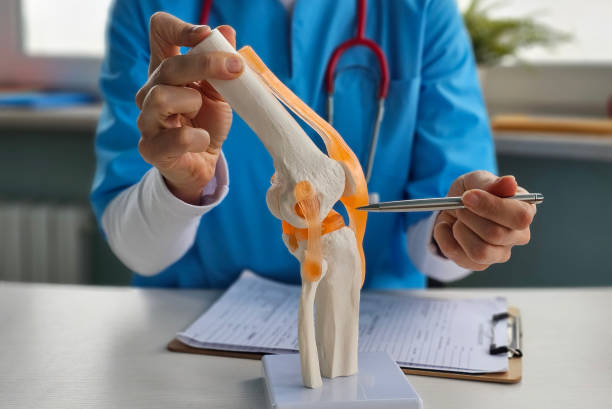

Dr Sean Leo subspecialises in knee and lower limb surgery. Over 25 years clinical experience means encountering virtually every ACL tear scenario. Straightforward cases, complex multi-ligament reconstructions, revisions, and ACL MCL combinations requiring nuanced decision-making.
ACL reconstruction surgery succeeds through complete care continuity. Orthokinetics integrates comprehensive rehabilitation support from first consultation through full return to sport, ensuring physiotherapy protocols align precisely with surgical technique.
Dr Sean Leo’s treatment philosophy centres on joint preservation. Carefully evaluating whether your ACL injury truly requires surgery. Treatment recommendations are grounded in peer-reviewed research, providing honest, transparent guidance.
Complete ACL surgery recovery time spans 9-12 months for competitive sports, with milestones along the way: walking independently by 2-4 weeks, jogging around 4-5 months, sport-specific drills by 6-8 months. The extended timeline reflects biological graft healing realities, rushing increases re-tear risk significantly.
Most recognise their ACL tear immediately: feeling or hearing a “pop” during injury, rapid swelling within 2-6 hours, immediate knee instability or buckling sensation. The hallmark ACL tear symptom is that persistent instability feeling. Your knee might give way during movements you previously performed confidently.
ACL tears don’t heal naturally as the ligament sits surrounded by synovial fluid interfering with healing. However, partial tears in less active individuals can sometimes be managed through physiotherapy, bracing, and activity modification, whilst complete tears in athletes typically demand ACL reconstruction surgery.
ACL reconstruction surgery replaces your torn ligament with a graft, whilst repair attempts to suture torn ends together without a graft. Research shows repair fails 5-10 times more frequently than reconstruction, which achieves 80-90% success rates using modern arthroscopic techniques.
ACL tears occur from non-contact twisting producing a “pop” with immediate instability and rapid swelling, whilst MCL injuries result from direct blows causing inner knee pain. Combined ACL MCL injuries require comprehensive assessment through physical examination and MRI imaging by Dr Sean Leo.
Comprehensive physiotherapy is fundamental to successful outcomes. Surgery provides mechanical stability, but physiotherapy rebuilds strength, coordination, and neuromuscular control essential for functional performance. Patients committed to structured rehabilitation achieve superior outcomes including better strength and lower re-tear risks.
Delaying beyond 3-6 months raises secondary damage risks as unstable knees allow abnormal motion, progressively damaging meniscus cartilage and articular surfaces. Studies show patients waiting six months or longer experience higher meniscus tear rates requiring more extensive surgical procedures.
Yes, though growing teenagers require modified techniques protecting open growth plates that could cause limb length differences if damaged. Modern innovations provide options treating ACL tears in younger patients using specialised techniques avoiding growth plates whilst achieving excellent stability.
The 60–90 minute arthroscopic procedure involves examining the knee structures, harvesting your graft, creating precisely positioned tunnels, and securing the graft with fixation devices. You go home the same day and begin gentle rehabilitation within 48–72 hours.
ACL reconstruction surgery demonstrates 80-90% success rates with modern techniques, allowing most patients to return to desired activity levels with restored stability. Success factors include surgical precision, appropriate graft selection, rehabilitation commitment, and respecting the 9-12 month timeline before full sports return.
The 80-90% success rates for ACL reconstruction are based on peer-reviewed medical studies and clinical outcomes data:
Peer-reviewed research shows 75-90% of patients report good to excellent outcomes following partial knee replacement surgery.
Multi-surgeon practice data demonstrates 90-95% of patients return to full activities without complications.
A recent comprehensive review confirms 80-95% success rates with modern surgical techniques and rehabilitation protocols.
Success encompasses pain relief, restored knee stability, return to activities, high patient satisfaction, and low revision surgery rates (10-15% require revision, meaning 85-90% do not).
Individual Results Depend On:
➤ Patient factors: Age, arthritis severity, ligament stability, overall health
➤ Surgical factors: Appropriate patient selection, precise implant positioning, advanced technology
➤ Rehabilitation factors: Physiotherapy adherence, timeline compliance, long-term lifestyle management
These figures represent within documented medical literature. Dr Sean Leo’s thorough assessment determines whether your specific knee condition aligns with the patient profiles who achieve these success rates.
Your knee kept you active for years. When it needs rebuilding, shouldn’t you consider the most effective solution?