Personalised Frozen Shoulder Care in SingaporeAdhesive Capsulitis Treatment

Stiff, painful shoulder? You may have a frozen shoulder. Our specialist in Singapore offers effective treatments for adhesive capsulitis, from physio to advanced procedures. Regain your motion.
Man with short black hair and glasses wearing a dark shirt, smiling at camera.

Dr. Sean Leo

Orthopedic Surgeon Singapore
https://orthokinetics.sg/wp-content/uploads/2025/11/Frozenshoulder_diagram-640x582.png

What is a FrozenShoulder?

Understanding Knee Ligament Injuries with Dr. Sean Leo.

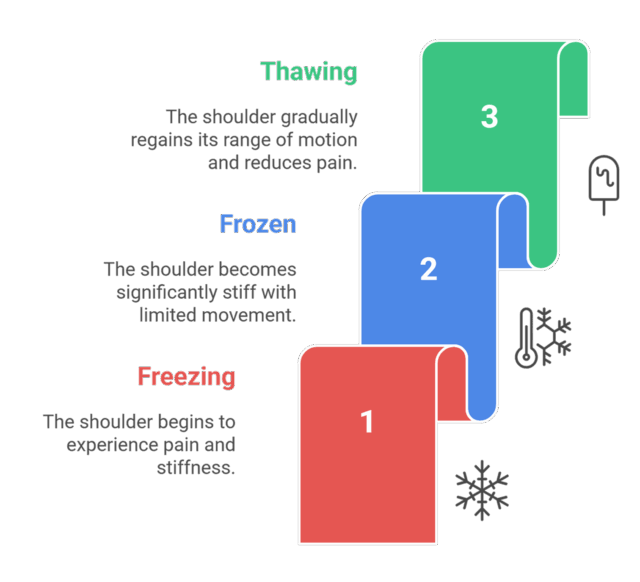
Frozen Shoulder, medically known as Adhesive Capsulitis, is a condition characterised by stiffness, pain, and a significant loss of range of motion in the shoulder joint. The shoulder capsule thickens and becomes tight, forming stiff bands of tissue called adhesions. It typically develops in stages: freezing (painful), frozen (stiff), and thawing (resolution). 

What are the Symptoms of a Frozen Shoulder?

Frozen shoulder typically develops with a deep, aching pain followed by increasing stiffness. Patients often notice a gradual loss of mobility, making daily movements difficult and giving the shoulder a “locked” or restricted feeling.

https://orthokinetics.sg/wp-content/uploads/2025/11/shoulderpainsymptom.webp
Dull, aching pain deep in the shoulder, often worsening at night

You may notice a persistent, deep ache in the shoulder that often becomes worse at night or with movement. This discomfort may be caused by inflammation in the joint capsule or surrounding soft tissues, making simple motions uncomfortable.

Progressive stiffness that makes it difficult to move the arm

Over time, you may experience a gradual tightening of the shoulder that limits how far you can move your arm. This stiffness may result from thickening or contraction of the joint capsule, restricting normal motion and daily activities.

Inability to perform everyday movements like reaching overhead or behind your back

You may find it difficult to carry out routine tasks, such as reaching overhead, behind your back, or lifting objects. This limitation may be caused by both pain and reduced flexibility within the shoulder joint.

The feeling that your shoulder is "locked" in place

You might feel as if your shoulder is stuck or frozen in place, making it hard to move freely. This sensation is often due to inflammation and tightening of the joint capsule, which restricts smooth motion and causes discomfort.

Frozen Shoulder Injury
Treatment and Recovery

The goal of treatment is to control pain and restore motion.
  • Non-Surgical Treatments
  • Surgical Treatments

What are the treatment options for Frozen Shoulder?

Surgical vs Non-surgical
  • Physiotherapy: The cornerstone of treatment, focusing on stretching exercises to improve range of motion. 
  • Pain Management: Anti-inflammatory medications or corticosteroid injections to reduce pain and inflammation. 
  • Hydrodilatation: A procedure where a sterile fluid is injected into the joint capsule to stretch it and break up adhesions. 

When would you need surgery?

Act Promptly for Better Outcomes
  • Manipulation Under Anaesthesia (MUA): The doctor gently manipulates your shoulder to break up the scar tissue while you are under anaesthesia. 
  • Arthroscopic Surgery: A minimally invasive surgery to cut through the tight joint capsule and release it (capsular release). 

Recovery can be slow and requires dedication to physiotherapy. The “thawing” stage can take from 6 months to 2 years. 

Take the First Step Towards Recovery

Our frozen shoulder specialist can help you navigate the stages of recovery and restore your mobility. Get a personalised treatment plan today.