appointment@orthokinetics.sg
Emergency Call +65 8439 2120

Feel that pain concentrated on one side of your knee. Sharp on the inner edge when you walk, or perhaps aching on the outer side during stairs. Whilst one compartment of your knee causes constant discomfort, the rest feels surprisingly functional. What if you could address only the damaged area, preserving the healthy tissue that’s still serving you well?
Dr Sean Leo brings 25+ years of clinical experience with subspecialty expertise in knee and lower limb surgery, helping many Singaporeans through partial knee replacement. A joint-preserving approach targeting isolated compartment arthritis. With faster recovery than total knee replacement and a more natural-feeling result, you can envision yourself returning to comfortable movement whilst keeping the healthy parts of your knee intact
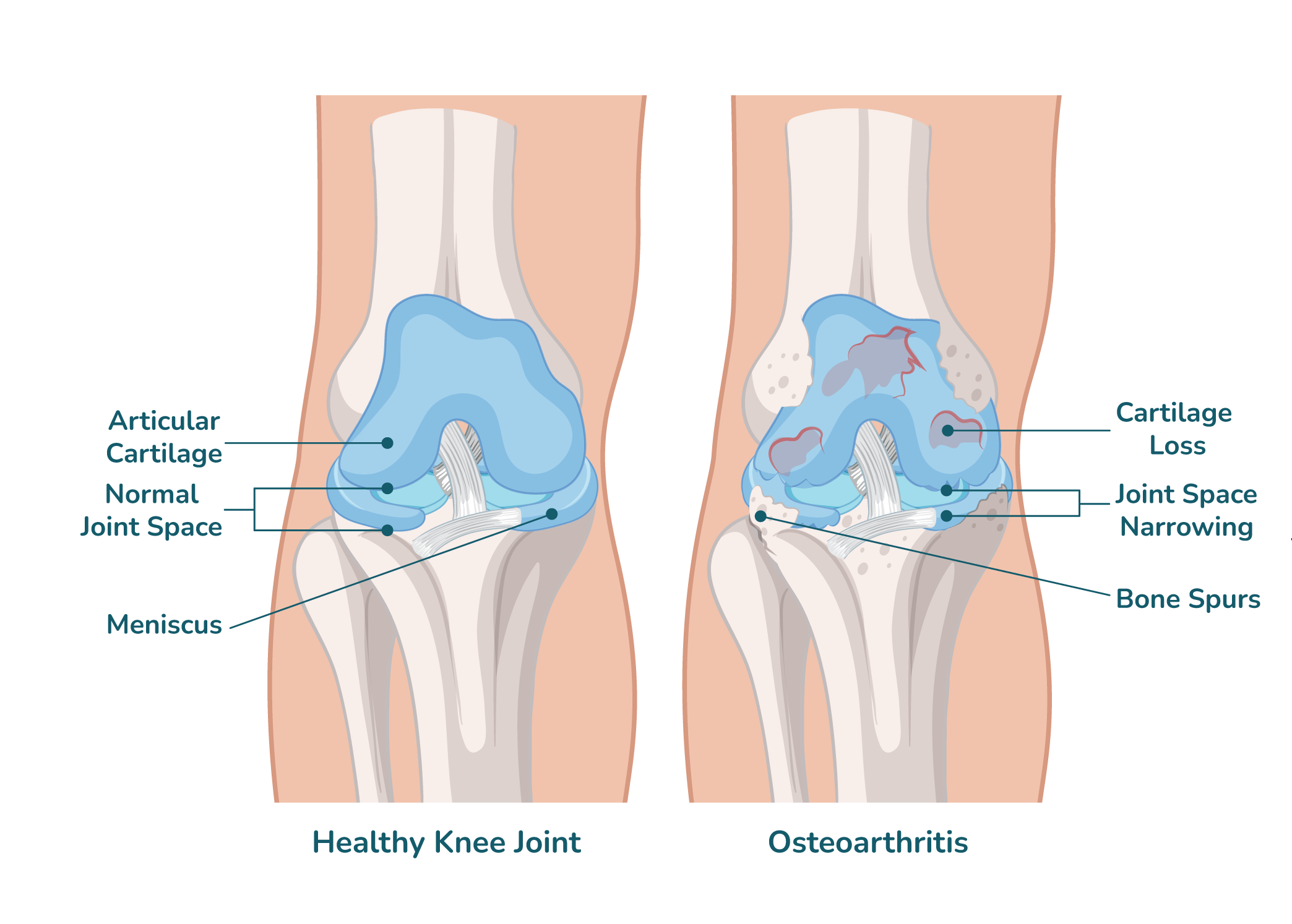
Not everyone with knee arthritis suits partial knee replacement. This knee replacement surgery works best when arthritis remains confined to a single compartment.
You may be suitable for partial knee replacement if you:
✓ Pain localised to one area – inner knee, outer knee, or kneecap region specifically
✓ Age typically 50-75 – though younger patients with post-traumatic arthritis may qualify
✓ Healthy ligaments – ACL, PCL, MCL, and LCL remain intact and functional
✓ Good range of motion – knee bends and straightens reasonably well despite pain
✓ Minimal deformity – less than 10-15 degrees of varus or valgus alignment
✓ Failed conservative treatments – medications, injections, physiotherapy providing inadequate relief
✓ X-rays show isolated damage – imaging confirms single-compartment arthritis
Picture yourself with pain that’s clearly on one side of your knee and you can point exactly where it hurts. That’s the hallmark of compartmental arthritis suitable for partial knee replacement.
➤ Medial Compartment (Inner Knee)
Approximately 80-85% of partial knee replacement procedures address medial compartment arthritis. Feel that pain on the inside of your knee, especially when walking or climbing stairs? That’s typically medial arthritis, where the inner portion wears whilst the outer side remains healthy.
➤ Lateral Compartment (Outer Knee)
About 10-15% of cases involve lateral compartment damage. This outer knee arthritis causes pain along the outside edge during certain movements or weight-bearing positions.
➤ Patellofemoral Compartment (Kneecap Area)
Arthritis between your kneecap and thigh bone creates pain at the front of your knee, particularly during stairs, squatting, or kneeling. This represents roughly 5-10% of partial knee replacement cases.
Dr Sean Leo’s joint preservation philosophy means recommending partial knee replacement only when appropriate and not forcing a tissue-sparing approach when comprehensive knee replacement surgery better serves your needs.
You likely need total knee replacement instead if you have:
○ Multi-compartment arthritis – damage affecting two or more areas
○ Inflammatory arthritis – rheumatoid arthritis or other inflammatory conditions
○ Significant ligament damage – torn or deficient ACL, PCL, or collateral ligaments
○ Severe deformity – marked bow-legged or knock-knee alignment
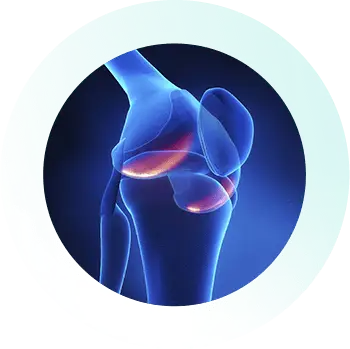
This common form of knee osteoarthritis affects the inner knee. When the damage is limited to the medial compartment, partial knee replacement can relieve pain and restore function while preserving healthy tissue in the other compartments.
In some cases, osteoarthritis affects the outer part of the knee, known as the lateral compartment. If the damage is localized and the rest of the knee is healthy, partial knee replacement can restore function and relieve pain in the affected area.
Osteoarthritis may also occur in the area where the kneecap (patella) meets the thigh bone (femur). Partial knee replacement can be considered when this compartment is damaged while the other areas of the knee remain intact.
Injuries such as fractures or previous surgeries that result in knee damage can lead to post-traumatic arthritis. If the damage is limited to a specific knee compartment, partial knee replacement can offer a solution to relieve pain and restore function.
Partial knee replacement is a surgical procedure intended for patients with knee damage limited to a specific compartment of the knee—most commonly the inner (medial) side. Unlike total knee replacement, this approach preserves the healthy bone, cartilage, and ligaments in the unaffected parts of the joint.
Dr. Sean Leo performs partial knee replacement using precise techniques tailored to each patient’s condition. This procedure may offer benefits such as smaller incisions, quicker recovery, and more natural knee movement when compared to total knee replacement, depending on individual suitability.
A detailed evaluation by an orthopaedic knee specialist is essential to assess whether partial knee replacement is the right treatment option based on your symptoms, imaging results, and activity level.
Feel reassured knowing partial knee replacement represents one of orthopaedics’ most refined procedures, a targeted knee surgery preserving healthy tissue whilst addressing what’s damaged.
Pre-operative assessment includes comprehensive physical examination, detailed X-rays or MRI to confirm single-compartment damage, ligament stability testing, and alignment analysis.
Through a smaller incision (7-10cm, roughly half the length needed for total knee replacement), Dr Sean Leo accesses the affected compartment whilst preserving all surrounding healthy structures.
➤ Controlled and Safe Tissue Removal
Only damaged cartilage and bone from the affected compartment are removed. All healthy cartilage in other compartments, all four major knee ligaments remain completely intact. This preserved anatomy provides the natural knee feel partial knee replacement is known for.
➤ Implant components
The partial knee replacement implant consists of:
These smaller implants (75% less material than total knee replacement) restore smooth joint surfaces in the affected compartment only.
Explore Advanced Surgical Techniques →
*Length of individual patients’ scars may vary depending on anatomy and surgical considerations.
One significant advantage of partial knee replacement over total knee replacement is markedly faster recovery. Because less tissue is disrupted and your natural anatomy is largely preserved, rehabilitation progresses more quickly.
Days 1-3: Immediate Recovery Imagine standing and walking with assistance within hours after your partial knee replacement. Pain management keeps you comfortable whilst early mobilization prevents stiffness. Many patients bear weight more comfortably than expected as the preserved ligaments immediately provide stability.
Week 1-2: Rapid Progress Feel your confidence building as you transition from walker to walking stick within days. Most partial knee replacement patients walk more naturally earlier because their preserved ACL and PCL provide the proprioception your brain relies on for coordinated movement.
Week 2-4: Accelerated Rehabilitation Picture yourself at three weeks: walking with minimal aids, managing stairs more comfortably than before knee surgery, resuming basic daily activities. This represents roughly half the recovery time compared to total knee replacement.
Week 4-8: Normal Life Resumes By 4-6 weeks post-partial knee replacement, most patients resume normal activities—shopping, light household tasks, short walks. Your preserved knee anatomy allows faster return to comfortable function.
Month 3-6: Full Activity Imagine yourself at three months: back to golf, cycling, swimming, extended walking. The combination of targeted pain relief and preserved natural function provides the comfortable movement partial knee replacement aims to deliver.
Picture this outcome: six months from now, you’re walking comfortably without that sharp inner knee pain, playing golf, cycling regularly, and barely remembering which knee had surgery because it feels so natural. That’s the experience 85-90% of carefully selected partial knee replacement patients report.
Modern partial knee replacement demonstrates excellent outcomes when appropriate patient selection meets precise surgical technique:
Success factors: patient selection matters most; candidates with true single-compartment arthritis and stable ligaments achieve superior outcomes. Surgical precision with robotic assistance directly influences longevity.
*Success rates based on peer-reviewed medical literature. See FAQ section for detailed clinical evidence.
Transparent pricing discussions help you plan confidently for your partial knee replacement journey. Because every knee condition presents unique considerations, costs naturally vary based on your individual situation.
Several factors shape the investment in this tissue-preserving knee surgery:
Many insurance plans recognize partial knee replacement as medically necessary when single-compartment arthritis significantly impacts quality of life and conservative treatments prove insufficient.
✓ Insurance coordination – Staff assist with letter-of-guarantee applications for partial knee replacement surgery
✓ Transparent discussions – Detailed cost breakdowns specific to your knee surgery treatment plan
✓ Flexible guidance – Financial counselling explores options suited to your situation
✓ Panel verification – Team confirms coverage parameters before proceeding with knee replacement surgery
Your focus should remain on preparing for successful partial knee replacement. Let our team handle the financial coordination—that’s part of comprehensive care at Orthokinetics.
Cost considerations shouldn’t delay appropriate treatment. Early partial knee replacement often means preserving more healthy tissue and potentially avoiding more extensive knee replacement later.
|
Aspect |
Partial Knee Replacement |
Total Knee Replacement |
|
Candidates |
Single-compartment arthritis, healthy ligaments |
Multi-compartment arthritis, ligament damage |
|
Tissue Preserved |
75% less bone/cartilage removed, all ligaments intact |
All three compartments resurfaced, ACL/PCL often removed |
|
Incision Size |
7-10cm (inner or outer knee) |
15-20cm (front of knee) |
|
Recovery Time |
4-6 weeks to normal activities |
8-12 weeks to normal activities |
|
Hospital Stay |
1 day |
1-3 nights |
|
Knee Feel |
More natural (preserved proprioception) |
Functional but less natural sensation |
|
Return to Activities |
Faster, often by 3 months |
Typically 4-6 months |
*Length of individual patients’ scars may vary depending on anatomy and surgical considerations.
Partial knee replacement embodies Dr Sean Leo’s joint preservation philosophy. By addressing only what’s damaged and preserving what’s healthy, you maintain more of your natural knee anatomy, potentially delaying or avoiding total knee replacement for years.
If arthritis eventually progresses to other compartments, converting partial knee replacement to total knee replacement remains straightforward because healthy bone and tissue were preserved initially.
Dr Sean Leo’s practice philosophy centres on tissue preservation. Doing only what’s necessary, preserving what’s healthy. Over 25 years of clinical experience and further subspecialisation in knee and lower limb surgery means refined judgment about when partial knee replacement serves patients better than total knee replacement.
Dr Sean Leo’s thorough assessment determines whether your arthritis pattern, ligament stability, and alignment genuinely suit partial knee replacement or if total knee replacement better serves your situation. This honest evaluation ensures you receive the knee replacement surgery matching your condition.

Partial knee replacement replaces only the damaged compartment whilst preserving all healthy bone, cartilage, and ligaments, resulting in faster recovery and more natural knee feel. Total knee replacement resurfaces all three compartments and often removes ligaments, providing comprehensive reconstruction when multiple areas are damaged.
Most patients resume normal activities within 4-6 weeks after partial knee replacement, roughly half the time needed for total knee replacement recovery. You’ll walk with assistance the same day, transition off walking aids within 1-2 weeks, and return to activities like golf or cycling by 3 months.
Yes, most patients report partial knee replacement feels more natural because all four major knee ligaments remain intact, preserving proprioception your brain relies on for coordinated movement. The preserved healthy compartments continue functioning normally.
Yes, if arthritis eventually progresses to other compartments, converting partial knee replacement to total knee replacement is straightforward and no more difficult than primary total knee replacement. The tissue preservation approach means healthy bone remains available.
Partial knee replacement allows most low-impact activities including walking, cycling, swimming, golf, and hiking once fully recovered. Many patients return to recreational activities faster than total knee replacement patients due to quicker recovery.
Comprehensive assessment including X-rays or MRI determines your arthritis distribution—if damage remains confined to one compartment with healthy ligaments intact, you may suit partial knee replacement. Multi-compartment arthritis or ligament deficiency typically requires total knee replacement.
Potential complications include infection (rare, <1%), blood clots, implant loosening, and progression of arthritis to previously healthy compartments requiring conversion to total knee replacement. Overall complication rates are lower than total knee replacement due to less invasive nature.
Many private and corporate insurance plans cover medically necessary partial knee replacement when conservative treatments have failed. Orthokinetics’ experienced staff assists with pre-authorisation, letter-of-guarantee applications, and clarifying coverage specifics.
Modern partial knee replacement implants demonstrate 90-95% survival at 10 years and 80-85% at 15-20 years when appropriate patient selection meets precise surgical technique. Implant longevity depends on activity level, weight management, and positioning accuracy.
The 90%+ implant survival rates for partial knee replacement are based on peer-reviewed medical studies and clinical outcomes data:
Studies show more than 90% of partial knee replacement implants remain in service and function well over 10 years after surgery. A comparable success rate to total knee replacement.
Peer-reviewed research demonstrates survival rates >90% at 10 years, 93% at 15 years, and 90% at 20 years after partial knee replacement.
View NIH Review (PMC6134885) →
View NIH Long-term Study (PMC5853168) →
Around 90% of unicompartmental knee arthroplasties still perform well after ten years, with patients reporting less pain, high activity levels, and high satisfaction rates.
15-year follow-up showed 89.8% survivorship for partial knee replacement compared to 78.7% for total knee replacement. Demonstrating superior outcomes in appropriate candidates.
Referenced in Medical Literature →
Research demonstrates that in appropriately selected candidates, partial knee replacement offers:
These excellent outcomes occur when arthritis is truly isolated to one compartment with healthy ligaments intact. Dr Sean Leo’s thorough assessment determines whether your specific knee condition genuinely suits partial knee replacement.
Your knee’s healthy tissue deserves preservation. When one compartment causes your pain, shouldn’t you consider the targeted approach?
