appointment@orthokinetics.sg
Emergency Call +65 8439 2120

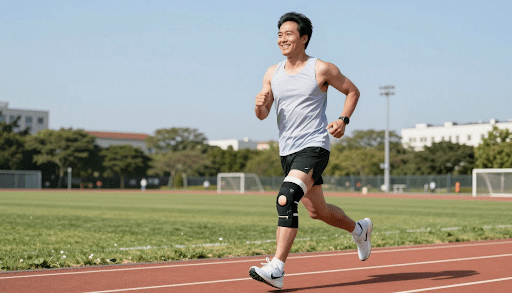
The most common symptom, varying in location and severity based on the underlying cause.
Inflammation and fluid buildup can lead to visible swelling.
Difficulty moving the knee or a sensation of tightness.
A feeling that the knee may give way or buckle.
The knee may feel warm or appear red.
Noises during movement.
Inability to fully extend the knee.
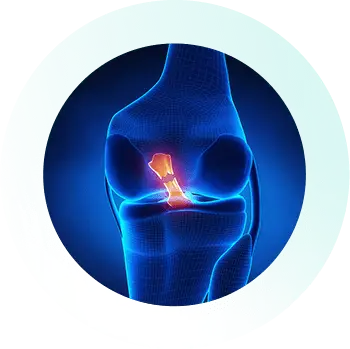
The anterior cruciate ligament is one of the primary stabilisers of the knee. An ACL tear typically presents as a sudden “pop,” immediate swelling and an unstable joint. ‘a0 Most commonly during sports involving pivoting, cutting or landing. Learn more about ACL reconstruction.
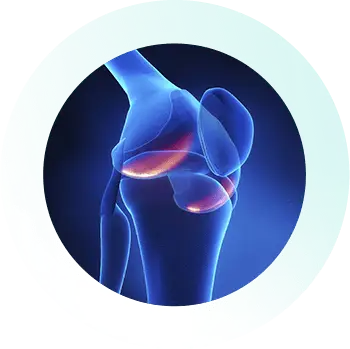
Osteoarthritis is the progressive loss of cartilage within the knee joint, causing stiffness, aching and pain that worsens with activity. Management is staged from physiotherapy, activity modification and injection therapy through to partial or total knee replacement in advanced cases. Learn more about knee replacement surgery for osteoarthritis.
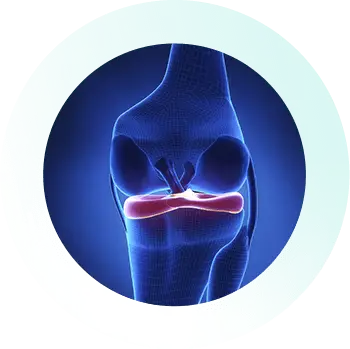
The meniscus acts as a shock absorber between the femur and tibia. Tears cause locking, catching and joint-line pain that often worsens with twisting movements. Learn more about meniscus repair surgery.
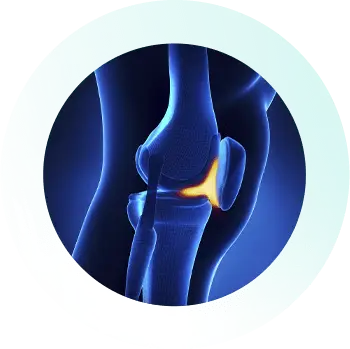
Patellar tendonitis, also known as jumper’s knee, is an overuse condition causing pain and tenderness at the base of the kneecap, particularly with jumping, running and stair climbing. It is common in athletes involved in repetitive loading activities. Learn more about patellar tendonitis.
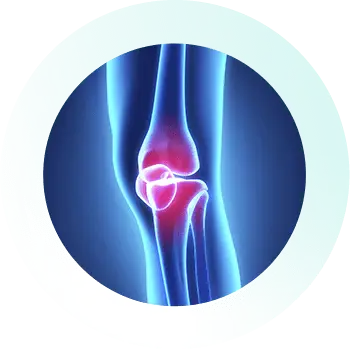
Cartilage damage within the knee can result from acute trauma or progressive wear. Localised cartilage defects cause pain, swelling and reduced range of motion, and may accelerate joint degeneration if left unaddressed. Learn more about cartilage repair surgery.
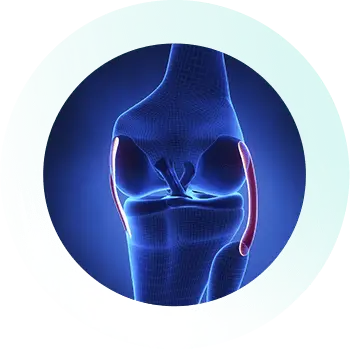
The medial collateral ligament runs along the inner side of the knee and resists valgus stress. MCL injuries typically occur through direct contact or awkward landing and present with inner knee pain and instability. Learn more about MCL reconstruction.
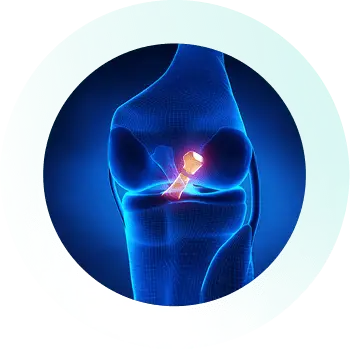
The posterior cruciate ligament stabilises the knee against backward displacement of the tibia. PCL injuries cause significant posterior instability and pain, and are less common than ACL tears but require careful assessment to determine the appropriate management pathway. Learn more about PCL reconstruction.
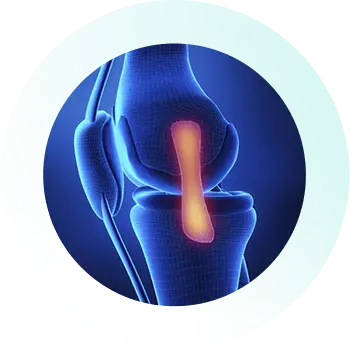
The quadriceps tendon connects the quadriceps muscle group to the top of the kneecap. Injuries range from tendinopathy which is characterised by pain above the kneecap with loading,’a0 to partial or complete rupture requiring surgical repair. Learn more about quadriceps tendon conditions.
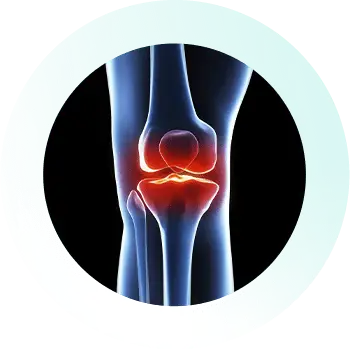
Fractures around the knee’a0 including the patella, tibial plateau and distal femur which often result from trauma, falls or high-impact collisions. Management depends on fracture displacement and pattern, ranging from conservative immobilisation to surgical fixation. Learn more about fractures vs sprains.
To confirm the diagnosis, the following imaging tests may be conducted:
Identifies the location and extent of bone and cartilage damage.
Provides detailed cross-sectional images of the knee from various angles and are especially useful for evaluating bony issues.
Utilizes magnets and radio waves to create 3D images of the knee, assessing damage to ligaments and muscles. They do not use ionising radiation of x-rays or CT scans to acquire the images.
A minimally invasive surgical procedure done as an inpatient where a thin scope with a camera is inserted into the joint for inspection and potential treatment.
For mild to moderate knee injuries, the RICE method—Rest, Ice, Compression, and Elevation—serves as an initial treatment strategy. This method helps reduce swelling, alleviate pain, and support the healing process for strains, sprains, and minor ligament injuries.
Nonsteroidal anti-inflammatory drugs (NSAIDs) such as ibuprofen and naproxen are commonly prescribed by healthcare professionals to address knee swelling and pain. These medications help manage inflammation associated with conditions like osteoarthritis and tendonitis.
Wearing braces, splints, or orthotic supports can help immobilize the injured area, reduce strain, and promote healing. These devices are commonly used for ligament injuries, joint instability, or during rehabilitation to prevent re-injury while gradually restoring movement.
An essential component of recovery for all knee conditions, physiotherapy involves personalized exercise programs designed to strengthen the muscles surrounding the knee, improve flexibility, and enhance joint stability. This approach is beneficial for conditions such as arthritis, tendonitis, and post-surgical rehabilitation.
Corticosteroid and lubricant injections may be administered directly into the knee joint to provide relief from inflammation and pain, particularly for individuals with osteoarthritis.
This minimally invasive procedure allows for the treatment of knee issues with less pain and quicker recovery times. Surgeons use an arthroscope—a small camera—and specialized instruments to access and treat the joint with precision.
Advanced robotic-assisted surgical techniques are available for knee procedures in Singapore, providing enhanced precision during operations.
Ligament tears in the knee—such as the ACL, MCL, or LCL—can result from trauma, accidents, or degenerative conditions. Reconstruction involves replacing the damaged ligament with a graft, typically taken from the patient. Performed arthroscopically, this procedure helps restore knee stability and improve mobility.
For younger patients with localized cartilage injuries, procedures like microfracture, osteochondral grafting, or autologous chondrocyte implantation (ACI) help regenerate cartilage, relieve pain, and delay knee replacement.
For severe cases, such as advanced osteoarthritis or significant joint damage, orthopaedic surgeons may recommend total or partial knee replacement. A partial knee replacement involves substituting only the damaged portion of the knee with artificial components, while a total knee replacement replaces the affected bones and cartilage with artificial joints made from durable materials.
Experiencing ongoing pain that doesn’t improve with rest or home treatment.
Noticing significant swelling or stiffness in the knee joint.
Difficulty bending, straightening, or bearing weight on the affected knee.
Sustaining a knee injury during sports or an accident, especially if accompanied by swelling or instability.
Experiencing symptoms such as joint stiffness, swelling, and decreased range of motion.
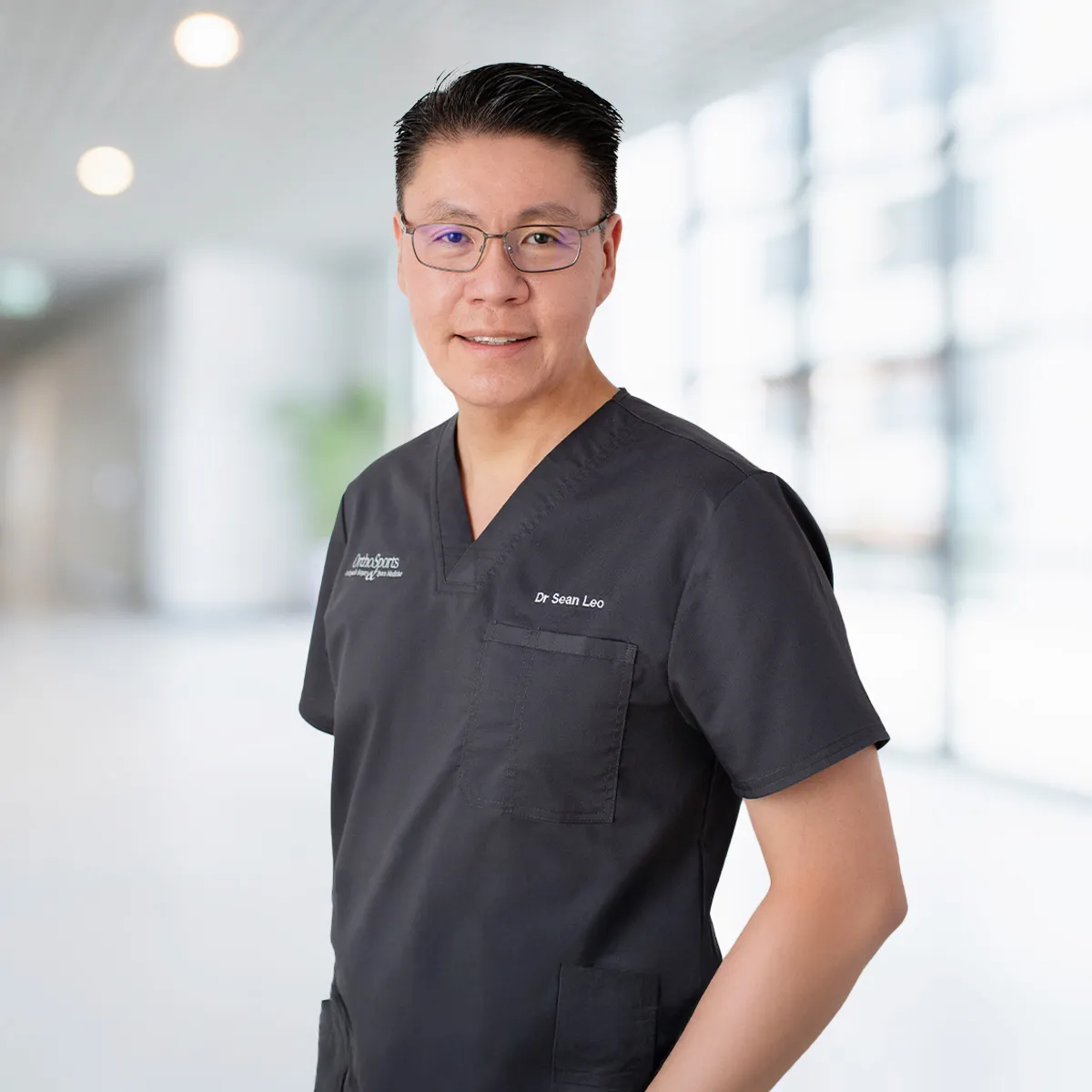
Your care is led by Dr. Sean Leo, a board-certified orthopaedic surgeon in Singapore with over 25 years of clinical experience in knee and lower limb surgery. He provides evaluation and management for a range of conditions — including ACL tears, kneecap instability, meniscus injuries, trauma, and knee osteoarthritis.
Detailed Evaluation & Individualised’a0Planning
Every treatment plan starts with a structured consultation to understand your joint function, activity level, and long-term mobility goals.
Joint Preservation Techniques
Where appropriate, Dr. Leo offers techniques such as arthroscopic repair and cartilage resurfacing. These procedures are intended to support joint function and may help delay the need for total knee replacement.
Experience in Sports and Military Settings
Dr. Leo’s clinical background includes work with physically active populations, including service in the Singapore Armed Forces and involvement with team care in the New South Wales Rugby League.
Full-Spectrum Orthopaedic Care
From injury management to post-op rehab, we support you through every stage of recovery; whether you’re an athlete returning to sport or a senior seeking to regain independence.
Expertise in
Knee & Sports Care
Evidence-Based
Practices
Care for Patient
Well-Being
You should see a knee specialist in Singapore when knee pain persists beyond two weeks despite rest, when the joint swells repeatedly, when there is a sensation of instability or buckling, or following an acute sports injury with significant swelling. Early review is particularly important for suspected ligament injuries, as delayed diagnosis can allow secondary joint damage to develop and reduces the range of management options available. A specialist assessment is also appropriate if you are experiencing progressive joint stiffness, pain with stairs or night pain pointing to an underlying degenerative process. Most patients who present early have access to a broader range of conservative options than those who wait until symptoms are advanced. If in doubt, an assessment provides clarity’a0 and no commitment to any treatment.
Knee surgery is not always required and is not the first option considered at Orthokinetics. The majority of knee conditions’a0 including ligament sprains, early osteoarthritis, patellofemoral pain and tendinopathy, respond to structured non-surgical management including physiotherapy, activity modification, bracing and injection therapy. Surgery is considered when conservative management over an appropriate period has not achieved adequate functional improvement, or when the nature of the injury makes non-surgical recovery unlikely to restore the stability or function a patient needs. Every management plan at Orthokinetics is individual, based on clinical findings, imaging and the patient’s own activity goals. Many patients are reassured to learn that a clear non-surgical pathway exists for their condition.
Recovery time depends on the injury type and treatment pathway. Minor ligament sprains may recover in 2 to 6 weeks with physiotherapy. ACL reconstruction typically involves 6 to 12 months of structured rehabilitation before full return to sport. Meniscus repair requires 3 to 6 months depending on repair type. Partial knee replacement patients often regain independent walking within 4 to 6 weeks, with full recovery over 3 to 6 months. Total knee replacement recovery is typically 6 to 12 months to full function. Consistent adherence to a structured rehabilitation programme is the single most important factor in determining how quickly and completely function is restored.
MCL reconstruction is a surgical procedure that rebuilds the medial collateral ligament, the structure on the inner side of the knee that resists valgus stress. Most isolated MCL injuries recover with non-surgical management including bracing and physiotherapy. Reconstruction is considered in cases of chronic MCL instability that has not resolved after a full course of conservative treatment, or in complex multi-ligament knee injuries where the MCL is part of a broader pattern of structural instability. At Orthokinetics, MCL reconstruction uses additional radiological imaging intraoperatively to support accurate placement. Recovery to functional activity typically takes 4 to 6 months.
MPFL reconstruction rebuilds the medial patellofemoral ligament,’a0 the primary soft tissue restraint that prevents the kneecap from dislocating laterally. Recurrent patellar dislocation is the main indication. Patients who have dislocated their kneecap multiple times, or whose first dislocation involved cartilage damage, are typically considered for MPFL reconstruction. The procedure restores the normal tension of the medial restraint and reduces the risk of further dislocation. It is particularly relevant for younger, active patients where repeated dislocation poses a progressive risk to joint health. Recovery to sport is typically 4 to 6 months with structured rehabilitation.
A partial knee replacement replaces only the damaged compartment of the knee, typically the medial (inner) side, while preserving the remaining healthy bone and cartilage. A total knee replacement resurfaces all three compartments of the joint. Partial replacement is appropriate when osteoarthritis is confined to a single compartment, with good ligament integrity and an intact opposite compartment. Total replacement is indicated for more advanced, multi-compartmental arthritis. Both procedures aim to relieve pain and restore functional mobility. The choice between them depends on the distribution of arthritis, patient activity level and the clinical assessment of joint integrity. Read more about total knee replacement and partial knee replacement at Orthokinetics.
Return to sport after ACL reconstruction is a realistic goal for most active patients, but it requires a structured and progressive rehabilitation programme. The typical timeline is 9 to 12 months before return to competitive or high-impact sport, though this varies by individual recovery progress, the type of graft used and the demands of the sport involved. Clearance for return is based on functional criteria such as strength symmetry, movement quality and sport-specific testing, rather than a fixed time point alone. Patients who complete a structured rehabilitation plan and are cleared on functional criteria have the best prospects for a durable return to their activity level.
An MRI is not always the first investigation required. Many knee conditions can be accurately assessed through clinical examination alone, and an X-ray is sufficient to evaluate bony changes and joint space narrowing. MRI is indicated when soft tissue injury is suspected, such as an ACL or meniscus tear,’a0 or when clinical examination findings are inconclusive. It is also useful for assessing cartilage damage, bone oedema and the extent of structural involvement before planning surgery. At Orthokinetics, imaging is recommended on the basis of clinical assessment findings, not as a routine step for every patient with knee pain.
Knee arthroscopy is a minimally invasive procedure used to diagnose and treat a range of intra-articular knee problems’a0 including meniscus tears, loose bodies, cartilage lesions and fat pad impingement. The outcomes depend on the condition being treated and the underlying state of the joint. For specific structural problems such as a repairable meniscus tear or a loose body causing locking, arthroscopy can provide durable relief. For more degenerative presentations such as widespread cartilage loss, arthroscopy has a more limited role. The procedure is performed as an inpatient using a small camera and specialised instruments, with a faster recovery than open surgery. A clinical assessment will confirm whether arthroscopy is an appropriate option for your specific condition.
At your first consultation at Orthokinetics, Dr. Sean Leo will take a detailed history of your symptoms like when they began, what makes them better or worse, and how they affect your daily activities and sporting life. A clinical examination of the knee will follow, assessing range of motion, stability, swelling and specific provocation tests. If imaging is indicated, X-rays or an MRI referral may be arranged. You will receive a clear explanation of what the assessment findings suggest, what the diagnostic possibilities are, and what management options are available to you. The goal of the first consultation is to give you an accurate picture of your knee and a clear, individualised pathway forward.